
Reviewed · MUSEUMS
The Fram Museum Admission Ticket
Ships can tell stranger stories than books. At Oslo’s Fram Museum, you walk aboard the original Fram and Gjøa, then see the cramped cabins, engine spaces, equipment, and working areas that supported some of Norway’s boldest polar expeditions. I especially like the chance to explore the ships from the inside and the storm-and-ice effects that make life aboard feel less like a museum lesson and more like a hard, cold job.
I also like the clear exhibits, which use texts in ten languages, and the regular polar film shown every fifteen minutes. The main caution is timing: the museum can take two to three hours if you read the displays carefully, and some areas have been closed at times. It is also on the Bygdøy museum peninsula, so you should allow time to reach it.
In This Review
- Key things to know before you go
- Why Oslo’s Fram Museum is worth your time
- Entering the Fram building and meeting the ship
- The three Fram expeditions in context
- Gjøa and the Northwest Passage story
- Films, weather effects, and interactive displays
- The High North beyond heroic exploration
- How long you should allow
- Price, ticket value, and booking sense
- Getting there and planning the rest of Bygdøy
- Who will enjoy this museum most
- Small drawbacks to keep in mind
- Should you book the Fram Museum admission ticket?
- FAQ
- How much does admission to the Fram Museum cost?
- How long does a visit to the Fram Museum take?
- What are the opening hours?
- Is a mobile ticket available?
- Can I go aboard the original ships?
- Is the film included with admission?
- Can I cancel the ticket for a refund?
Key things to know before you go
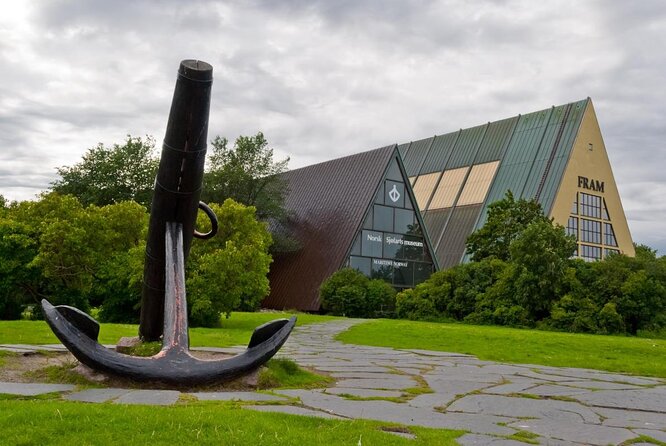
- Walk through the original Fram: You can explore decks, cabins, lower areas, and the engine room of the famous polar ship.
- See Gjøa, the Northwest Passage ship: The separate Gjøa building adds another original vessel and exhibitions on several later expeditions.
- Start with the polar film: The 116-seat cinema shows an introductory film every fifteen minutes and helps explain the museum before you tackle the displays.
- Expect more than ship models: Exhibits cover Fram, Gjøa, Maud, N24 and N25 aircraft, the airship Norge, John Franklin, Henry Larsen, and Eivind Astrup.
- Allow two hours at a minimum: A quick visit can fit into one hour, but careful reading and ship exploration usually take longer.
- Check the practical details: Admission costs about $19.38 per person, mobile tickets are accepted, and the museum is open daily from 10:00 a.m. to 5:00 p.m. during the stated operating period.
Why Oslo’s Fram Museum is worth your time
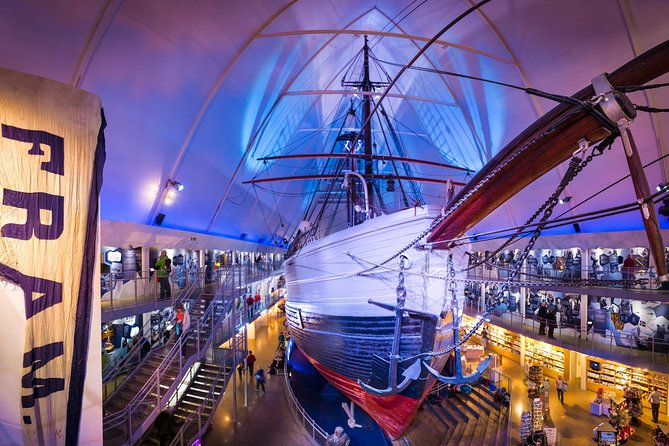
The Fram Museum is not simply a room with an old boat in it. The building was designed around the ship, so the Fram sits at the heart of the visit, surrounded by exhibits that explain why it was built, where it went, and how people lived aboard it.
That matters because polar exploration can seem abstract when you only see maps and dates. Here, you can step into the actual spaces. You see how little room the crew had, how tightly equipment was arranged, and how much daily life depended on careful planning.
The museum receives a 4.6 rating from 490 reviews, with 94 percent of visitors recommending it. The most consistent praise is easy to understand: the original ships are the main attraction, and you are allowed to walk through them rather than only view them from behind a barrier.
I would make this a priority if you enjoy maritime history, engineering, exploration, Norwegian history, or hands-on museums. Families can also find plenty to do, though younger children may get less from the written displays than older children and adults.
More Museums in Oslo
- Kon-Tiki Museum Entrance Ticket
★ 4.5 · 1,096 reviews - Oslo: Paradox Museum Entry Ticket
★ 4.3 · 799 reviews - Oslo: Oslo Discovery Tour with 2 Museums Included
★ 4.6 · 334 reviews
Entering the Fram building and meeting the ship
The main Fram exhibition explains the three great expeditions of the Fram. The wall displays, maps, timelines, and objects give you the setting before you board the ship.
Take your time here. One useful approach is to read enough to understand the ship’s purpose, then go aboard, then return to the displays for more detail. The museum is not always arranged as one perfectly straight story, so the introductory film can help you get your bearings before moving through the exhibits.
The Fram itself is the star. You can walk across its decks and move below them into the working and living areas. The ship is remarkably preserved, but it does not feel like a polished replica. The cramped rooms and practical fittings make the expeditions easier to picture.
The lower sections are especially effective. You can see the engine room and other working spaces, along with crew areas and objects connected to daily routines. A visit here explains the physical demands of the voyages better than a standard display case ever could.
One of the museum’s strongest features is the way it lets you move through several levels of the ship. You are not only looking at the vessel’s outside shape. You are seeing how it functioned from the inside, including the places where people worked, slept, stored supplies, and endured long periods away from home.
The three Fram expeditions in context
The main building’s exhibits focus on the three great Fram expeditions. Maps and written explanations help connect the ship to the routes, crews, preparation, and scientific aims behind the voyages.
The displays also show the human side of exploration. Polar expeditions required more than courage. They depended on food, fuel, tools, clothing, navigation, repair work, and a crew able to live together in difficult conditions.
I found the museum most useful when it connected bold goals with ordinary details. A polar expedition sounds grand from a distance, but the ship’s narrow rooms and practical equipment show the daily reality. You begin to understand that endurance was built into every part of the voyage.
The museum uses explanatory text in ten languages, which makes the displays easier to follow for an international audience. English is also offered for the mobile ticket experience, but the written exhibits provide broad language coverage inside the museum.
Gjøa and the Northwest Passage story
An underground tunnel connects the Fram building to the Gjøa building. This second section is not an afterthought. Its centerpiece is Gjøa, the first ship to navigate the entire Northwest Passage.
The ship gives you another chance to walk through an original vessel, but the story is different from the Fram exhibitions. The Gjøa displays widen the museum’s focus beyond the three main Fram voyages and show how Norwegian exploration continued to develop.
The Gjøa building also includes exhibits on the Maud, the N24 and N25 aircraft, and the airship Norge. There are sections on John Franklin’s legendary expedition, Henry Larsen, and Eivind Astrup.
This variety makes the museum stronger than a single-ship attraction. You can compare different forms of polar transport and different stages of exploration. Ships, aircraft, and airships each faced their own problems, and the exhibitions show how people kept pushing into the High North by different means.
The underground connection is also a fun part of the visit. One review praised a cold walk-through tunnel, and the museum includes atmospheric effects that add a little drama without replacing the historical material.
A completely different kind of day out from Oslo:
- Oslo: Scenic Fjord Cruise with Audio Guide Commentary
★ 4.5 · 5,375 reviews - Oslo Nature Walks: Island Hopping Tour
★ 4.8 · 2,713 reviews - Oslo: 100% Electric Oslofjord Sightseeing Cruise
★ 4.4 · 2,041 reviews - Oslo: Fjord Evening Cruise with Shrimp Buffet
★ 4.5 · 1,956 reviews
Films, weather effects, and interactive displays
The museum has a 116-seat cinema showing a polar introduction film every fifteen minutes. I recommend starting here if the timing works. It gives you a quick overview before you begin reading maps and expedition panels.
The film is especially useful if you are visiting with children or with someone who does not normally choose maritime museums. It creates a shared starting point, then the ship and exhibits provide the detail.
The museum also uses sound, movement, and weather effects. A stormy-weather simulation, ice imagery, and a rocking bench help you sense the discomfort and instability of life at sea. One popular feature is an ice bunker, which adds a playful element to the colder side of the exhibition.
These effects are not the main reason to visit, but they help break up the reading. The best moments come when the atmosphere supports the objects and the written history. You can read about harsh conditions, then feel a small hint of what movement and weather meant aboard ship.
The N25 Flight 4D Cinema is included with admission. It adds another modern presentation to a museum otherwise centered on historic vessels and expedition artifacts.
The High North beyond heroic exploration
The museum does not stop with old expeditions. It also presents current issues facing the High North, including polar bears, melting ice, gas, and oil.
This section gives the visit a useful present-day connection. The expeditions belong to the past, but the polar regions remain politically, environmentally, and economically important. You are encouraged to think about what has changed and what remains at stake.
I appreciate this wider focus because it keeps the museum from treating exploration as a string of heroic tales only. The exhibits connect human ambition with the fragile conditions of the Arctic. That makes the museum relevant even if you already know the basic stories of Norwegian polar exploration.
How long you should allow
The official estimate is one to three hours. I would plan for about two hours in normal conditions.
One hour works if you move quickly, watch the film, walk through the ships, and read only the key panels. Two hours gives you time to study the maps and displays, explore the Fram and Gjøa, and enjoy the film and interactive sections without racing.
Three hours makes sense if you read nearly everything. Several visitors have spent about two hours reading wall panels and maps before spending another hour aboard the ship. That is a good guide for anyone who enjoys detailed museum visits.
The museum can become busy, especially around the ships and popular displays. Arriving near opening time at 10:00 a.m. may give you better access to the exhibits and easier photo opportunities. The stated opening hours are daily from 10:00 a.m. to 5:00 p.m.
Do not build an extremely tight schedule around the museum. One admission problem was caused by a posted opening time that did not match the actual opening, and another visitor arrived too late after a delayed flight. The practical lesson is simple: verify the opening time for your date and leave room for delays.
Price, ticket value, and booking sense
The admission price is about $19.38 per person. For Oslo, that is a fair museum price, especially since it includes access to both the Fram and Gjøa displays and the N25 Flight 4D Cinema.
The value is strongest if you spend two hours or more. You are paying for original ships, historical exhibitions, artifacts, films, and atmospheric displays, not only a short viewing of one preserved vessel.
A prepaid mobile ticket can make entry simple. Confirmation is received at booking, and the ticket is offered in English. The experience is not a guided group tour, so you can set your own pace inside the museum.
The booking data shows that this admission is often reserved about 21 days ahead. That does not mean you must always book three weeks early, but it suggests that planning ahead is sensible during busy periods.
Free cancellation is available up to 24 hours before the experience start time for a full refund. Cancellations or changes made less than 24 hours ahead are not accepted for a refund, and the cut-off follows local Oslo time.
Getting there and planning the rest of Bygdøy
The museum is near public transportation, but the location can feel somewhat remote compared with central Oslo. Check bus routes and times before you set off, especially if your day includes other appointments.
The museum is in an area with other attractions nearby, so it can work well as part of a Bygdøy museum day. Still, avoid cramming too many major stops into one narrow time slot. The Fram Museum rewards curiosity, and rushing through the ships would waste much of its value.
Food and drinks are not included with admission. Plan accordingly, particularly if you are visiting with children or intend to stay for several hours.
Service animals are allowed with identification. The activity is suitable for most people, but walking through historic ships means you should be prepared for confined areas, stairs, and uneven movement through the exhibits. The supplied information does not give a full accessibility description, so contact the provider if you need specific access details.
Who will enjoy this museum most
I would recommend the Fram Museum most strongly to:
- Anyone interested in the Arctic, Antarctic, or Northwest Passage
- People who enjoy ships, engineering, and practical history
- Families looking for a museum with films and hands-on features
- Readers who like maps, expedition routes, and historical objects
- Visitors who want an Oslo museum experience that feels different from a standard art collection
The museum is also a good choice if you have only a few hours in Oslo and want one focused attraction. It is less suitable if you dislike reading, confined ship interiors, or museums that require you to build some of the story for yourself.
Children may enjoy climbing through the vessels, the weather simulation, the ice bunker, and the film. Adults will likely get more from the expedition details, crew routines, and current High North displays.
Small drawbacks to keep in mind
The museum’s main weakness is that the experience can be uneven if parts of the building are closed. One visitor found the cinema area shut on the first visit and later discovered that a substantial part of the museum had been missed. Check what is open when you arrive.
Some areas may also feel dark, particularly around the historic ships. That atmosphere suits the subject, but it can make reading and taking photos harder.
Crowds can gather around the Fram, and narrow ship passages do not offer much room when several people stop at once. Arriving early is the best simple fix.
Finally, the museum does not always lead you through one obvious narrative from beginning to end. Starting with the introductory film, then following the exhibitions and returning to any missed panels, gives the visit more shape.
Should you book the Fram Museum admission ticket?
Yes, if original ships and polar exploration appeal to you. The chance to walk through the Fram and Gjøa is the real reason to go, and the maps, artifacts, films, and weather effects add enough context to make the ships meaningful.
I would book it for a two-hour visit, arrive close to opening time, and avoid placing it immediately before a nonrefundable activity. The $19.38 price is reasonable for the amount of material included, and the mobile ticket makes entry straightforward.
Skip it only if your Oslo schedule is extremely tight or you have little interest in maritime and polar history. For most people with room for one more museum, this is one of the city’s most memorable choices.
FAQ
How much does admission to the Fram Museum cost?
The listed price is $19.38 per person.
How long does a visit to the Fram Museum take?
The estimated visit lasts one to three hours. Allow about two hours if you want time for the exhibitions, films, and both ships.
What are the opening hours?
The stated opening hours are Monday through Sunday, 10:00 a.m. to 5:00 p.m., during the operating period from September 1, 2021, through April 2, 2027.
Is a mobile ticket available?
Yes. The admission includes a mobile ticket, and confirmation is received at the time of booking.
Can I go aboard the original ships?
Yes. The museum includes access to the original Fram and Gjøa ships, where you can walk through their interiors and see areas connected with crew life and ship operations.
Is the film included with admission?
Yes. Admission includes the N25 Flight 4D Cinema. The museum also has a 116-seat cinema showing a polar introduction film every fifteen minutes.
Can I cancel the ticket for a refund?
You can cancel up to 24 hours before the experience start time for a full refund. Cancellations or changes made less than 24 hours before the start time are not refundable.
Just added around Oslo
- Visit the Instaworthy Spots of Oslo’s Vigeland Park with a Local★ 5.0 · 4 reviews
- Oslo: 3-hour Cross Country trip with equipment and guide★ 5.0 · 4 reviews
- Oslo: 2-hour Christmas Private Walking Tour★ 3.0 · 4 reviews
- Art and Museum Tour of Oslo★ 5.0 · 4 reviews
- Flavors of Oslo: Food & Beer Tour★ 4.8 · 4 reviews
- Private Transfer from Oslo City Centre to Oslo Airport★ 5.0 · 4 reviews
- 3-Hour Vattkørt Beginner Kayak Course on Oslo Fjord★ 5.0 · 4 reviews
- Hipstoric Grünerløkka Private Walking Tour★ 5.0 · 4 reviews
Museums, compared.


Troll Museum Entry Ticket with AR Media Experience
Read our review →


Aksla-Alnes-Giske-Sunnmøre museum 100 % Highlights 4.5 H
Read our review →Browse the lists this tour appears in