
Reviewed · MUSEUMS
Kon-Tiki Museum Entrance Ticket
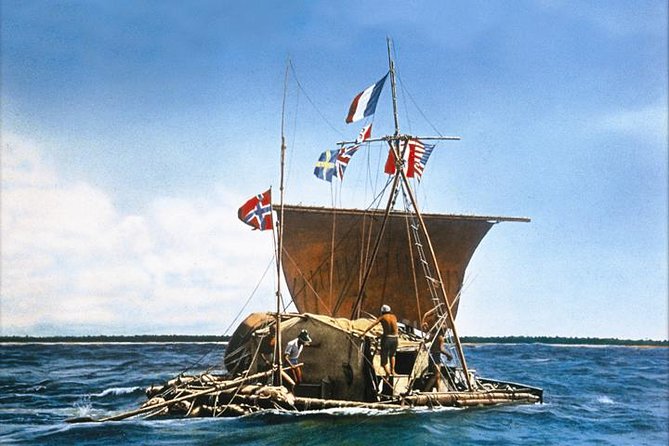
A tiny raft crossed a huge ocean. That astonishing story makes Oslo’s Kon-Tiki Museum far more memorable than its modest size suggests. I like the chance to see the original Kon-Tiki raft up close, and I like that the museum explains not only Thor Heyerdahl’s 1947 Pacific crossing, but also his later voyages on the reed boats Ra and Tigris.
The museum also works well for families because the boats, cave passage, underwater display, and dramatic film give children something to look at while adults follow the larger story. My main caution is time: the advertised visit takes about an hour, but the displays can feel a little dated in places, and you may want two hours if you read everything.
In This Review
- Key points to know before you go
- Why Thor Heyerdahl’s raft still matters
- Seeing the original Kon-Tiki raft
- The noon film and original expedition footage
- Ra, Tigris, and the wider collection
- The cave, whale shark, and family appeal
- How long to allow for the museum
- Getting to Bygdøy and planning your day
- Is the $19.42 ticket good value?
- What could be improved
- Who should book the Kon-Tiki Museum?
- My final recommendation
- FAQ
- How much does the Kon-Tiki Museum entrance ticket cost?
- How long does a visit to the Kon-Tiki Museum take?
- Is the Kon-Tiki documentary shown at the museum?
- Can I see the original Kon-Tiki raft?
- What other vessels are displayed?
- Is the museum suitable for children?
- How do I get to the Kon-Tiki Museum?
Key points to know before you go
- The actual 1947 Kon-Tiki raft is the main attraction, giving the expedition a physical scale that photographs cannot match.
- The daily noon film is worth planning around, since it uses original footage from the Pacific voyage and runs for about an hour.
- The museum covers more than one expedition, including Ra, Tigris, Easter Island, Fatu-Hiva, Túcume, and the Galapagos.
- A 30-metre cave tour and a 10-metre whale shark model add variety to what could otherwise be a text-heavy museum.
- The location beside the Fram Museum makes it easy to build a full Bygdøy museum day.
- The ticket costs about $19.42 per person, with transportation, food, drinks, souvenirs, and a guide not included.
Why Thor Heyerdahl’s raft still matters

Thor Heyerdahl became famous by testing an idea many people considered impossible. In 1947, he and his crew crossed the Pacific Ocean from South America toward Polynesia on a raft made from balsa wood. The expedition was called Kon-Tiki.
Heyerdahl’s argument was that ancient South American peoples could have reached Polynesia by sea. The voyage did not prove every part of that theory, but it showed that such a crossing was physically possible with simple materials and careful planning.
That distinction matters when you visit. This is not simply a museum about a successful boat trip. It is about a bold question, a controversial theory, and the willingness to test an idea at sea rather than argue about it from a desk.
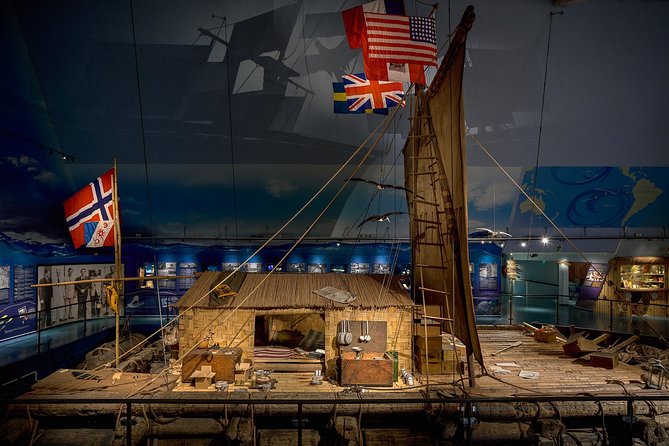
I find the raft itself especially useful because it cuts through the romance. In books, a Pacific crossing can sound thrilling and almost comfortable. Standing near the original vessel makes the limited space and exposed design much easier to picture. The crew lived and worked on a small platform with very little protection from the ocean.
The museum also presents Heyerdahl’s later expeditions. The reed boats Ra and Tigris show that Kon-Tiki was not a one-off stunt. Heyerdahl continued to investigate ancient seafaring, long-distance contact, and the movement of people across oceans.
More Museums in Oslo
- Oslo: Paradox Museum Entry Ticket
★ 4.3 · 799 reviews - The Fram Museum Admission Ticket
★ 4.5 · 490 reviews - Oslo: Oslo Discovery Tour with 2 Museums Included
★ 4.6 · 334 reviews
Seeing the original Kon-Tiki raft
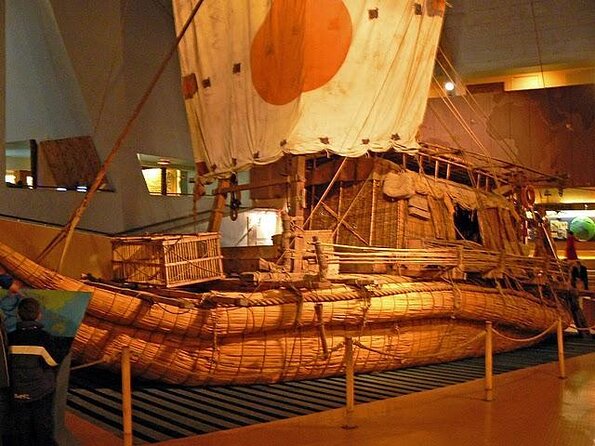
The central object is the original Kon-Tiki raft used in the 1947 expedition. This is the part I would make sure you do not rush.
The vessel is impressive because it looks both practical and startlingly fragile. You can see why the expedition captured worldwide attention. The raft was not designed like a modern ocean-going ship, and its presence turns an old adventure story into something immediate.
The museum places the vessel within a broader presentation of the voyage. Displays explain the expedition, the crew, their equipment, and the setting in which they worked. You get a better sense of the planning behind the journey instead of seeing only a heroic image of men floating across the Pacific.
One useful feature is the amount of supporting material around the boat. Artifacts and written displays help explain how the expedition came together and what the crew faced. The museum also includes material about Heyerdahl himself, including his library and a section about him in person.
That personal material is helpful, though it may not satisfy everyone. If your main interest is Heyerdahl’s private life, you might find the museum gives more attention to the expeditions than to every chapter of his biography. If you come for the boats and the voyages, the balance works well.
The noon film and original expedition footage
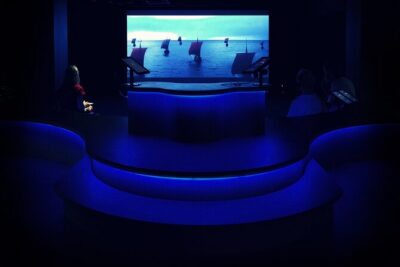
Plan your visit around the original Kon-Tiki documentary if you can. It is shown every day at noon in the museum cinema and lasts about an hour.
This is not just a modern reconstruction. The film uses footage made by the expedition crew, which gives it a direct, rough-edged quality. You see the journey through the eyes of the people who were actually there. That makes the film one of the strongest parts of the visit.
The movie also helps you understand the raft before or after you see it in the exhibition hall. If you watch the film first, the boat has more meaning when you return to it. If you see the raft first, the footage gives you a stronger sense of what life on board involved.
The noon start creates one practical issue. If you arrive later, you may miss the film and need to wait until the next day. I would check your route and plan to be at the museum before noon if the documentary is important to you.
The film may not suit very young children for its full running time, but older children who enjoy adventure stories can find it gripping. One 11-year-old reportedly considered the museum a favorite, which makes sense: the story has danger, unusual equipment, real ocean footage, and a clear goal.
Ra, Tigris, and the wider collection
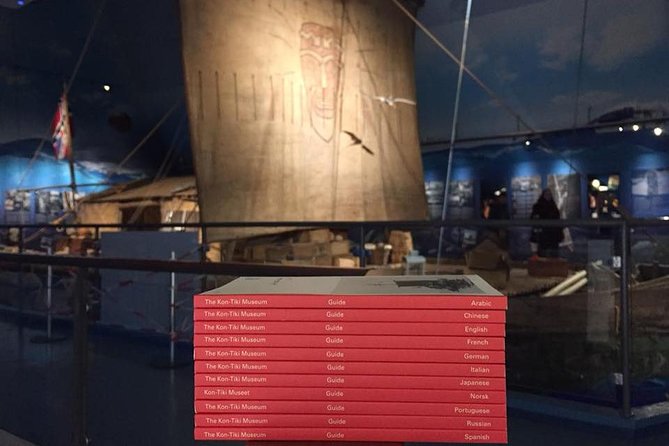
Kon-Tiki gets the largest share of attention, but the museum does not stop there. You can also see the reed boats Ra and Tigris, which Heyerdahl used for later expeditions.
These vessels change the mood of the museum. The Kon-Tiki raft represents a long Pacific crossing on balsa wood. Ra and Tigris show Heyerdahl trying different materials and ideas connected to ancient boatbuilding. Seeing the vessels together helps you compare their shapes, construction, and intended journeys.
The displays also cover Easter Island, Fatu-Hiva, Túcume, and the Galapagos. These subjects widen the museum’s focus from one famous crossing to Heyerdahl’s broader research.
The Easter Island material is particularly important to the museum’s identity. Heyerdahl was fascinated by the island’s monuments, people, and possible connections with South America. The exhibits give you a chance to consider his theories, while also showing the artifacts and research that shaped his work.
I would approach these displays with curiosity rather than treating every theory as settled fact. Heyerdahl was a gifted explorer and a powerful communicator, but his ideas were debated. The museum is at its best when it shows you the evidence, the expeditions, and the questions that drove him.
A completely different kind of day out from Oslo:
- Oslo: Scenic Fjord Cruise with Audio Guide Commentary
★ 4.5 · 5,375 reviews - Oslo Nature Walks: Island Hopping Tour
★ 4.8 · 2,713 reviews - Oslo: 100% Electric Oslofjord Sightseeing Cruise
★ 4.4 · 2,041 reviews - Oslo: Fjord Evening Cruise with Shrimp Buffet
★ 4.5 · 1,956 reviews
The cave, whale shark, and family appeal
The museum has several features that prevent the visit from becoming a long sequence of labels and photographs.
A 30-metre cave tour gives the building a more physical element. It is a small feature, but it changes the pace and gives children a route through the museum that feels more like an adventure.
There is also an underwater display with a 10-metre model of a whale shark. This connects the exhibitions to the sea environment around the expeditions. The model adds scale and visual drama, especially for younger visitors who may not want to read every panel.
These features help explain why the museum suits families. Adults can follow the exploration story and the research questions, while children can focus on the unusual boats, the cave, the whale shark, and the film.
Still, I would not describe the museum as a large interactive science center. Much of the visit remains self-guided, with displays that reward reading. Families should allow children to move between the visual highlights rather than expecting every panel to hold their attention.
How long to allow for the museum

The basic visit takes about one hour, especially if you concentrate on the main raft and the key exhibitions. That makes the museum easy to fit into a busy Oslo schedule.
I would allow closer to two hours if you want to watch the full documentary, read the displays, and look carefully at the material on Heyerdahl’s different expeditions. The film alone uses much of the one-hour estimate.
Your timing also depends on how you combine the museum with nearby attractions. The Kon-Tiki Museum sits next to the Fram Museum, which is devoted to polar exploration. Doing both gives you two very different kinds of adventure: Heyerdahl’s open-ocean raft on one side, and Arctic and Antarctic ship exploration on the other.
A nearby cafe makes it practical to stop for food during the day. The area also has a marina setting, so you can add a short outdoor break rather than spending the entire outing indoors.
Getting to Bygdøy and planning your day

The museum is near public transportation, and a bus from central Oslo stops directly in front of the museums. That is the simplest option described for reaching the site.
You can also use a hop-on, hop-off bus, and the museum is described as being not far from the cruise port. Exact routes and schedules can change, so I would check the current transport information before setting out, particularly if you are visiting from the airport or during poor weather.
The Bygdøy location is a strength because several attractions sit within a short distance. The Fram Museum is next door, and other museums and a public beach are also in the wider area. I would avoid treating Kon-Tiki as an isolated one-hour stop if you have a full day available.
At the same time, the location requires a little planning. If a train or another connection is canceled, reaching Bygdøy can take longer than expected. Build in extra time if you have a cruise departure, airport connection, or timed booking later in the day.
Is the $19.42 ticket good value?
At about $19.42 per person, the ticket is not the cheapest short museum visit in Oslo. Its value depends on how much use you make of the collection.
For a quick look at the raft alone, the price may feel high if you are comparing it with a much larger museum. The museum is compact, and one hour can pass quickly.
The value improves if you watch the documentary, read the expedition displays, and spend time with the Ra and Tigris boats, cave, underwater exhibit, and Easter Island material. It also works better as part of a Bygdøy museum day, especially when you combine it with the Fram Museum.
The ticket includes local taxes, but not transportation, food, drinks, souvenirs, or a guide. This is a self-guided admission ticket, so you should not expect a scheduled tour or personal explanation throughout the visit.
Advance booking gives you confirmation at the time of purchase and convenient entry on the day. The stated cancellation terms allow a full refund if you cancel at least 24 hours before the start time. Changes or cancellations made inside that window are not refunded.
What could be improved
The museum’s strongest displays are memorable, but not every section may feel equally fresh. One part of the collection has been described as somewhat dated, and the museum has indicated plans for a new presentation of the Kon-Tiki raft.
That planned renewal is worth keeping in mind if you are deciding when to visit. The proposed concept includes an ocean and sky setting around the raft, interactive stations, and an underwater view beneath the vessel. If completed as described, that would make the central exhibit more physical and dramatic.
For now, the museum’s appeal comes mainly from authenticity. You are looking at original vessels and expedition material rather than a theatrical attraction built only for effect. Some visitors will prefer that direct approach. Others may want more modern screens, more personal biography, or more hands-on activities.
I also would not come expecting a guide. The ticket provides entry, and you explore at your own pace. That is convenient, but you need to take responsibility for the order and depth of your visit.
Who should book the Kon-Tiki Museum?
I would recommend this museum to you if you enjoy exploration, unusual transportation, maritime stories, or museums built around real objects. It is also a strong choice for families with school-age children, especially if you pair it with the Fram Museum.
The museum suits a flexible afternoon because the visit can last one hour or stretch toward two. The noon film makes it less flexible if you want the complete experience, so plan that part first.
You may want to skip it if your Oslo schedule is extremely tight and you are not interested in Heyerdahl or ocean exploration. The museum is focused, and its value comes from caring about the story behind the vessels.
My final recommendation
Book the Kon-Tiki Museum if you want one of Oslo’s most unusual true adventure stories brought to life through original boats, film, artifacts, and clear displays. Arrive before noon, watch the documentary, and allow time for the cave and underwater exhibit rather than rushing straight to the raft.
The smartest plan is to combine it with the Fram Museum next door. That turns a short museum visit into a satisfying Bygdøy outing, with enough variety for both adults and children.
FAQ
How much does the Kon-Tiki Museum entrance ticket cost?
The listed price is $19.42 per person. Local taxes are included.
How long does a visit to the Kon-Tiki Museum take?
The estimated visit lasts about one hour. You may want closer to two hours if you watch the full film and read the exhibits carefully.
Is the Kon-Tiki documentary shown at the museum?
Yes. The original Oscar-winning Kon-Tiki documentary is screened every day at noon in the museum cinema.
Can I see the original Kon-Tiki raft?
Yes. The museum displays the original balsa-wood raft used by Thor Heyerdahl during his 1947 Pacific expedition.
What other vessels are displayed?
The museum also presents the reed boats Ra and Tigris, along with exhibitions connected to Heyerdahl’s expeditions and research.
Is the museum suitable for children?
Yes. The museum is described as a good family activity, with boats, a 30-metre cave tour, a 10-metre whale shark model, and an adventure story that can appeal to school-age children.
How do I get to the Kon-Tiki Museum?
The museum is near public transportation, and a bus from central Oslo stops directly in front of the museums. It can also be reached using a hop-on, hop-off bus. The Fram Museum is next door.
Just added around Oslo
- Visit the Instaworthy Spots of Oslo’s Vigeland Park with a Local★ 5.0 · 4 reviews
- Oslo: 3-hour Cross Country trip with equipment and guide★ 5.0 · 4 reviews
- Oslo: 2-hour Christmas Private Walking Tour★ 3.0 · 4 reviews
- Art and Museum Tour of Oslo★ 5.0 · 4 reviews
- Flavors of Oslo: Food & Beer Tour★ 4.8 · 4 reviews
- Private Transfer from Oslo City Centre to Oslo Airport★ 5.0 · 4 reviews
- 3-Hour Vattkørt Beginner Kayak Course on Oslo Fjord★ 5.0 · 4 reviews
- Hipstoric Grünerløkka Private Walking Tour★ 5.0 · 4 reviews
Museums, compared.

Troll Museum Entry Ticket with AR Media Experience
Read our review →


Aksla-Alnes-Giske-Sunnmøre museum 100 % Highlights 4.5 H
Read our review →Browse the lists this tour appears in