
Reviewed · WALKING TOURS
Oslo: Historic Myths & Legends Evening Walking Tour
Oslo gets more intriguing after dark. This two-hour walk blends Norse mythology and local folklore with the city’s oldest streets, moving from City Hall to Christiania Torv, Akershus Fortress, and Bankplassen. I like the way it gives you both familiar sights and the stories hiding behind them. I also like that guides such as Maria and Anastasia bring humor, local tips, and plenty of room for questions.
The main catch is the weather. Oslo evenings can be bitterly cold, windy, and dark, especially in winter. You’ll need warm layers, sturdy comfortable shoes, and a willingness to keep walking outside for two hours. The route is also not suitable for children under 13, wheelchair users, or people with mobility impairments.
In This Review
- Key points to know before booking
- What this Oslo walking tour is really about
- Starting beside Oslo City Hall
- Christiania Torv and Oslo’s older street stories
- Akershus Fortress, engineering, and prisoners
- Bankplassen and Oslo’s history of audacious thefts
- Oslo Cathedral and the route’s mix of landmarks
- Why the evening timing changes the experience
- Guide quality and the human side of the tour
- Is $42 good value for two hours?
- Who should book this Oslo walk?
- FAQ
- Where does the Oslo myths and legends tour meet?
- How long does the walking tour last?
- What language is the tour in?
- Is the tour suitable for children?
- Is the route suitable for wheelchair users?
- What should I bring?
- Should you book the Oslo Historic Myths and Legends walk?
Key points to know before booking
- Norse myths meet real city history: Hear about trolls, nisse, huldra, Viking beliefs, spirits, crime, punishment, and famous thefts.
- The route covers Oslo’s historic center: Stops include City Hall, Christiania Torv, Akershus Fortress, Oslo Cathedral, and Bankplassen.
- City Hall adds a strong visual opening: Wooden friezes depict Viking beliefs and help connect old stories with modern Oslo.
- Akershus Fortress is more than a photo stop: You’ll hear about its design, defensive role, prisoners, and grim episodes inside its walls.
- The evening setting changes the mood: In December, a 4 p.m. start can finish in full darkness, while summer brings long light and possible sunsets.
- The guide makes the difference: Past guides such as Maria and Anastasia have been praised for warm delivery, humor, clear English, and useful Oslo suggestions.
What this Oslo walking tour is really about
This is not a ghost-hunting expedition. You will not crawl through tunnels or visit underground chambers. Instead, the tour uses legends about ghosts, underground kingdoms, trolls, and protective spirits to explain how people in Norway understood danger, luck, illness, death, and the unknown.
That distinction matters. If you want jump scares or theatrical haunted-house effects, this is not the right choice. If you enjoy hearing how old beliefs shaped daily life, architecture, and local customs, the subject gives the walk plenty of personality.
The tour also avoids treating folklore as a collection of silly fairy tales. Stories about mischievous trolls, helpful nisse, and the mysterious huldra are presented as part of Norway’s cultural memory. You get a sense of how tales passed from one generation to the next, and why certain symbols still feel familiar in Norwegian culture.
I like this mix because it gives Oslo a human side. Dates and royal names can blur together on a standard city tour. A story about protecting a home from an unwanted spirit, fearing a particular sound, or spotting a troll is much easier to remember.
The historical range is broad. The walk begins with Viking beliefs and Norse mythology, then moves through medieval Oslo, crime and punishment, the fortress, and stories reaching as far as the Second World War. It is not a specialist lecture, and you should not expect a full academic study of any one period. Think of it as a lively introduction that gives you enough context to notice more during the rest of your stay.
More Walking Tours in Oslo
- Oslo: Best of Oslo Walking Tour
★ 4.5 · 458 reviews - Oslo: Guided Walking Tour of Central Oslo
★ 4.7 · 438 reviews - Taste of Oslo Walking Tour
★ 4.5 · 282 reviews
Starting beside Oslo City Hall
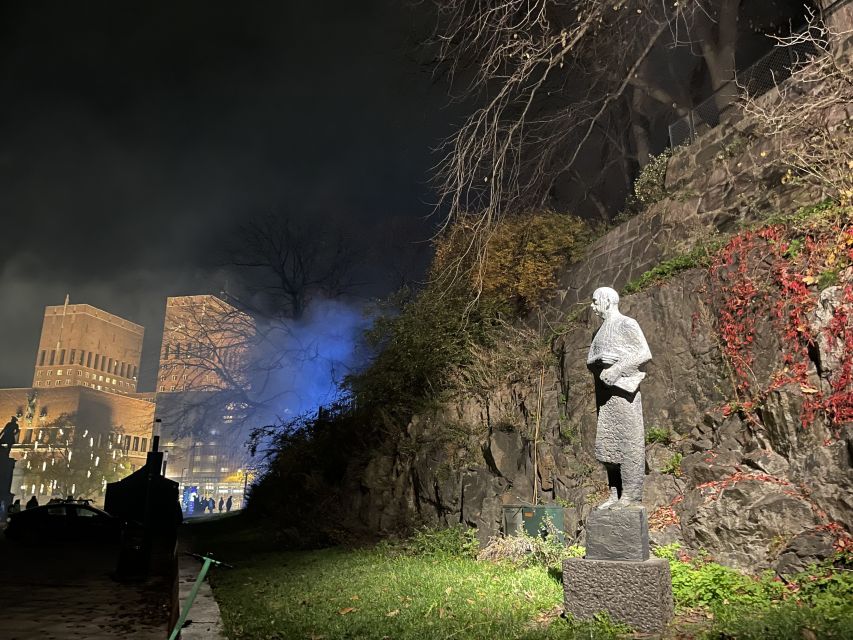
The meeting point is near the Swans fountain at the entrance to Oslo City Hall on Fridtjof Nansen’s Square. This is a practical place to begin because City Hall is easy to identify, and the opening section connects a major modern landmark with much older Norwegian beliefs.
The City Hall walls feature wooden friezes showing Viking beliefs. These carvings give the guide a useful visual tool. Rather than asking you to picture distant gods, seafaring life, and old customs from a spoken description alone, the guide can point to the designs and explain what they represent.
That makes this first stop one of the strongest parts of the route. You are not simply looking at an important building. You are learning how Norway’s older stories have been preserved in public art.
The guide may also use this opening to set up the difference between Viking mythology and later folk beliefs. Norse gods and heroic stories belong to one part of the tradition. Trolls, nisse, and huldra belong to another. Hearing them together helps you understand that Norwegian folklore is not one single storybook, but a long collection of beliefs that changed over time.
The square is also a good place to ask questions before the walk gets moving. Guides have been praised for being interactive and patient, so solo visitors and curious first-time visitors should feel comfortable speaking up. If you prefer simply to listen, the format works for that too.
Christiania Torv and Oslo’s older street stories
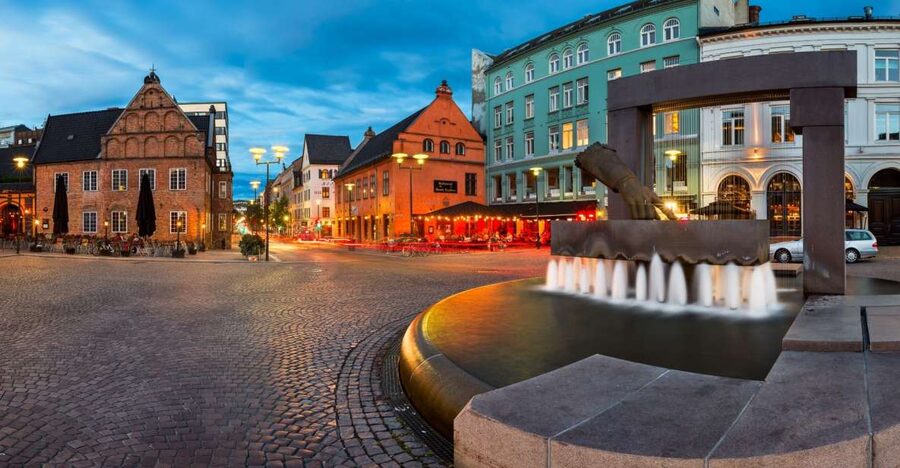
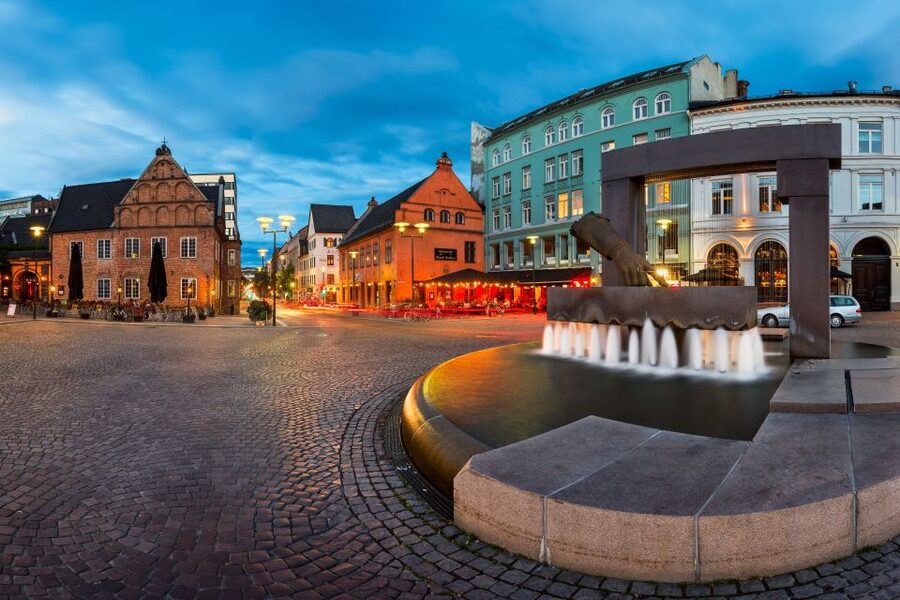
From City Hall, the walk continues toward Christiania Torv, one of the city’s historic squares. Here, the emphasis shifts from broad mythology to events and characters connected with Oslo itself.
Christiania Torv gives the tour a sense of place. You are no longer hearing only about distant Viking voyages or creatures from old tales. The guide connects stories to streets and buildings around you, showing how Oslo’s past has left marks on the present city.
This part will suit you if you enjoy small details. The tour is designed to point out things you might pass without noticing when walking alone. Several guides have also offered suggestions for places to visit later, which makes the walk useful beyond its scheduled two hours.
Do not expect every stop to be a major monument. Some of the pleasure comes from pausing in an ordinary-looking part of the center and finding out that it has a story attached to it. That is a better way to get your bearings than simply ticking off famous sights.
The pace is relaxed. You can listen, ask a question, or stop briefly for a photograph. One guide made a point of keeping everyone together in the dark and ensuring that the group did not miss important details. That sort of care matters on an evening tour, when lighting and winter conditions can make a city walk less straightforward.
Akershus Fortress, engineering, and prisoners
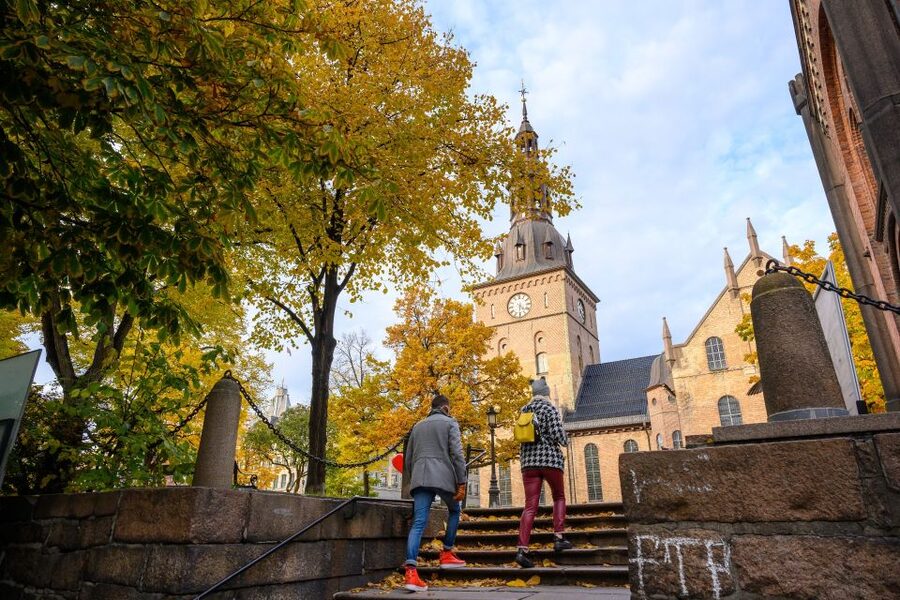
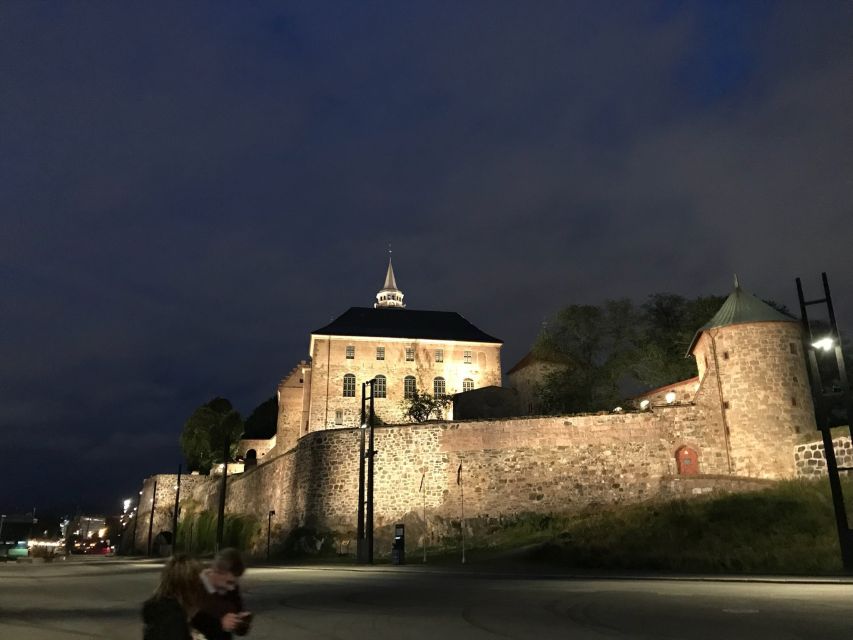
Akershus Fortress is the visual centerpiece of the walk. Its walls, towers, and defensive layout give the guide a powerful setting for stories about medieval engineering and Oslo’s need for protection.
The fortress was designed to defend the city and its important harbor area. On the tour, you’ll hear about the way its structures worked together, along with the changes made over time. The focus is not only on stone walls and military purpose. The guide also tells stories about people held inside the fortress and the fates they faced.
This is where the tone can turn darker. Tales of prisoners and punishment bring home the harshness of earlier justice systems. If you prefer a light folklore walk with no grim material, you may find parts of this section sobering. For most people, though, the darker stories add balance to the tales about trolls and helpful household spirits.
The fortress is especially effective in the evening. In summer, the setting can be softened by late light and a colorful sunset. In winter, darkness and cold create a more serious mood, though the wind can be piercing around exposed areas. Several winter participants found the walk worthwhile even in temperatures around minus 10 degrees Celsius, but they also made clear that proper clothing is essential.
You should wear shoes with a firm sole. The activity information specifically recommends comfortable footwear, and that advice is worth following. Even a relaxed two-hour route can feel long if your feet are cold or sore.
More historical sites:
- Oslo: History, Art and Secrets Tour
★ 4.7 · 62 reviews - Oslo City Walks – Historic River Walk
★ 5.0 · 31 reviews - A Well Balanced History and Food Tour with Focus on the Scandinavian Kitchen
★ 4.5 · 29 reviews - Jewish Heritage Tour in Oslo
★ 5.0 · 16 reviews
Bankplassen and Oslo’s history of audacious thefts
At Bankplassen, the subject turns toward crime, theft, and justice. This gives the tour a welcome change of pace after mythology and fortress architecture.
Stories of daring heists and intricate robberies show another side of old Oslo. Instead of focusing only on kings, soldiers, and legends, the guide brings ordinary wrongdoing into the picture. You learn how crime affected the city and how authorities responded.
The justice section is useful because medieval punishment can look strange or cruel from a modern viewpoint. A good guide helps you understand the system in its own setting without pretending it was fair by today’s standards. The stories also make the old city feel more populated. Oslo becomes a place of thieves, prisoners, officials, victims, and witnesses, not just a backdrop for grand events.
This is one of the more distinctive features of the walk. Many introductory city tours cover monuments and famous figures. Fewer spend time on old robberies or the way justice worked. If you enjoy true-crime stories with a historical angle, you’ll likely find this portion especially memorable.
The subject remains suitable for adults and older teenagers, but it is worth remembering the age limit. The tour is officially not suitable for children under 13, even though some families with younger children have enjoyed the storytelling. If you are booking with children, follow the stated minimum age rather than assuming the material will be suitable for everyone.
Oslo Cathedral and the route’s mix of landmarks

Oslo Cathedral is another important stop on the route. The cathedral helps broaden the story beyond fortifications and folklore, adding a religious and civic layer to the city’s past.
The guide uses the landmarks as anchors, but the tour is not simply a walk from one photo opportunity to another. The value comes from the explanations between stops. You may already know the names of City Hall, Akershus Fortress, or the cathedral, yet still leave with a clearer sense of how these places fit together.
That makes the experience a useful first-day activity. Several people have used it as an introduction to Oslo, then followed the guide’s suggestions for other areas to see. You get a basic map in your head, a set of historical reference points, and a list of details to notice later.
I would not book this as your only history experience in Oslo. The two-hour format means the guide has to move quickly across several centuries. You will receive a broad overview rather than a detailed treatment of the fortress, cathedral, or Viking age. Pair it with a museum visit or a slower daytime exploration if you want more depth.
Why the evening timing changes the experience
The evening timing is not just a label. It affects what you see and how the city feels.
In late autumn and winter, the walk may begin around 4 p.m. and finish between 6 and 7 p.m., when Oslo is already dark. City lights, fortress walls, and quiet streets can make the myths feel more atmospheric. The drawback is practical: you need warm clothing, and it can be harder to see small architectural details.
Spring and summer are easier on the body. You may have more daylight, warmer temperatures, and a better chance to appreciate the city’s buildings. In October, one group enjoyed an intense sunset that added a memorable backdrop to the walk.
The guide’s delivery matters more in poor weather. Past guides have kept the mood upbeat through snow, wind, and freezing temperatures. Still, enthusiasm cannot replace gloves, a warm hat, and weatherproof outerwear. Check the forecast before you go and dress for standing outside as well as walking.
The walk is described as relaxed and manageable, but it is still a continuous outdoor activity. People with mobility impairments or wheelchair users should not book it. The route’s suitability for other physical needs is not specified, so you should ask the operator if you have concerns that go beyond the stated restrictions.
Guide quality and the human side of the tour
The strongest praise is directed at the guides. Maria is repeatedly described as warm, funny, easy to listen to, and generous with practical suggestions. Anastasia is praised for vivid storytelling, strong English, enthusiasm, and a clear love of Oslo and Norwegian history.
Guide names can vary by date, and you may meet someone else. The important point is the style of guiding the experience aims for: conversational rather than stiff, informed without being overly formal, and open to questions.
That style suits a walking tour built around stories. A dry list of dates would weaken the folklore. The best moments come when the guide explains why a belief mattered, connects a legend with a building, or turns a crime story into a picture of daily life.
The English-language format has also been praised for clarity. That is useful if English is not your first language, since the tour includes unfamiliar Norwegian names and mythology. You can ask for clarification rather than trying to catch every detail while walking.
Solo visitors should feel at ease here. The walk gives you a social setting without requiring a full-day commitment. It also offers an easy way to ask for advice about what to see next.
Is $42 good value for two hours?
At $42 per person, the tour costs about $21 for each hour of guided time. That is fair if you value interpretation, local storytelling, and a well-planned route through several historic areas.
You are paying for a live English-speaking guide and a focused introduction to Oslo. Taxes are included. Food, drinks, and hotel pickup are not, so this is a simple walking experience rather than a packaged evening outing.
The value is strongest for first-time visitors. You see key central locations while learning how mythology, crime, punishment, religion, and city defense shaped Oslo. You also receive suggestions for places to explore afterward.
The value is weaker if you already know Oslo well or want a specialist tour of Viking artifacts. This experience does not replace a museum guide, a fortress-only tour, or a dedicated architectural walk. Its strength is the unusual blend of topics and the guide’s ability to connect them.
The option to reserve now and pay later gives you some flexibility, and cancellation is available up to 24 hours before the start for a full refund. Those terms are useful when planning around changeable weather, though you should still check the exact start time when booking.
Who should book this Oslo walk?
I would recommend it to first-time visitors, solo visitors, couples, and adults who like stories with their sightseeing. It is also a good pick if you want to see Oslo after the daytime crowds have thinned and prefer a guide who can suggest what to do next.
You’ll get the most from it if you enjoy:
- Folklore linked to real places
- Norse mythology and Viking beliefs
- Medieval crime and punishment
- Fortress history and old architecture
- Casual, question-friendly guiding
- A broad introduction rather than a specialist lecture
You may want another activity if you dislike cold-weather walking, need step-free access, or want a dramatic ghost tour. This walk discusses spirits and underground kingdoms, but it keeps the focus on cultural meaning and history.
FAQ
Where does the Oslo myths and legends tour meet?
Meet the guide near the Swans fountain at the entrance to Oslo City Hall on Fridtjof Nansen’s Square.
How long does the walking tour last?
The tour lasts two hours. Available starting times vary, so check the schedule when booking.
What language is the tour in?
The tour is conducted in English with a live English-speaking guide.
Is the tour suitable for children?
The activity is not suitable for children under 13. The tour includes stories about death, prisoners, crime, punishment, spirits, and folklore.
Is the route suitable for wheelchair users?
No. The tour is listed as unsuitable for wheelchair users and people with mobility impairments.
What should I bring?
Bring comfortable shoes. In cold or windy weather, you should also wear warm layers and dress carefully for an evening outdoors.
Should you book the Oslo Historic Myths and Legends walk?
Book it if you want a lively introduction to Oslo that goes beyond the usual monument list. The mix of City Hall carvings, Norse beliefs, Christiania Torv, Akershus Fortress, prisoners, old thefts, and medieval justice gives the city a memorable human character.
I would especially choose it near the start of a stay. The guide can point out places you might otherwise miss, explain symbols you will see elsewhere in Norway, and suggest what to explore next. Just respect the weather, wear proper shoes, and do not expect a haunted attraction or a detailed academic tour. For $42, it offers a friendly, story-led way to get oriented in Oslo and see the old center with fresh eyes.
More Evening Experiences
- Oslo: Fjord Evening Cruise with Shrimp Buffet
★ 4.5 · 1,956 reviews - Oslo Fjord Evening Cruise with Shrimp Buffet on a Sailing Ship
★ 4.0 · 170 reviews - Oslo Fjord Evening Live Rock music cruise with Shrimp buffet
★ 4.9 · 15 reviews - Tromsø: Evening Aurora Cruise (dinner optional)
★ 4.4 · 1,570 reviews
Just added around Oslo
- Oslo: 3-hour Cross Country trip with equipment and guide★ 5.0 · 4 reviews
- Visit the Instaworthy Spots of Oslo’s Vigeland Park with a Local★ 5.0 · 4 reviews
- Art and Museum Tour of Oslo★ 5.0 · 4 reviews
- Oslo: 2-hour Christmas Private Walking Tour★ 3.0 · 4 reviews
- Flavors of Oslo: Food & Beer Tour★ 4.8 · 4 reviews
- Private Transfer from Oslo City Centre to Oslo Airport★ 5.0 · 4 reviews
- 3-Hour Vattkørt Beginner Kayak Course on Oslo Fjord★ 5.0 · 4 reviews
- Hipstoric Grünerløkka Private Walking Tour★ 5.0 · 4 reviews
Walking Tours, compared.

Past & Present Small Group Guided Walking Tour
Read our review →
Walking Tour in Bergen of the Past and Present
Read our review →




Central Oslo Guided Walking Tour with Local Guide
Read our review →Browse the lists this tour appears in