
Reviewed · FOOD & DRINK
A Well Balanced History and Food Tour with Focus on the Scandinavian Kitchen
Come hungry for both stories and samples. This three-hour Oslo walking tour pairs city sights with stops for Norwegian food, giving you a useful first look at the capital’s waterfront, fortress, public buildings, and everyday eating culture. I like the way it links places such as Akershus Fortress and City Hall with salmon, fish soup, meat, local beer, and other traditional tastes.
I also like the personal touch provided by guides such as Tanya-Lisa, who has helped guests adjust the pace, add an unexpected market stop, recommend restaurants, and explain how salmon is raised in Norwegian fjords. The main caution is simple: food and drinks cost extra, Sunday tastings are limited, and the tour can feel expensive if you expect a full meal or a long, detailed history lecture.
In This Review
- Key Points Before You Book
- What This Oslo Tour Does Best
- Starting Near Oslo Municipality
- The Opera House and Oslo’s Modern Face
- Aker Brygge, Fish, and Waterfront Eating
- City Hall and the Stories Behind the Buildings
- Akershus Fortress and Medieval Oslo
- From Salmon to Sausages and Norwegian Farm Foods
- Timing Can Change the Whole Experience
- Price, Extra Costs, and Real Value
- The Guide Makes the Difference
- Who Should Book This Food Walk?
- Should You Book It?
- FAQ
- How long does the Oslo history and food tour last?
- What landmarks are included?
- Is food included in the tour price?
- What food might I taste?
- Is the tour available on Sundays?
- Is the tour suitable for people who cannot walk long distances?
- Where does the tour start and finish?
- How large is the group?
- Can I cancel the booking?
Key Points Before You Book
- A history walk with food stops: See the Opera, Aker Brygge, City Hall, and Akershus Fortress while learning about Oslo and Norwegian food traditions.
- Food costs extra: The tour price covers the guide, not the tastings. A salmon trilogy, for example, costs about 210 Norwegian kroner per person.
- Best timing matters: Sunday and weekday tours after 6 PM have fewer tasting choices because some venues close.
- Tanya-Lisa gets strong praise: Her friendliness, local advice, patience, and willingness to adjust the route are major assets.
- Expect samples, not dinner: Depending on the day and time, you might taste salmon, fish cakes, fish soup, sausages, cold cuts, beer, coffee, or a Norwegian specialty such as mosbrømlefse.
- The walking is real: The route covers several central districts and landmarks. Ask for a slower pace if you need regular rests.
What This Oslo Tour Does Best
Oslo is easy to admire from the outside. Its harbor, modern Opera House, grand City Hall, and old fortress all sit within a compact central area. This tour helps you connect those sights to Norwegian food, which gives the walk more purpose than a standard city orientation.
I like the combination because the food is not treated as a separate restaurant visit. Instead, it becomes part of the city story. Salmon connects to Norway’s coast and aquaculture. Fish soup reflects the country’s access to cold northern waters. Sausages, cured meats, and farmhouse products point toward older methods of preserving food for long winters.
The experience is also flexible by design. Your guide may take you to a chocolate shop, gourmet supermarket, canteen, traditional pub, fish company, cafe, or market-style food stop. The exact mix depends on opening hours, the day of the week, and which tastings you choose and pay for.
That flexibility can work very well. It can also create a gap between what you expect and what you receive. If you picture a carefully planned progressive meal with a large plate at every stop, you may be disappointed. If you want a guided introduction to Oslo with several small tastes and practical restaurant advice, the format makes more sense.
More Food Tours in Oslo
- Oslo: Grünerløkka Food & Culture Walking Tour
★ 4.5 · 161 reviews - Oslo: Norwegian Food Tour & Hidden Gems City Walk
★ 4.5 · 73 reviews - Norwegian Food Tour & Hidden Gems of Oslo
★ 4.9 · 60 reviews
Starting Near Oslo Municipality
The stated meeting point is Oslo Municipality in central Oslo, and the activity ends back at the meeting point. Pickup is offered, and some guests have arranged to meet their guide at a hotel. Confirm the exact place and time carefully, since communication around meeting arrangements has caused trouble for at least one group.
The tour lasts about three hours, though one particularly successful outing ran closer to four hours and included a hotel drop-off. Treat three hours as the expected length, not a promise that every group will follow an identical route.
The group size is described as up to 10 for the listed price, while the activity information also gives a maximum of 12 participants. Ask before booking if group size matters to you. A smaller group will make it easier to hear commentary, discuss food preferences, and ask your guide to adjust the pace.
You will walk through central Oslo. The route includes several major sights, but it is not a coach tour. One critical comment estimated at least four miles of walking, while another person praised the guide for stopping when members of the group needed a rest. Wear comfortable shoes and say early if you need a gentler pace.
The Opera House and Oslo’s Modern Face
The Norwegian National Opera and Ballet is listed as the first stop. This is a strong place to begin because it introduces the newer Oslo waterfront and gives you a sense of how the city has changed.
The Opera is one of the city’s best-known modern buildings, and its waterfront setting makes it an obvious orientation point. Your guide can use the area to explain how the central harbor functions as a public part of Oslo, not just a working port.
Do not expect a full inside visit or a performance. The stop is part of a walking route, so the value comes from seeing the building, hearing commentary, and connecting it with the rest of the waterfront.
From here, the route continues toward Aker Brygge. This means the early part of the tour gives you a useful contrast: contemporary architecture and public harbor space on one side, older military and civic buildings later in the walk.
Aker Brygge, Fish, and Waterfront Eating
Aker Brygge is one of the city’s best-known waterfront areas and a natural place to discuss Norway’s connection to the sea. The tour uses this part of Oslo for both sightseeing and food-focused stops.
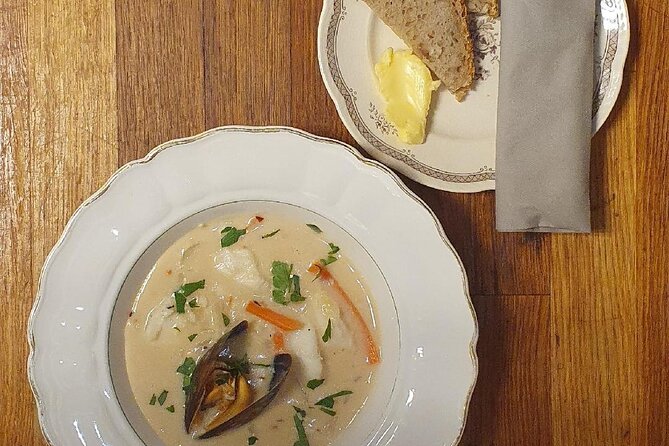
Depending on the schedule, you might taste salmon prepared in several ways, fish cakes called fiskekaker, fish soup, mackerel, or other seafood. One memorable food route included a salmon company with a restaurant attached, where the guide explained how salmon is raised in the fjords before serving several salmon bites and fish cakes.
That kind of explanation gives the tasting more meaning. You are not simply eating smoked salmon from a plate. You are hearing how a product fits into modern Norwegian food production and the country’s coastal economy.
Still, the exact salmon stop is not guaranteed. The tour can use different venues, and the food options change with the day and hour. If salmon is your main reason for booking, ask what is operating on your chosen date.
A salmon trilogy is offered as an example starter and costs about 210 Norwegian kroner per person. That is an optional purchase, not part of the tour price. A few small tastes may be enough for some people, but you should not count on leaving full.
A completely different kind of day out from Oslo:
- Oslo: Scenic Fjord Cruise with Audio Guide Commentary
★ 4.5 · 5,375 reviews - Oslo Nature Walks: Island Hopping Tour
★ 4.8 · 2,713 reviews - Oslo: 100% Electric Oslofjord Sightseeing Cruise
★ 4.4 · 2,041 reviews - Oslo: Fjord Evening Cruise with Shrimp Buffet
★ 4.5 · 1,956 reviews
City Hall and the Stories Behind the Buildings
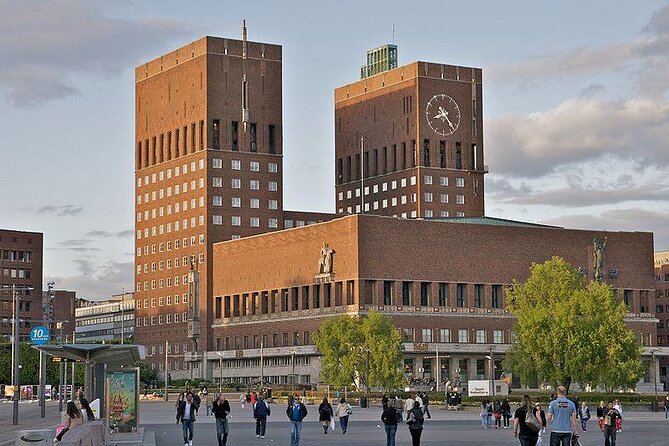
Oslo City Hall is another scheduled stop. The building is a major civic landmark, and it gives your guide a chance to explain Norwegian public life, local government, and the city’s development.
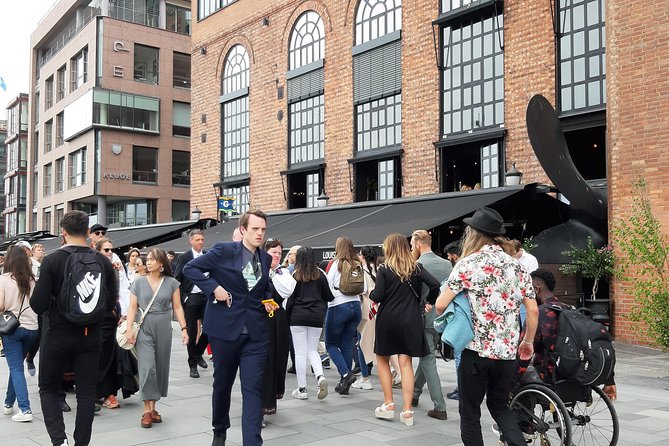
The historical commentary is strongest when it stays connected to what you are seeing. You may hear about the City Hall, the Royal Palace, the Grand Hotel, the main street, and the waterfront as the route passes through central Oslo. Some outings have included these extra landmarks even though they are not listed as formal stops.
This is where expectations matter most. The guide can provide a useful overview, but the experience is still a food walk with sightseeing, not a specialist history seminar. One less satisfied guest wanted more detail about Oslo’s past and felt the guide mostly pointed out places to visit rather than explaining them at length.
I would book this tour for a broad introduction, not for an exhaustive account of Norwegian history. You will get more from it if you ask questions as you walk. Tell the guide which subjects interest you, such as the monarchy, the harbor, medieval Oslo, modern architecture, or local food customs.
Akershus Fortress and Medieval Oslo
Akershus Castle and Fortress is the most obviously historical stop on the route. The medieval complex overlooks the harbor and helps explain why this location mattered to Oslo for centuries.
The fortress gives the walk a different mood from the Opera and Aker Brygge. Here, military history, royal power, and the old city meet the modern waterfront. Even a short visit helps you see Oslo as more than a new Scandinavian capital built around cafes and design shops.
The route does not promise a detailed interior tour of the castle. Your guide may show you the grounds and explain the site while moving through the central area. If you want extensive time inside the fortress, you should plan a separate visit.
Seeing Akershus after the waterfront works well. You get a clear visual sequence: modern Norway at the Opera, commercial and social Oslo around Aker Brygge, civic Oslo at City Hall, and medieval Norway at the fortress.
From Salmon to Sausages and Norwegian Farm Foods
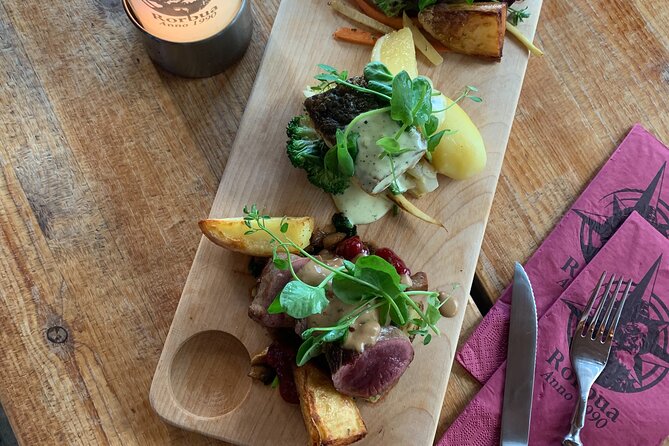
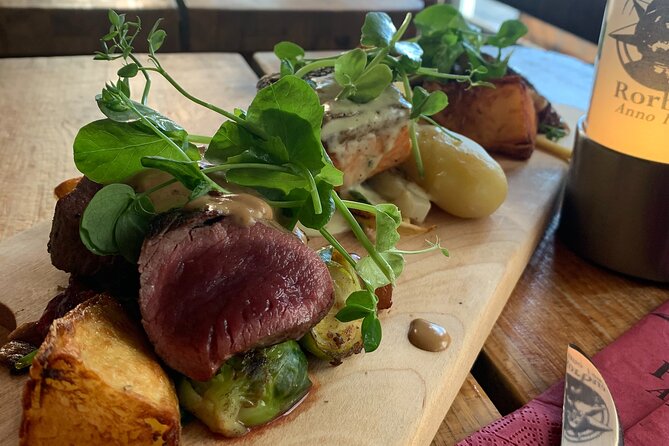
The food stops are the heart of the experience, but they vary more than the sightseeing. Possible venues include a well-known chocolate shop, gourmet supermarket, canteen, traditional pub, fish market store, or cafe.
The tastings may include:
- Smoked salmon in several preparations
- Fish cakes and seasonal fish soup
- Mackerel
- Lamb sausage and chicken sausage
- Local meats and cold cuts
- Local beer
- Coffee or tea
- Norwegian specialty foods such as mosbrømlefse
- Chocolate and other products, depending on the route
One especially varied outing included six samples of meat and fish at a commercial fish market store, including whale. Whale is a traditional product in Norway, but it is not to everyone’s taste. The important point is that the food can move beyond the familiar salmon stereotype.
Mosbrømlefse was another highlight. It combines caramelized goat cheese in a thin, crepe-like flatbread with sour cream. It is sweet, creamy, and quite different from the fish and meat samples that dominate many Norwegian food tastings.
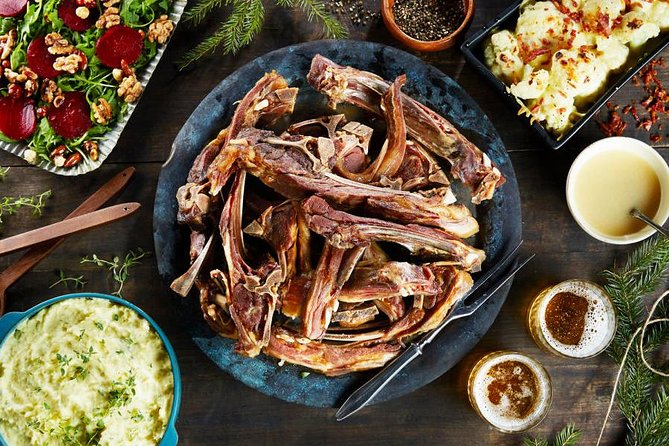
You may also encounter fenalår, a traditional cured meat, at a place called Fenaknoken. This stop has earned especially warm praise for its traditional products and helpful staff. It is also a place you can visit independently, so part of what you are paying for is the guide’s selection, explanation, and help fitting it into a larger Oslo walk.
Timing Can Change the Whole Experience
The biggest practical issue is scheduling. Tastings are limited on Sundays and on weekdays after 6 PM. Some restaurants and food venues close, so a late or Sunday tour may replace a planned stop with a smaller sample or a recommendation for you to return another day.
One Sunday outing offered only three small tastings: fish soup, a few types of smoked salmon, and thin slices of cold cuts. The food was considered authentic, but the amount felt modest for the price. A Monday tour also had fewer choices because the food market was closed.
I would choose a Saturday or a weekday before 6 PM if food is your priority. The operator has also suggested Saturday or Monday instead of Sunday in some cases, but the supplied details make clear that opening hours can change the plan. Contact the guide before booking if you have a fixed food wish.
Late tours may still work if your main aim is a city walk with some tastes. They are a poor choice if you expect access to every advertised type of venue.
Price, Extra Costs, and Real Value
The listed price is $348.18 per group of up to 10 people. That can be reasonable for a private or small-group experience, especially if you have several people sharing the base cost. The price covers a professional local guide, pickup is offered, and the tour combines a city orientation with food advice.
But the price does not include food or drinks. That detail deserves more attention than it usually gets. Every tasting, coffee, beer, or ordered dish comes from your own budget. A salmon trilogy alone is about 210 Norwegian kroner per person, and buying additional products at a market-style shop can quickly raise the bill.
The tour also does not promise a full meal. Think of it as a guided tasting walk. You may finish satisfied after several small portions, but you may also need dinner afterward.
Value depends on what you would otherwise do. If you would pay separately for a private city walk and spend time locating Norwegian specialties, this package can save effort and give you a better route. If you only want three inexpensive samples, you may find it costly.
Be clear about your budget before you start. Ask which tastings are planned, what each costs, and which stops are included as complimentary value-added offers. You never need to buy extra products at a shop.
The Guide Makes the Difference
Guide quality is central here because the tour is personal and flexible. Tanya-Lisa, also referred to as Tania in one account, receives the strongest praise. Her strengths include clear Oslo stories, warm communication, patience, restaurant suggestions, and care for people who need to rest.
She has also taken groups to an annual market that was not part of the planned route and dropped one group back at its hotel after a longer outing. Those details suggest a guide who can respond to the day rather than simply recite a fixed script.
The experience has not been perfect for everyone. One group reported repeated changes to the meeting time and location, along with commentary they felt was repetitive or inaccurate. Another group wanted more historical detail. Communication before the tour is especially important when opening hours and pickup arrangements affect the plan.
The guide may be multilingual, and the tour is offered in English. If you need a specific pace, food restriction, or meeting arrangement, state it clearly when booking and confirm it again before the start.
Who Should Book This Food Walk?
I would recommend it to first-time visitors who want to get their bearings fast while learning what Norwegians eat. It is also a good match for people who like small samples, local products, and a guide who can suggest restaurants for later meals.
It suits couples, families, and small groups who can share the cost. People with limited time may like the two-in-one format. You see several major central sights without giving up the chance to try salmon, fish soup, cured meats, sausages, or a local sweet.
I would be more cautious if you need a fully planned menu, dislike walking several miles, or want a serious lecture on medieval and modern Norwegian history. I would also avoid Sunday and late weekday departures if the food is your main goal.
Should You Book It?
Book this tour if you want a friendly introduction to Oslo that mixes landmarks, local food, and practical advice. The best outings offer a pleasing range of tastes, from salmon and fish cakes to cured meats, local beer, coffee, and mosbrømlefse, while Tanya-Lisa adds useful context and personal recommendations.
Skip it if you expect the $348.18 price to include a meal, or if you want a fixed list of generous tastings. Before paying, check the meeting place, confirm the day’s food stops, and budget separately for everything you eat and drink.
With those limits understood, this is a useful first-day tour. It gives you a feel for Oslo’s waterfront, civic center, fortress, and Scandinavian kitchen in one compact outing.
FAQ
How long does the Oslo history and food tour last?
The advertised duration is approximately three hours. One outing lasted about four hours, so allow some flexibility if the guide adds stops or the group takes its time.
What landmarks are included?
The route includes the Norwegian National Opera and Ballet, Aker Brygge, Oslo City Hall, and Akershus Castle and Fortress. Guides may also point out places such as the Royal Palace, Grand Hotel, and Oslo’s main street.
Is food included in the tour price?
No. Food and drinks are paid for separately unless a specific value-added offer is included. A salmon trilogy is given as an example and costs about 210 Norwegian kroner per person.
What food might I taste?
Possible samples include salmon, fish soup, fish cakes, mackerel, lamb sausage, chicken sausage, cured meats, local beer, coffee, chocolate, and Norwegian specialties such as mosbrømlefse. The exact selection depends on venue hours and your tour time.
Is the tour available on Sundays?
Yes, but tastings are limited on Sundays. Some restaurants and food venues may be closed, so Saturday or a weekday before 6 PM is a better choice if food variety matters most.
Is the tour suitable for people who cannot walk long distances?
The tour is a walking experience through central Oslo and may cover several miles. Most people can participate, and guides have adjusted the pace and stopped for rests, but you should mention mobility needs in advance.
Where does the tour start and finish?
The stated start is Oslo Municipality in Oslo, and the activity ends back at the meeting point. Pickup is offered, and some groups have arranged hotel pickup or drop-off.
How large is the group?
The price is stated for a group of up to 10 people. The activity information also gives a maximum of 12 participants, so confirm the expected group size if this is important to you.
Can I cancel the booking?
You can cancel up to 24 hours before the experience for a full refund. Cancellations or changes made less than 24 hours before the start time are not accepted for a refund.
More Historical Sites
- Oslo: Historic Myths & Legends Evening Walking Tour
★ 4.8 · 408 reviews - Oslo: History, Art and Secrets Tour
★ 4.7 · 62 reviews - Oslo City Walks – Historic River Walk
★ 5.0 · 31 reviews - Jewish Heritage Tour in Oslo
★ 5.0 · 16 reviews
More Food Tours
- Oslo: Food Tasting and Walking Tour with a Local
★ 4.5 · 50 reviews - 3 Hours Walking Tour for Great Food in Oslo
★ 5.0 · 32 reviews - Flavors of Oslo: Food & Beer Tour
★ 4.8 · 4 reviews - Food and Culture walk
★ 4.5 · 243 reviews
Just added around Oslo
- Visit the Instaworthy Spots of Oslo’s Vigeland Park with a Local★ 5.0 · 4 reviews
- Oslo: 3-hour Cross Country trip with equipment and guide★ 5.0 · 4 reviews
- Oslo: 2-hour Christmas Private Walking Tour★ 3.0 · 4 reviews
- Art and Museum Tour of Oslo★ 5.0 · 4 reviews
- Flavors of Oslo: Food & Beer Tour★ 4.8 · 4 reviews
- Private Transfer from Oslo City Centre to Oslo Airport★ 5.0 · 4 reviews
- 3-Hour Vattkørt Beginner Kayak Course on Oslo Fjord★ 5.0 · 4 reviews
- Hipstoric Grünerløkka Private Walking Tour★ 5.0 · 4 reviews
Food & Drink, compared.
Fjords & Beaches Tour with Campfire and Arctic Food
Read our review →
Aurora Tour with Photos, Campfire and Arctic Food
Read our review →
3 Hour Guided Food Walk Tour in Alesund, Norway
Read our review →
Geiranger Fjord Boat Tour with Waterfall Tasting
Read our review →
Browse the lists this tour appears in