
Reviewed · HISTORICAL TOURS
Oslo: History, Art and Secrets Tour
Oslo reveals itself on foot. This three to four-hour walk links the Royal Palace, waterfront, fortress, opera house, and Munch Museum while a local guide fills in the stories between them. I especially like the route’s mix of famous sights and lesser-known details, plus the chance to see Oslo from several useful viewpoints.
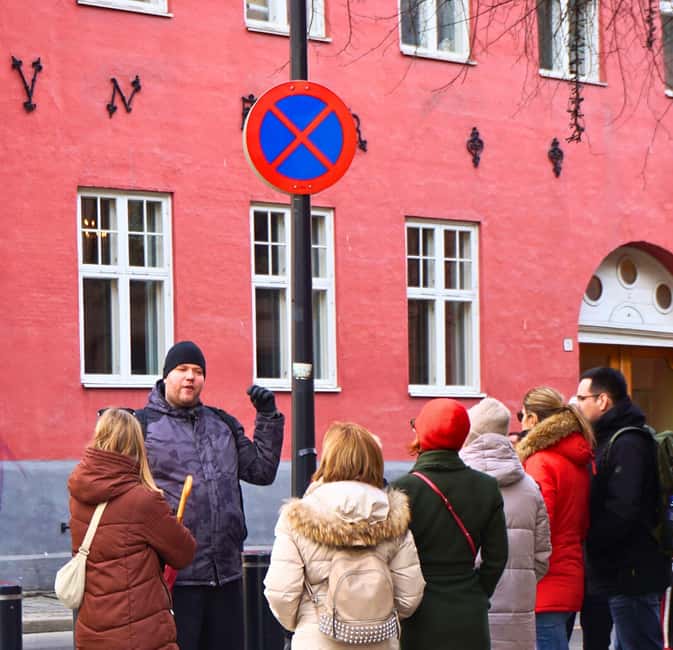
I also like the small group, limited to 10 people. Guides such as Anders, Michael, Radu, Magnus, and Luis have been praised for clear storytelling, good humor, and practical advice about restaurants and other things to do. The main drawback is the pace and terrain: you cover a large part of central Oslo, with hills and extended walking, so this is not a good fit for wheelchair users or people with mobility impairments.
In This Review
- Key points to know before booking
- Why this walking tour works well for a first day
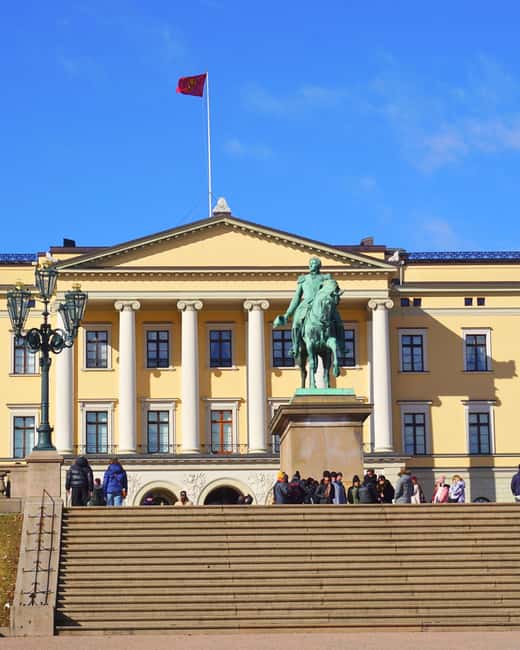
- Starting beside the Royal Palace
- Aker Brygge and the harbour views
- Oslo City Hall and Karl Johans Street
- Oslo Central Station and the practical centre
- Akershus Fortress, where the past feels close
- The Oslo Stock Exchange and the changing city
- The Opera House and Munch Museum
- The guides make the difference
- What the $41 price gets you
- Walking conditions and who should book
- Where the tour ends
- My verdict: book it for context, not museum depth
- FAQ
- How long does the Oslo History, Art and Secrets Tour last?
- How much does the tour cost?
- Where does the tour start?
- Where does the tour finish?
- What languages are available?
- How large is the group?
- Is entry to the Opera House included?
- Are museum tickets included?
- Is the tour suitable for wheelchair users?
Key points to know before booking
- A downhill route with a wide city introduction: You begin near the Royal Palace and work toward the harbour, central station, fortress, and opera house.
- A small group of up to 10: This gives you a better chance to ask questions and hear the guide clearly.
- History told through fires and rebuilding: Oslo’s repeated destruction by fire helps explain its changing streets, buildings, and identity.
- Several strong photo stops: Aker Brygge, City Hall, Akershus Fortress, the opera house, and the fjord viewpoints give you plenty to photograph.
- The Opera House is entered: This is more than an exterior photo stop, though museum admissions are not included.
- Best early in your stay: The route gives you restaurant suggestions, local tips, and a useful sense of how central Oslo fits together.
Why this walking tour works well for a first day
Oslo can feel spread out at first. The centre is compact enough to walk, but its main sights are divided among the palace district, waterfront, historic core, fortress, and newer cultural quarter. This tour ties those areas together without asking you to plan the route yourself.
The guide does more than point at buildings. The central theme is how Oslo changed over time, including the repeated fires that nearly destroyed the city. That story gives extra meaning to the mix of older stonework, grand public buildings, modern waterfront architecture, and rebuilt streets.
I would choose this tour early in a stay because it helps with orientation. You finish knowing where the Royal Palace, Karl Johans Street, Oslo Central Station, Akershus Fortress, the harbour, and the opera house sit in relation to one another. The guide may also suggest places to eat and other activities, with advice suited to different budgets.
The experience lasts three to four hours, depending on the starting time and pace. It is long enough to cover a lot, but not so long that the city walk takes up your entire day. Expect a proper walking outing rather than a short introduction.
More historical sites:
- Oslo: Historic Myths & Legends Evening Walking Tour
★ 4.8 · 408 reviews - Oslo City Walks – Historic River Walk
★ 5.0 · 31 reviews - A Well Balanced History and Food Tour with Focus on the Scandinavian Kitchen
★ 4.5 · 29 reviews
Starting beside the Royal Palace
The tour begins at the Royal Palace or in Slottsparken, depending on the option you book. This is a sensible opening point. You start in one of Oslo’s grandest settings, then head downhill toward the harbour.
The palace area gives the guide room to introduce Norway’s modern capital and its royal setting before the route moves into the city itself. Slottsparken also offers a calmer beginning than a crowded transport hub.
From here, the route winds through scenic streets. The downhill direction is helpful, but do not read that as an effortless stroll. You will still cover a broad area, and the route includes several walks between stops. Wear shoes that can handle three to four hours on city streets.
Aker Brygge and the harbour views
Aker Brygge brings you to Oslo’s waterfront. The stop includes a guided walk of about 10 minutes, giving you time to take in the harbour and the city’s connection to the Oslo Fjord.
This is one of the places where the tour’s photo focus makes sense. Open water and broad views give you a useful change from streets and facades. Your guide may also point out details that are easy to miss when you are simply walking along the waterfront.
Aker Brygge is a good early pause because it shifts the mood from palace district to modern harbour. Keep your camera ready, but listen closely too. The value here comes from linking the view with Oslo’s growth and rebuilding rather than treating the waterfront as a quick backdrop.
Oslo City Hall and Karl Johans Street
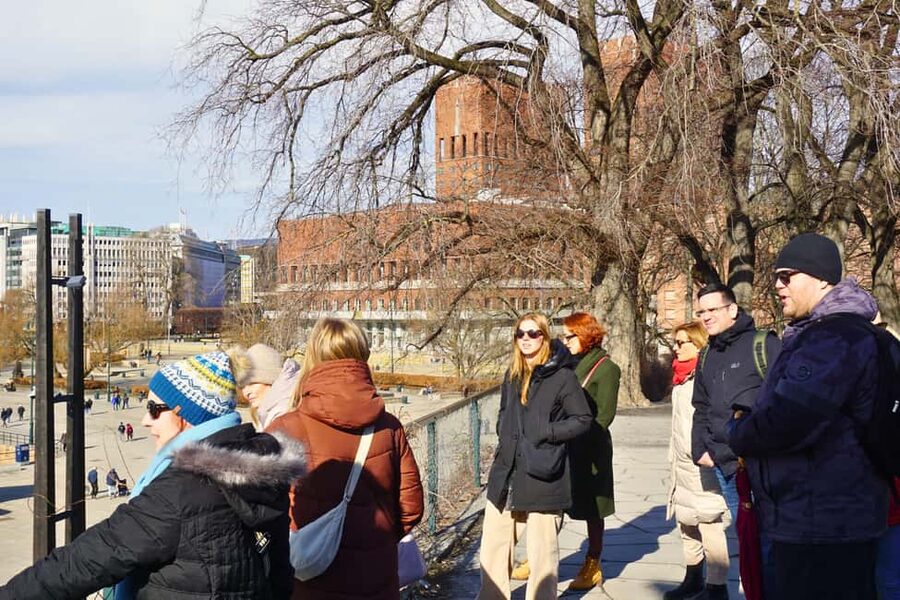
At Oslo City Hall, you get a guided sightseeing stop and about 10 minutes for photographs. The building is an important civic landmark, and the guide uses it to add context to Oslo’s public life and architecture.
The next major stretch follows Karl Johans Street, the city’s main ceremonial avenue. This stop includes a photo opportunity, guided commentary, and about 15 minutes of walking. It is a useful section for seeing how Oslo’s formal centre connects the palace area with the station and older parts of town.
The route’s strength is its comparison of spaces. The palace feels formal, the harbour feels open and modern, and Karl Johans Street gives you the capital’s central public axis. A guide can make those changes easier to understand than a map alone.
A few more trips worth weighing up
- Oslo: Scenic Fjord Cruise with Audio Guide Commentary
★ 4.5 · 5,375 reviews - Oslo Nature Walks: Island Hopping Tour
★ 4.8 · 2,713 reviews - Oslo: 100% Electric Oslofjord Sightseeing Cruise
★ 4.4 · 2,041 reviews - Oslo: Fjord Evening Cruise with Shrimp Buffet
★ 4.5 · 1,956 reviews
Oslo Central Station and the practical centre
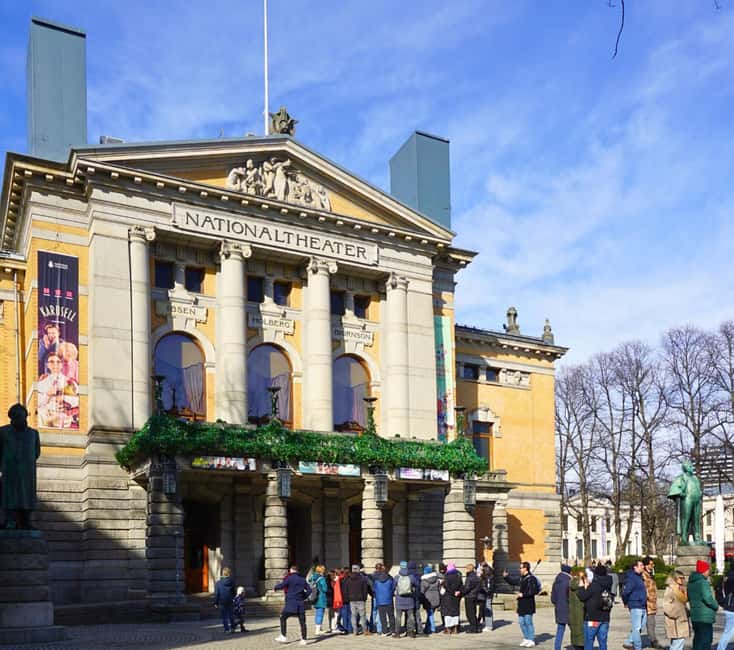
Oslo Central Station is both a sightseeing stop and a useful orientation point. You spend about 15 minutes here, with time for photos and commentary.
This part matters even if you are not taking a train. The station area is one of the main points for getting around the city, and the tour ends at Oslo Central Station for some departures. Seeing it during the walk helps you recognize the area later.
The station also marks a change in the route. You have moved from the palace and ceremonial centre toward the older fortress district and newer cultural buildings. The guide’s broader account of fires and reconstruction helps connect these very different parts of Oslo.
Akershus Fortress, where the past feels close
Akershus Fortress is one of the most important stops on the route. You get about 15 minutes of walking, sightseeing, and guided explanation, along with time for photographs.
The fortress gives the tour a stronger sense of Oslo’s medieval origins. Its position near the harbour also makes the city’s defensive past easier to picture. You are not simply hearing about an old site in isolation. You can see how its location relates to the waterfront and the modern city around it.
Do not expect a full museum visit here. The tour includes outdoor sightseeing, but museum entry tickets are not included. If you want a more detailed look inside paid museums, plan that separately and allow extra time after the walk.
The Oslo Stock Exchange and the changing city
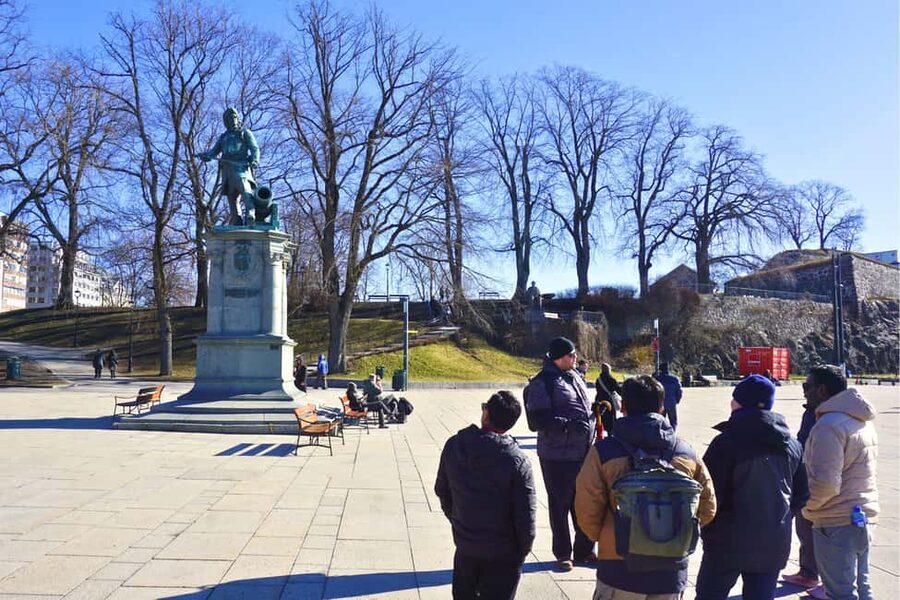
The Oslo Stock Exchange is another short stop, with about 15 minutes for photos and commentary. It may not be the first sight you would choose on your own, which is exactly why it earns a place on a city-history walk.
Here, the guide can show how commerce fits into Oslo’s central streets and how the city has changed from its older trading and defensive roots to a modern capital. The stop also breaks up the more obvious attractions, giving the route a broader view of urban life.
This is a good example of what you are paying for. You could walk past many buildings yourself, but you might not know which ones help explain Oslo. The guide gives the ordinary city centre a story.
The Opera House and Munch Museum
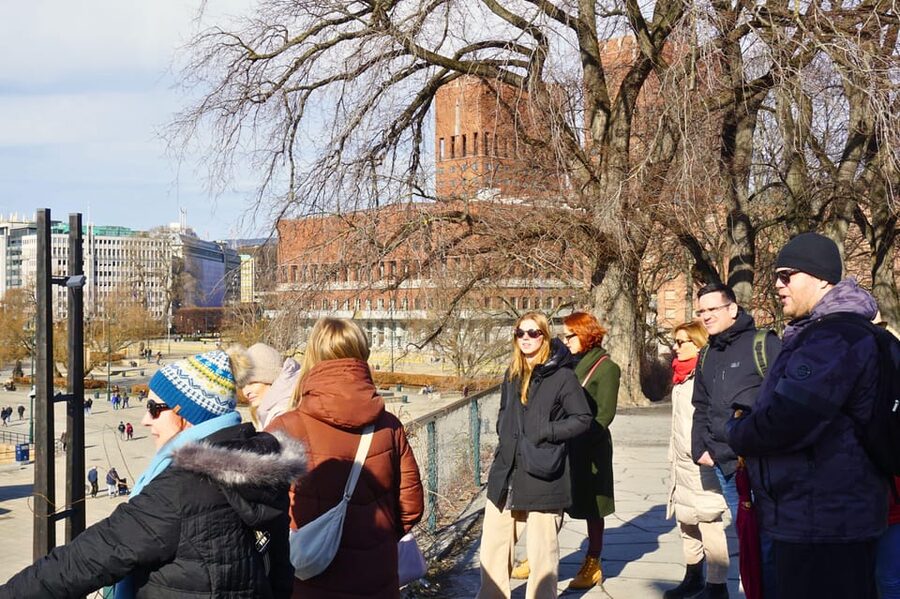
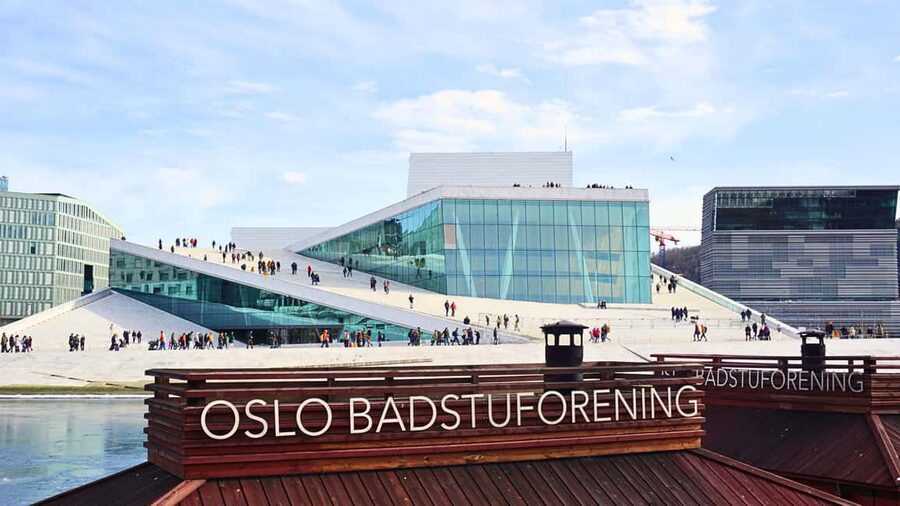
The Oslo Opera House is one of the route’s most enjoyable modern stops. You get about 15 minutes for a break, photographs, a visit, and guided commentary. Entry into the Opera House is included, while paid museum tickets elsewhere are not.
The building is especially useful for photographs because the experience is not limited to looking at it from across the street. You get to enter and experience the space as part of the tour. The stop also gives you a pause after several historic and civic sights.
The Munch Museum follows as another photo and sightseeing stop, with about 15 minutes of guided attention. This connects the walking route to Oslo’s art scene without turning the experience into a museum tour. If you want to see the collections inside, you will need to buy a separate admission ticket.
That distinction is important. This tour introduces Oslo’s art and architecture, but it does not replace a dedicated museum visit. If Edvard Munch is a main reason for your visit, reserve more time for the museum itself.
The guides make the difference
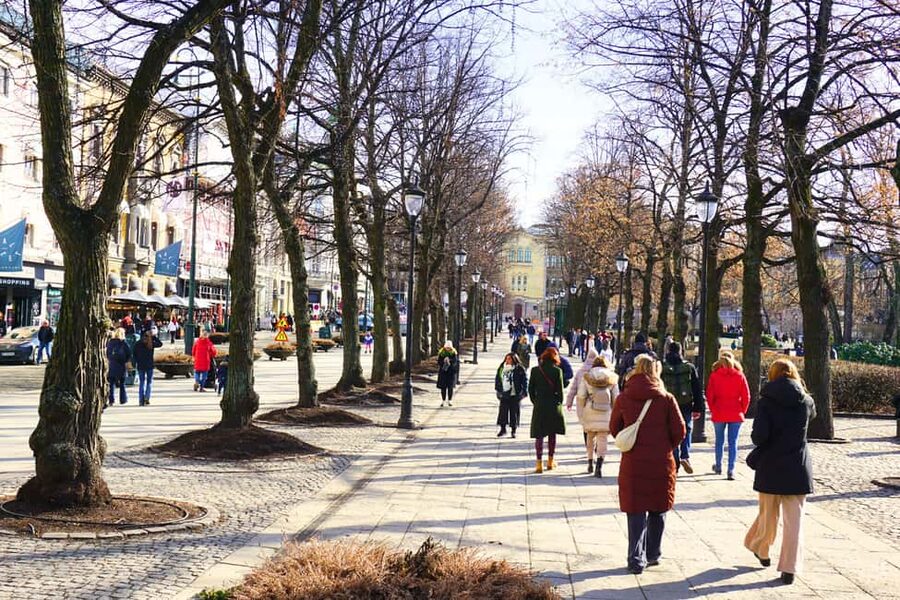
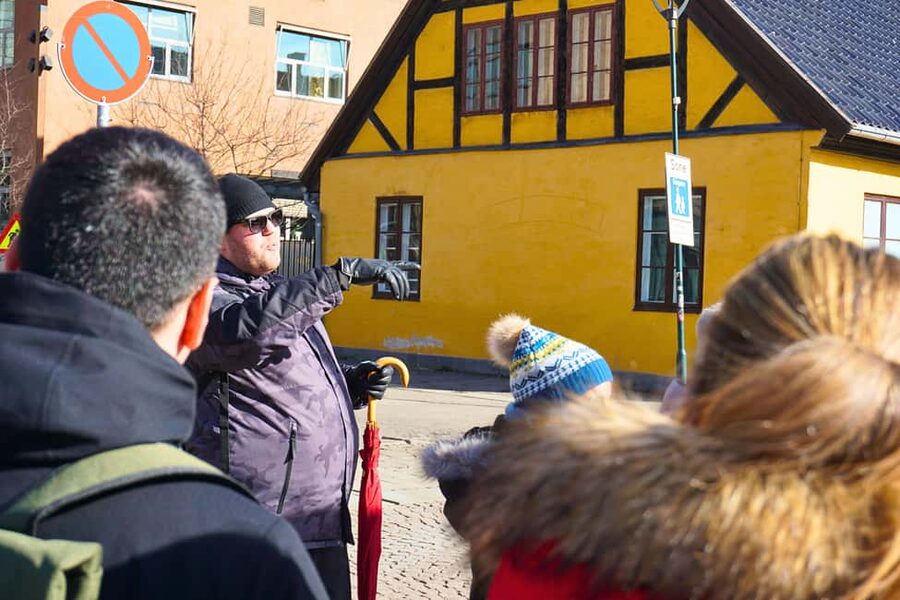
The strongest part of this experience is the human side. Anders is praised for combining serious history with humor, making time for slower walkers, answering questions, taking photographs for solo participants, and suggesting restaurants. One group also appreciated a short coffee and water break during the walk.
Anders is not the only guide named in the feedback. Michael received praise for his grasp of architecture and city history. Radu was credited with covering many of Oslo’s best sights, while Magnus led a relaxed walk. Luis also received thanks for making the experience memorable.
The guide language options are English, German, Spanish, and Italian. Since the tour is capped at 10 people, the atmosphere should be more personal than a large city group. A small group also helps when the guide is explaining a detail beside a busy street or answering individual questions.
The style is not purely academic. You will hear anecdotes and secrets alongside dates and buildings. A Christmas cookie was even given to one participant, a small touch that suggests the guides can be warm and personal rather than simply following a script.
What the $41 price gets you
At $41 per person, this is a reasonable price if you want a guided introduction to central Oslo rather than a brief landmark walk. You are paying for three to four hours with a local guide, a small group, scenic viewpoints, and entry into the Opera House.
The value is strongest for first-time visitors. You get a route that would take planning to reproduce, plus background on why the city looks the way it does. Restaurant suggestions and local tips can also save you time later.
The price does not include museum admissions. That keeps the base cost lower, but you should budget separately if you want to enter the Munch Museum or other museums. The tour is best viewed as an orientation and storytelling experience, not an all-inclusive art pass.
A full refund is available when you cancel at least 24 hours ahead, and you can reserve now and pay later. Those terms are useful if your Oslo schedule is still shifting.
Walking conditions and who should book
Bring comfortable shoes, water, a camera, and clothing suited to the weather. Oslo’s conditions can change, and the tour is outdoors for much of its duration.
The route covers a large part of the centre. It begins near the palace, heads downhill toward the harbour, then continues through the station, fortress, exchange, opera house, and Munch Museum area. Even with stops and a possible break, you should expect sustained walking.
This experience suits you if you enjoy learning through stories, want a broad first look at Oslo, and prefer a guide who can answer questions. It is also a good choice for solo visitors, since the guide may help with photographs and the small group makes it easier to connect with others.
It is less suitable if you want a slow museum visit, a short stroll, or a fully accessible route. The activity is not suitable for wheelchair users or people with mobility impairments. If you walk slowly, tell the guide at the start. Anders, in particular, has been praised for allowing slower walkers time to keep up and hear the commentary.
Where the tour ends
Depending on the option booked, the tour can finish at Oslo Central Station, The Broker, or the Royal Palace. Check your selected option carefully because the meeting point may vary as well.
Ending near the station is handy if you have a train, need to connect with public transport, or want to continue exploring central Oslo. A Royal Palace finish works well if you plan to revisit Slottsparken or continue along Karl Johans Street.
Because the activity ends back at the meeting point, plan your next stop with that location in mind. The route is broad, but it remains focused on central Oslo.
My verdict: book it for context, not museum depth
I would book the Oslo: History, Art and Secrets Tour if I had three to four hours free near the beginning of a city stay. The mix of palace, harbour, fortress, public buildings, modern art, viewpoints, and local anecdotes gives you a useful map of Oslo’s centre.
Book it especially if you value a guide who can explain architecture, answer questions, take photographs, and recommend places to eat. The strong 4.7 rating from 62 reviews fits the experience described by the named guides: informative, friendly, relaxed, and often funny.
Skip it if you need wheelchair access, dislike extended walking, or want long visits inside museums. For most first-time visitors who can handle the distance, $41 is fair value for a small-group introduction that gives Oslo much more shape and meaning.
FAQ
How long does the Oslo History, Art and Secrets Tour last?
The tour lasts three to four hours. Starting times vary, so check availability when selecting your date.
How much does the tour cost?
The price is $41 per person.
Where does the tour start?
The starting point may vary by booking option. The listed starting location is the Royal Palace or Slottsparken.
Where does the tour finish?
Possible ending locations are Oslo Central Station, The Broker, or the Royal Palace. The exact ending point depends on the option booked.
What languages are available?
The live guide may conduct the tour in English, German, Spanish, or Italian.
How large is the group?
The tour is a small-group activity limited to 10 participants.
Is entry to the Opera House included?
Yes. Entering the Opera House is included in the tour.
Are museum tickets included?
No. Entry tickets to museums are not included.
Is the tour suitable for wheelchair users?
No. The activity is not suitable for wheelchair users or people with mobility impairments.
Just added around Oslo
- Oslo: 3-hour Cross Country trip with equipment and guide★ 5.0 · 4 reviews
- Visit the Instaworthy Spots of Oslo’s Vigeland Park with a Local★ 5.0 · 4 reviews
- Oslo: 2-hour Christmas Private Walking Tour★ 3.0 · 4 reviews
- Art and Museum Tour of Oslo★ 5.0 · 4 reviews
- Flavors of Oslo: Food & Beer Tour★ 4.8 · 4 reviews
- Private Transfer from Oslo City Centre to Oslo Airport★ 5.0 · 4 reviews
- 3-Hour Vattkørt Beginner Kayak Course on Oslo Fjord★ 5.0 · 4 reviews
- Hipstoric Grünerløkka Private Walking Tour★ 5.0 · 4 reviews
Historical Tours, compared.

Reindeer Camp and Sami Cultural Tour with Lunch
Read our review →

Sightseeing Cruise of Bergen’s Historic Landmarks
Read our review →

A Well Balanced History and Food Tour with Focus on the Scandinavian Kitchen
Read our review →Browse the lists this tour appears in