
Reviewed · WALKING TOURS
Oslo City Walks – Historic River Walk
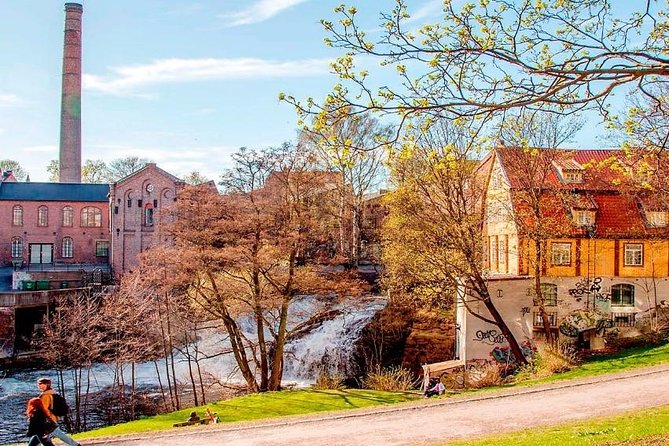
Oslo’s river has a story to tell. This two-hour walk follows the Akerselva through the city’s green corridor, linking old factories, modern cafés, art spaces, and a lively food hall. I like the clear focus on Oslo’s industrial transformation, and I like that the route ends at a dramatic waterfall rather than simply returning to the starting point. The main consideration is value: at $53.28 per person, you are paying for the guide and interpretation, not a meal or hotel transfer.
The walk begins in central Oslo and finishes near Beierbrua, so you should be ready to make your own way back afterward. It also runs in all weather, and the operator asks for moderate physical fitness, making good shoes and weatherproof clothing sensible choices.
In This Review
- Key points at a glance
- Following Akerselva from central Oslo
- Akerselva Miljopark and Oslo’s industrial past
- Mathallen, a 15-minute taste of Oslo
- Ending at Beierbrua’s waterfall
- What the $53.28 price really buys
- Who will enjoy this riverside walk
- Timing, group size, and practical planning
- Should you book the Historic River Walk?
- FAQ
- How long is the Historic River Walk?
- Where does the tour begin?
- What time does the tour start?
- Where does the tour end?
- Is food included at Mathallen?
- Is the tour available in English?
Key points at a glance
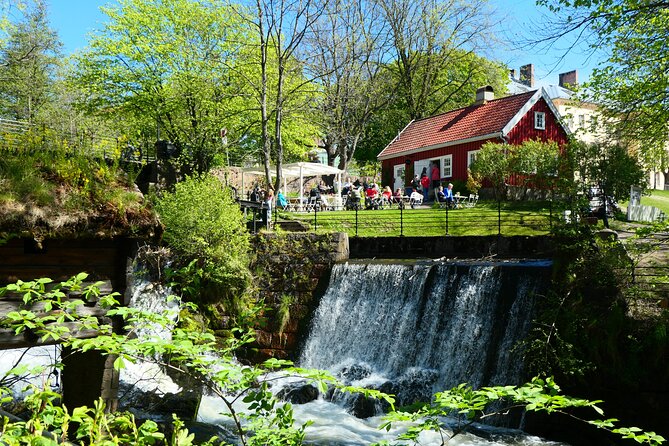
- Akerselva tells Oslo’s east-west story: The river has long helped divide the city socially and geographically, while also powering its industrial growth.
- The route shows old industry in a new role: Former industrial buildings now hold cafés, galleries, and public spaces.
- Mathallen adds a useful food stop: You get about 15 minutes at Oslo’s gourmet food hall, with Norwegian and international food available to buy separately.
- The finish is a waterfall at Beierbrua: The walk ends beside a striking riverside feature, not at a generic city street.
- The small group limit matters: The maximum is 20 people, a manageable size for a walking guide.
- The timing suits an afternoon in Oslo: The tour starts at 2 pm and runs for about two hours.
Following Akerselva from central Oslo
You meet your guide at the Oslo Visitor Center at Jernbanetorget 1, close to the main rail and transit hub. That location is practical if you are arriving by train, using public transportation, or spending the morning around central Oslo.
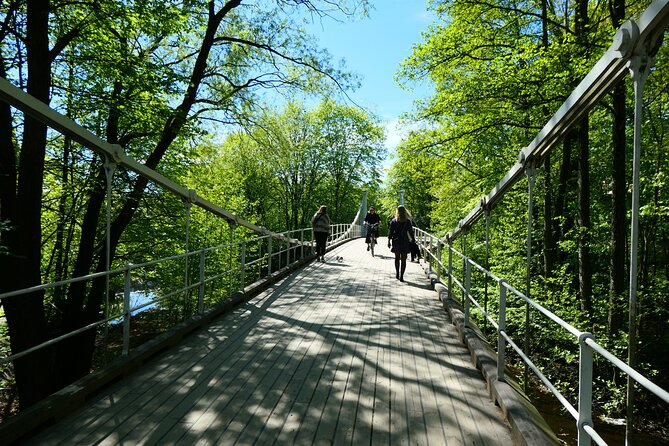
From there, the walk heads toward Akerselva Miljopark. The river is more than a pleasant strip of water through town. It is presented as Oslo’s Green Lung, a long outdoor corridor that brings trees, walking paths, water, and open space into the urban setting.
I like this starting point because it gives you a different way to understand Oslo. Instead of treating the city as a collection of grand buildings and museums, the walk uses the river as its organizing line. You see how water shaped work, neighborhoods, and later recreation.
The route also explores the river’s role as a dividing line between east and west Oslo. That idea gives the walk some useful social and geographic context. You are not simply looking at scenery. You are learning why this particular waterway matters to the city.
More Walking Tours in Oslo
- Oslo: Best of Oslo Walking Tour
★ 4.5 · 458 reviews - Oslo: Guided Walking Tour of Central Oslo
★ 4.7 · 438 reviews - Oslo: Historic Myths & Legends Evening Walking Tour
★ 4.8 · 408 reviews
Akerselva Miljopark and Oslo’s industrial past
The main portion of the experience takes place along Akerselva Miljopark and lasts about one hour. Your guide explains how the river became a hub of Oslo’s industrialization, then points out how the riverside has changed for modern city life.
The appeal is in that contrast. Industrial buildings and working infrastructure have not simply vanished from the story. Instead, the area has been transformed into a public space lined with cafés, galleries, and places to walk. The result is a route where the past and present sit close together.
I find this more useful than a sightseeing walk that only points out attractive façades. You get a reason for the buildings and the river’s importance. The setting also gives you a chance to see how a city can reuse older industrial areas rather than leaving them disconnected from daily life.
The river itself helps keep the walk varied. You move through an area described as Oslo’s green corridor, with water and riverside surroundings replacing the traffic of the central streets. The walk is still urban, but it offers a calmer change of pace.
Keep the physical demands in mind. The tour lasts only around two hours, but you are walking outdoors for most of that time. The operator recommends a moderate level of physical fitness, and the experience runs in all weather. Wear shoes you can walk in comfortably, and dress for the forecast rather than hoping Norwegian weather will show mercy.
The maximum group size is 20 people. That is not a private tour, but it is small enough to keep the route reasonably personal. If you want to ask about the river, industrial buildings, or the city’s east-west divide, a group of this size should make it easier to hear the guide than on a large coach excursion.
Mathallen, a 15-minute taste of Oslo
The walk pauses at Mathallen Oslo for about 15 minutes. The food hall occupies an old industrial building, so it continues the main theme of the tour: older working spaces given a new public purpose.
Mathallen is a gourmet food court with Norwegian and international offerings. You can use the stop to buy a bite or sample a local specialty, but food is not included in the tour price. The pause also serves as the toilet stop, which is a small but useful detail during an outdoor walk.
Fifteen minutes is enough for a quick look or a modest snack, but it is not enough for a leisurely meal. I would treat Mathallen as an introduction, not the main food experience. If you want to browse several stalls or sit down for a full lunch, plan to return another time.
This stop adds value because it connects the history lesson with present-day Oslo. The old industrial setting is not presented as a museum piece. It is now part of the city’s food culture, with Norwegian products alongside international choices.
You should also budget for anything you eat. The $53.28 price covers the guide, while food and other personal purchases are extra. That makes the tour a better fit for someone who wants context and a guided route, rather than someone mainly looking for a food tour.
Ending at Beierbrua’s waterfall
After Mathallen, the walk continues toward Beierbrua. The endpoint is a bridge over a spectacular waterfall, and the tour finishes there.
This is a strong choice for the final stop. A waterfall gives the walk a clear visual finish and makes the route feel like a journey through the river corridor. You are not simply told about Akerselva’s importance. You end beside one of its most memorable features.
The supplied details do not specify the exact return directions from Beierbrua, so plan to continue independently once the tour ends. The endpoint is in the 0459 area, away from the starting point at Jernbanetorget. Check your onward route before the walk, especially if you have a dinner reservation or another timed activity.
The finish also affects how you should schedule the rest of your day. Since the tour starts at 2 pm and lasts about two hours, you will likely finish in the late afternoon. Mathallen may be worth revisiting afterward if you want more time to eat, but the tour itself only allows a short stop there.
More historical sites:
- Oslo: History, Art and Secrets Tour
★ 4.7 · 62 reviews - A Well Balanced History and Food Tour with Focus on the Scandinavian Kitchen
★ 4.5 · 29 reviews - Jewish Heritage Tour in Oslo
★ 5.0 · 16 reviews - Downtown Oslo: Self-Guided Highlights and History Audio Tour
★ 4.0 · 10 reviews
What the $53.28 price really buys
At $53.28 per person, this is not a low-cost way to take a riverside stroll. You can walk around Oslo independently, and there is no admission ticket listed for Akerselva Miljopark or Mathallen.
The value comes from the guide’s interpretation. You are paying to connect the river, Oslo’s industrial growth, the city’s east-west division, the reuse of old buildings, and the modern outdoor spaces along the water. If those links would be easy for you to miss on your own, the price can be reasonable.
The tour also saves you the work of planning a sensible route from central Oslo to the river, Mathallen, and Beierbrua. That matters during a short city break, when a guided walk can help you see more without studying maps first.
Food is not included, and neither is hotel pickup or drop-off. The experience is best judged as a guided city walk with a food-hall pause, not as a full meal outing or a transportation package.
The rating is strong, at 4.8 out of 5 from 31 ratings, with 94 percent recommending it. The most praised quality is the straightforward pleasure of walking beside the river while learning how Oslo’s industrial past has been adapted for modern life. One particularly useful description calls it a short, pleasant route with a clear lesson about transformed buildings, which is exactly the kind of expectation you should bring.
Who will enjoy this riverside walk
I would recommend this experience to you if you want history in a relaxed outdoor setting. It suits people who prefer seeing a city through its working past, public spaces, and neighborhood changes rather than spending another afternoon inside formal museums.
It also works well for a first visit to Oslo. The meeting point is central, the route introduces an important part of the city, and the guide gives you a framework for understanding areas you may later explore on your own.
Food-minded visitors may like the Mathallen stop, provided they understand its limits. You can taste Norwegian or international food there, but the 15-minute pause is brief and purchases are separate.
Families can join, but children must be accompanied by an adult. You should also think about the walking requirement and the all-weather policy before booking for younger children.
This is less suitable if you want a fully accessible, slow-paced outing with guaranteed shelter. The physical fitness requirement is moderate, the route is outdoors, and the experience continues even in poor weather. The available information does not provide detailed accessibility specifications, so anyone with specific mobility needs should confirm the route directly with Oslo Guidebureau before booking.
Timing, group size, and practical planning
The tour begins at 2 pm at the Oslo Visitor Center. Arrive with enough time to find Jernbanetorget and locate the meeting point without rushing. The central location is convenient, but major transport hubs can be busy.
The experience lasts approximately two hours. The timing includes about one hour at Akerselva Miljopark, around 15 minutes at Mathallen, and the remaining time walking toward the waterfall at Beierbrua.
A mobile ticket is provided, and the tour is offered in English. Confirmation arrives when you book, which is useful if you are fitting this into a tightly planned Oslo stay.
The tour is often reserved about 39 days ahead. That does not mean you must book that early, but it suggests you should not leave it until the last minute if your schedule is fixed. The group limit of 20 also gives you a reason to reserve ahead during busy periods.
Service animals are allowed, and the route is near public transportation. Hotel pickup and drop-off are not included, so you handle transportation to the start and from the finish.
Free cancellation is available if you cancel at least 24 hours before the local start time. Changes or cancellations made inside that window are not accepted for a refund.
Should you book the Historic River Walk?
Book it if you want a guided look at Oslo’s industrial transformation, enjoy walking outdoors, and like the idea of ending beside a waterfall. The best part is the connection between the river’s working past and its current role as a green public corridor with cafés, galleries, and food spaces.
Skip it if you mainly want a long meal at Mathallen, a private tour, or a short sightseeing ride. The food stop is only about 15 minutes, and the $53.28 cost makes sense only if the guide’s local context is important to you.
For many first-time visitors, this is a useful two-hour introduction to a less obvious side of Oslo. Bring comfortable shoes, dress for changing weather, and make a plan for getting back from Beierbrua. With those details handled, you can focus on the river, the old industrial buildings, and the city story running along the water.
FAQ
How long is the Historic River Walk?
The walk lasts approximately two hours.
Where does the tour begin?
It begins at the Oslo Visitor Center, Jernbanetorget 1, 0154 Oslo, Norway.
What time does the tour start?
The tour starts at 2 pm.
Where does the tour end?
It ends at Beierbrua, near a spectacular waterfall.
Is food included at Mathallen?
No. Food is not included, but you can buy Norwegian and international offerings at Mathallen.
Is the tour available in English?
Yes. The tour is offered in English and includes a guide.
Just added around Oslo
- Oslo: 3-hour Cross Country trip with equipment and guide★ 5.0 · 4 reviews
- Visit the Instaworthy Spots of Oslo’s Vigeland Park with a Local★ 5.0 · 4 reviews
- Art and Museum Tour of Oslo★ 5.0 · 4 reviews
- Oslo: 2-hour Christmas Private Walking Tour★ 3.0 · 4 reviews
- Flavors of Oslo: Food & Beer Tour★ 4.8 · 4 reviews
- Private Transfer from Oslo City Centre to Oslo Airport★ 5.0 · 4 reviews
- 3-Hour Vattkørt Beginner Kayak Course on Oslo Fjord★ 5.0 · 4 reviews
- Hipstoric Grünerløkka Private Walking Tour★ 5.0 · 4 reviews
Walking Tours, compared.
Past & Present Small Group Guided Walking Tour
Read our review →
Walking Tour in Bergen of the Past and Present
Read our review →

Browse the lists this tour appears in