

Reviewed · WALKING TOURS
Central Oslo Guided Walking Tour with Local Guide
Oslo reveals itself on foot. This two-hour central Oslo walk links the city’s major sights with local stories, from the Tiger sculpture to the Royal Palace, making it a useful first look at Norway’s capital. I especially like the low price and the way the route connects history, architecture, politics, and waterfront life.
The tour also earns praise for its friendly guides, including Suzanne, Alexia, Marta, Kamil, and Daniel. Their humor and practical tips help bring the city to life. The main catch is that you do not go inside the buildings, and the route covers several city blocks, so comfortable shoes and reasonable walking ability matter.
In This Review
- Key points to know before booking
- Why this walk works well on your first day
- Starting with the Tiger at Jernbanetorget
- The Opera House and Oslo’s modern waterfront
- Rådhusgata and the older city center
- Akershus Fortress: Oslo’s medieval stronghold
- Oslo City Hall and the Nobel Peace Prize connection
- Oslo Cathedral and Karl Johans gate
- Aker Brygge and the harbor district
- The Norwegian Parliament and the final palace view
- Guides, group size, and the feel of the walk
- Is $16.94 good value?
- Who should book this Oslo walk?
- Should you book it?
- FAQ
- How long does the Central Oslo Guided Walking Tour last?
- How much does the tour cost?
- Where does the tour begin?
- Where does the tour end?
- What language is the tour offered in?
- Is admission to Akershus Fortress included?
- Does the tour enter the Opera House or Royal Palace?
- What sights are included on the route?
- How large can the group be?
- Can I cancel for a full refund?
Key points to know before booking
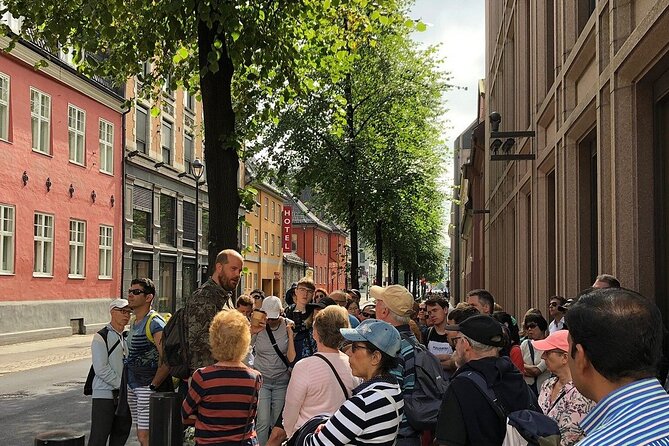
- The Tiger starts the story: Meet at Oslo Central Station and learn why Oslo is called the Tiger City.
- Akershus Fortress is viewed from the outside: You see this medieval stronghold, but admission to its museum is not included.
- The route covers central Oslo efficiently: Expect the Opera House, City Hall, Cathedral, Parliament, Aker Brygge, and the Royal Palace.
- Guides are the tour’s biggest strength: Suzanne, Alexia, Marta, Kamil, and Daniel are praised for clear explanations, humor, and helpful local advice.
- The pace is generally manageable: Most people describe the walk as easy or leisurely, but it still covers many blocks.
- At $16.94, it is a strong orientation tour: You are paying for context and direction, not entry tickets or a specialist museum experience.
Why this walk works well on your first day
A good city walk should answer three questions quickly: Where am I? What matters here? What should I return to later? This Oslo tour does that in about two hours.
You begin at Jernbanetorget, the square by Oslo Central Station, and finish at Slottsplassen in front of the Royal Palace. That east-to-west route gives you a useful mental map of central Oslo. You pass the waterfront, old streets, civic buildings, shopping areas, and royal district without spending time on long transfers.
I like this format for a first morning or afternoon in the city. You can note places for a later visit, such as the Opera House, Akershus Fortress, Oslo Cathedral, or Aker Brygge. The guide also adds the historical links between Norway, Denmark, and Sweden, which helps explain why Oslo’s story is not just a local one.
The tour has a rating of 4.7 from 278 reviews, with 94 percent recommending it. That is a strong record, though one important warning appears in the feedback: the quality depends partly on the guide assigned to your group. Most guides are praised for humor and clear storytelling, but one participant found the commentary too surface-level.
More Walking Tours in Oslo
- Oslo: Best of Oslo Walking Tour
★ 4.5 · 458 reviews - Oslo: Guided Walking Tour of Central Oslo
★ 4.7 · 438 reviews - Oslo: Historic Myths & Legends Evening Walking Tour
★ 4.8 · 408 reviews
Starting with the Tiger at Jernbanetorget
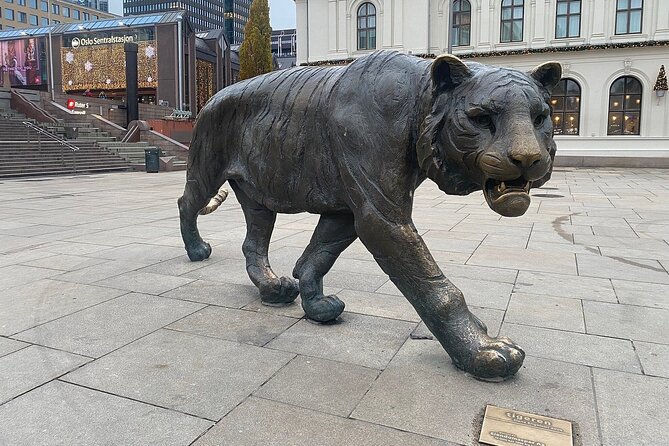
The meeting point is the Tiger sculpture at Jernbanetorget, address 0154 Oslo. This is a practical place to begin because it is beside Oslo Central Station and near public transportation.
The bronze Tiger was erected in 2000 for Oslo’s millennium celebration. It represents Oslo’s nickname, the Tiger City. The image comes from a famous poem that compared the city to a dangerous tiger, while the countryside was pictured as a gentler horse. Your guide uses the sculpture as a quick introduction to Oslo’s identity and urban character.
You spend about 10 minutes here, with no admission charge. It is also a sensible meeting point for a mobile-ticket tour because the square is easy to locate. Arrive with your confirmation ready on your phone, and keep an eye out for the exact sculpture among the station traffic.
From here, the walk moves toward the waterfront and the Oslo Opera House. The route begins in modern Oslo rather than with a long historical lecture, which keeps the opening lively.
The Opera House and Oslo’s modern waterfront
The Oslo Opera House is one of the city’s most recognizable pieces of contemporary architecture. Completed in 2008, it is home to the Norwegian National Opera and Ballet and sits directly by the water.
The building’s design is meant to feel accessible rather than sealed off. Its broad, sloping exterior has made it a major public meeting place as well as a performance venue. On a walking tour, the Opera House gives you a clear sense of how Oslo has reshaped its waterfront in recent decades.
This is one of the stops where the guide’s explanation matters more than simply taking a photograph. You learn how the building fits into Oslo’s newer architectural identity and how the waterfront differs from the older streets farther inland.
Do not expect a performance or an interior visit. The tour price covers the guided walk only, and the information specifically excludes visits inside buildings. You can admire the exterior and decide later if you want to return for a closer look.
Rådhusgata and the older city center
Rådhusgata offers a change of mood. This historic street dates from the 1620s and leads toward Oslo City Hall. It helps connect modern Oslo with the older city that developed after earlier parts of Oslo were destroyed and the center was rebuilt farther west.
The stop lasts about 10 minutes and is free. Rather than treating the street as a quick passage, a good guide uses it to explain the city’s growth, architecture, and changing role as Norway’s capital.
This is also where the tour benefits from a conversational guide. Alexia is praised for mixing history with Norwegian culture, while Marta is described as friendly and clear. The best commentary on this stretch will give you a few memorable details without turning the walk into a classroom.
A completely different kind of day out from Oslo:
- Oslo: Scenic Fjord Cruise with Audio Guide Commentary
★ 4.5 · 5,375 reviews - Oslo Nature Walks: Island Hopping Tour
★ 4.8 · 2,713 reviews - Oslo: 100% Electric Oslofjord Sightseeing Cruise
★ 4.4 · 2,041 reviews - Oslo: Fjord Evening Cruise with Shrimp Buffet
★ 4.5 · 1,956 reviews
Akershus Fortress: Oslo’s medieval stronghold
Akershus Fortress is one of the most important historical sights on the route. Built around 1299, it was designed to protect Oslo from invasion. Over the centuries, it served as a military base and prison, and it now functions as a museum and historic site.
The fortress is a strong visual reminder that Oslo was not always the peaceful, modern capital you see today. Its location beside the harbor also explains its military importance. From the surrounding area, you can better understand how the city’s defenses controlled access by water.
Here is an important booking detail: the tour does not include entry inside any building. Although the fortress is described as a museum and historic site, this experience takes you to the area for an exterior visit and explanation. If you want to explore the museum rooms, you will need to arrange that separately.
For many people, this is enough for a first look. If medieval buildings are a main reason for your Oslo visit, plan a separate return visit rather than assuming the walking tour includes admission.
Oslo City Hall and the Nobel Peace Prize connection
The walk continues to Oslo City Hall, where you spend roughly 15 minutes. Built between 1931 and 1950, the red-brick building is an important symbol of Norwegian public life and civic ideals.
City Hall is best known internationally as the place where the Nobel Peace Prize ceremony is held each year. That connection gives the stop more weight than a simple photo opportunity. Your guide can explain why Oslo, rather than Stockholm, hosts this particular Nobel ceremony and place the building within Norway’s political and cultural life.
The tour does not include an interior visit, but the outside is still worth careful attention. City Hall’s design is bold and somewhat stern, especially compared with the modern Opera House. Seeing both on the same walk gives you a quick lesson in Oslo’s changing architectural tastes.
One small issue is that a portable speaker may be needed when the group is large or city noise is high. Several people found the guides easy to hear, but one person said a guide spoke quickly and was sometimes hard to understand despite using a microphone. Stay near the guide when possible.
Oslo Cathedral and Karl Johans gate
Oslo Cathedral dates from 1697 and is known for its Baroque design. It has been renovated several times, especially during the 20th century, and remains both a religious building and an important part of the city center.
The cathedral adds an older, more intimate stop after the scale of City Hall. You get a sense of how religion, public life, and architecture have overlapped in Oslo for centuries. Again, the experience is an exterior visit, not a guided tour inside the church.
Next comes Karl Johans gate, Oslo’s main street. It runs between Oslo Central Station and the Royal Palace, passing shops, restaurants, historic buildings, and cultural sights along the way.
This is the city’s main ceremonial and everyday axis. Walking it helps you understand how Oslo’s center is organized. The street is not just a shopping route. It links the monarchy, Parliament, cathedral, station, and much of the city’s public life.
The guide may also use this stretch to explain Norway’s relationship with Denmark and Sweden. Several people found those national rivalries especially helpful because they clarified the political background behind modern Norway.
Aker Brygge and the harbor district
Aker Brygge is the tour’s most contemporary urban stop. The area began as a shipyard in 1854 and was transformed into a shopping, dining, and entertainment district in the 1980s.
The contrast with Akershus Fortress is useful. In a short distance, you move from medieval defense walls to a redeveloped harbor lined with restaurants and shops. This shows how Oslo has shifted from a working port and industrial center toward a waterfront city designed for public use and leisure.
Aker Brygge is a good place to mark for a later meal or casual stroll. The tour does not include food or shopping, so you will have only a short introduction rather than time to browse. Still, the guide can point out how this part of the waterfront fits into the wider center.
If you prefer old streets and museums to modern development, this may be less memorable than the fortress or cathedral. I see it as a useful piece of the city puzzle rather than the historical high point of the walk.
The Norwegian Parliament and the final palace view
The Storting building is the home of Norway’s Parliament. Built between 1861 and 1866, it represents the country’s legislative system and democratic ideals.
A guide can make this stop much more meaningful than a quick exterior photograph. Look for an explanation of Norway’s political structure and how Parliament fits into national life. The building also adds another layer to the route: royal power, religious history, civic government, and public culture all appear within a compact central area.
The walk finishes at Slottsplassen, the square in front of the Royal Palace at Slottsplassen 1. You do not enter the palace, but you get a clear view of this important royal landmark.
Ending here makes practical sense. The palace is near the top of Karl Johans gate, so you can continue exploring on your own afterward. You can also return to other central sights easily, since the tour finishes in the heart of Oslo rather than at an isolated attraction.
Guides, group size, and the feel of the walk
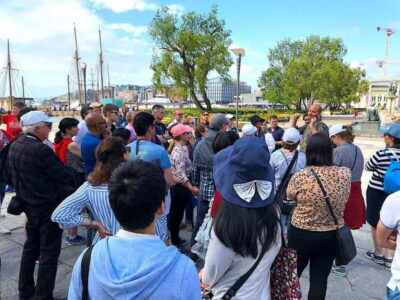
The guide is the main reason to book this experience. Suzanne is praised for being warm, informative, and good with questions. Alexia receives repeated praise for combining history, culture, and humor. Marta is described as personable and well informed, while Kamil and Daniel are noted for making the tour engaging.
Daniel is especially praised for handling a large group smoothly. The maximum group size is 27, and one group reportedly included about 20 people. That is not a private walk, but it is still small enough for a guide to keep the route moving.
The general pace is described as easy, leisurely, or just right. You move fast enough to cover the main sights, but not so fast that every stop becomes a rushed photograph. The route does cover several blocks, so people with walking difficulties should consider the distance before booking.
Rain does not automatically make the experience impossible, but the activity requires good weather and can be canceled if conditions are poor. Wear suitable shoes and bring weather protection. Oslo’s climate can change quickly, and a wet day can make a city walk less comfortable even when the route itself is manageable.
Is $16.94 good value?
At $16.94 per person, this is inexpensive for a two-hour guided introduction to central Oslo. You are not paying for museum admission, transport, food, or a private guide. You are paying for a route, local explanation, and a better understanding of what you are seeing.
That makes the tour especially good value if you are new to Oslo and would otherwise spend your first day walking past major buildings without context. The guide helps you decide which places deserve more of your time later.
The value is lower if you want detailed museum interpretation or long visits inside the sights. You will see many attractions but only stop briefly at most of them. One person found the information too sparse, which is a fair warning for history specialists who prefer a highly detailed lecture.
For most first-time visitors, the low price balances that limitation well. The 4.7 rating and 94 percent recommendation rate also suggest that the usual experience is strong, though no group tour can guarantee the same guide or storytelling style every time.
Who should book this Oslo walk?
I would choose this tour if you are visiting Oslo for the first time, staying near the center, or arriving with only a short amount of time. It gives you a clear introduction to the city’s main walkable sights and leaves you with a useful list of places to revisit.
Families may also like it. One guide received praise for keeping children interested, and the mix of sculpture, castle, waterfront, royal buildings, and humorous stories offers more variety than a strictly historical route.
It suits adults who enjoy a relaxed pace and plenty of chances to ask questions. It is less suitable if you want private attention, extensive interior visits, or specialist detail about one period of Norwegian history.
Book it early if your schedule is fixed. The experience is often booked about 28 days ahead, and it requires a minimum number of participants. You can cancel for a full refund up to 24 hours before the start time, but late cancellations are not refunded. Service animals are allowed, and the tour is near public transportation.
Should you book it?
Yes, if you want a low-cost first orientation to Oslo with a friendly English-speaking guide. The route covers an impressive amount in two hours, and the mix of medieval, royal, political, religious, and modern sights gives you a practical feel for the capital.
I would not book it as your only cultural experience in Oslo. Since buildings are not entered, you should plan separate visits to any museums or interiors that interest you. But as a way to get your bearings, learn the basic story of the city, and decide what to explore next, this walk is a sound choice.
FAQ
How long does the Central Oslo Guided Walking Tour last?
The tour lasts approximately two hours.
How much does the tour cost?
The listed price is $16.94 per person.
Where does the tour begin?
The meeting point is the Tiger sculpture at Jernbanetorget, 0154 Oslo, near Oslo Central Station.
Where does the tour end?
The walk ends at Slottsplassen, in front of the Royal Palace at Slottsplassen 1, Oslo.
What language is the tour offered in?
The tour is offered in English.
Is admission to Akershus Fortress included?
No. The tour does not include visits inside buildings, so entry to the fortress museum is not included.
Does the tour enter the Opera House or Royal Palace?
No. The experience is an outdoor walking tour and does not include visits inside buildings.
What sights are included on the route?
The route includes the Tiger sculpture, Oslo Opera House, Rådhusgata, Akershus Fortress, Oslo City Hall, Oslo Cathedral, Karl Johans gate, Aker Brygge, the Norwegian Parliament, and the Royal Palace exterior.
How large can the group be?
The tour has a maximum of 27 participants.
Can I cancel for a full refund?
Yes. You can cancel at least 24 hours before the start time for a full refund. Cancellations or changes made less than 24 hours before the start time are not refunded or accepted.
Just added around Oslo
- Visit the Instaworthy Spots of Oslo’s Vigeland Park with a Local★ 5.0 · 4 reviews
- Oslo: 3-hour Cross Country trip with equipment and guide★ 5.0 · 4 reviews
- Oslo: 2-hour Christmas Private Walking Tour★ 3.0 · 4 reviews
- Art and Museum Tour of Oslo★ 5.0 · 4 reviews
- Flavors of Oslo: Food & Beer Tour★ 4.8 · 4 reviews
- Private Transfer from Oslo City Centre to Oslo Airport★ 5.0 · 4 reviews
- 3-Hour Vattkørt Beginner Kayak Course on Oslo Fjord★ 5.0 · 4 reviews
- Hipstoric Grünerløkka Private Walking Tour★ 5.0 · 4 reviews
Walking Tours, compared.
Past & Present Small Group Guided Walking Tour
Read our review →
Walking Tour in Bergen of the Past and Present
Read our review →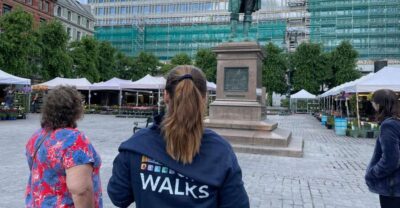

Browse the lists this tour appears in