
Reviewed · WALKING TOURS
Oslo City Walks: Historic River Walk
Follow Oslo’s river through time. I like this walk for its mix of industrial history and green scenery, plus the stop at Mathallen, where you can browse Norwegian and international food. The main consideration is pace: two hours gives you an excellent introduction, but not much time to linger at every stop or buy a full meal.
You meet an authorized Oslo guide at Oslo S and walk north along Akerselva, from Grønland toward the river’s parks, bridges, and waterfalls. I also like that the experience stays on foot and uses a part of Oslo you could easily miss on your own. Good shoes matter, and the weather can change the feel of the outing.
In This Review
- Key points about the Akerselva walk
- Starting at Oslo S and Grønland
- Akerselva, Oslo’s working river
- Beier Bridge and the waterfall
- Crossing the Fairytale Bridge
- From factory waterway to green public space
- Mathallen, Oslo’s food stop
- What $52 means for value
- Who will enjoy this two-hour route
- Practical ways to get more from the walk
- FAQ
- Where does the Historic River Walk meet?
- What time does the tour start?
- How long does the experience last?
- Which languages are available?
- Is food included at Mathallen?
- Is transportation included?
- Can I cancel for a refund?
- Should you book the Akerselva walk?
Key points about the Akerselva walk
- Akerselva tells Oslo’s industrial story: Follow the river from a former industrial zone to a cleaner urban waterway surrounded by parks and nature trails.
- Mathallen adds a tasty city stop: You have time to explore Oslo’s well-known food hall, though food purchases are your own expense.
- Beier Bridge has a striking waterfall: This is one of the walk’s most scenic points and a useful reminder of the river’s working past.
- The Fairytale Bridge brings a lighter touch: Its name fits the more picturesque side of Akerselva.
- A two-hour route suits a first look: You get history, culture, and nature without giving up a full day.
- The guide is central to the experience: The strongest praise focuses on a kind, engaged, sympathetic, and capable guide.
Starting at Oslo S and Grønland
The walk begins at 14:00 in front of the Oslo Visitor Center inside Østbanehallen at Jernbanetorget 1. This is a practical meeting point because Oslo S is the city’s main rail station, and the visitor center is easy to identify inside the station complex.
Arrive about 10 minutes early. That gives you time to find the meeting spot without rushing through the station, especially if you have luggage, a stroller, or a full day pack.
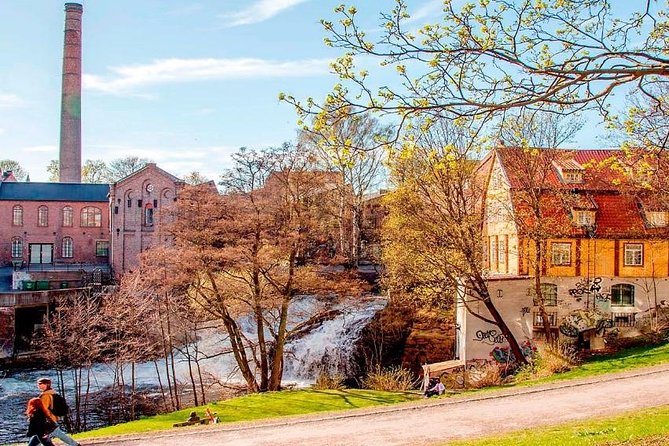
From Oslo S, the walk heads toward Grønland. This part of Oslo helps set up the central idea of the tour: the city has changed sharply over time. Grønland was once tied closely to industry, work, and river activity. Today, it is part of the city’s urban and cultural life.
That contrast is more useful than a simple list of old buildings. You begin to see Oslo as a city shaped by water, labor, and later environmental repair. The guide provides the story that turns an ordinary city walk into a lesson in how Oslo grew.
Do not expect a museum-style tour with long stops indoors. This is an outdoor walk, and the river provides the main stage. You should be ready to keep moving while listening.
More Walking Tours in Oslo
- Oslo: Best of Oslo Walking Tour
★ 4.5 · 458 reviews - Oslo: Guided Walking Tour of Central Oslo
★ 4.7 · 438 reviews - Oslo: Historic Myths & Legends Evening Walking Tour
★ 4.8 · 408 reviews
Akerselva, Oslo’s working river
Akerselva is described as Oslo’s green lung, and the phrase makes sense once the route leaves the denser streets. The river winds through the capital, linking urban neighborhoods with trees, parks, paths, and small natural areas.
Its importance is not only scenic. Akerselva helped drive Norway’s industrial development, so the waterway is part of the country’s economic story. Factories and other industry once relied on the river’s power and location. The route lets you see how a natural feature became a tool for production.
I find this kind of history especially useful because it connects the city’s past to what you see underfoot. The river is not just a pleasant stream beside a path. It helped shape where people worked and how Oslo expanded.
The river also had a difficult period. It became polluted, a problem that affected the waterway’s appearance and living systems. Environmental work later helped turn Akerselva into a healthier ecosystem with flora and fauna.
That change gives the walk a strong present-day message without becoming a lecture. You see that city improvement is often slow and practical. A cleaner river can add paths, parks, wildlife, and breathing room to neighborhoods that once centered on industry.
The tour information does not specify the full amount of walking or the exact surface underfoot at every point. For that reason, I would wear firm, comfortable walking shoes rather than casual street shoes. The route includes nature trails and green areas, so weather-appropriate clothing is also important.
Beier Bridge and the waterfall
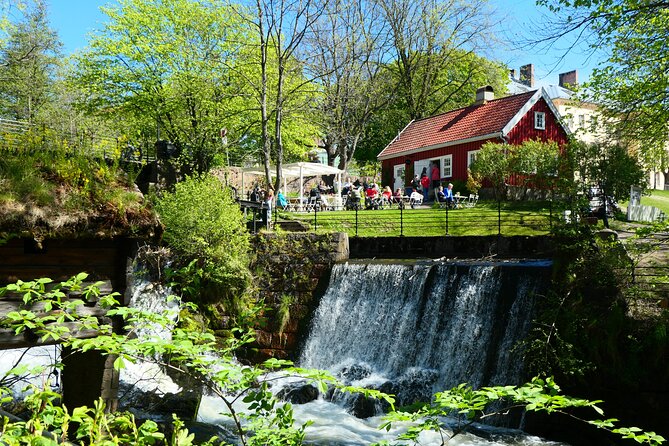
The waterfall at Beier Bridge is one of the clearest visual rewards on the route. A waterfall gives Akerselva energy and sound, and it helps you understand why the river mattered to industry.
This is where the river’s natural force and human use come together. Waterfalls were valuable sources of power, so a pretty view can also explain a practical fact about Oslo’s industrial growth.
You may want to pause here for photographs, but remember that the walk has a fixed two-hour duration. The guide needs to keep the group moving toward the later stops, so this is a place for a quick look and a few questions rather than a long break.
The waterfall also provides variety. A city walk that stays only on streets can feel repetitive. Akerselva changes the rhythm with moving water, trees, bridges, and open paths.
The exact conditions will depend on the season and the weather. In January, the river and paths may feel very different from a May or August outing. Dress for the day, not for the calendar alone.
Crossing the Fairytale Bridge
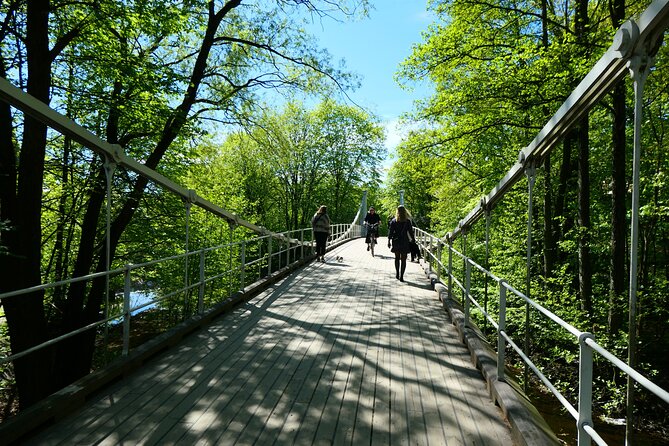
The Fairytale Bridge adds a more playful note to the walk. After hearing about pollution, industry, and environmental repair, a picturesque bridge helps show that Akerselva is now also a place for leisure and local city life.
The name suggests a decorative, storybook character, though the important point is how it fits the route. You are moving from the working river of the past to a public setting where people can enjoy the water and greenery.
This is also a good stop for travelers who want more than dates and facts. The walk combines cultural history with small visual moments. A bridge, a waterfall, and a leafy path can make Oslo’s past easier to remember than a string of statistics.
Still, do not expect every stop to receive equal time. The walk covers several themes and locations in two hours. If you want detailed architectural analysis or a long photography session, you may feel hurried.
More historical sites:
- Oslo: History, Art and Secrets Tour
★ 4.7 · 62 reviews - Oslo City Walks – Historic River Walk
★ 5.0 · 31 reviews - A Well Balanced History and Food Tour with Focus on the Scandinavian Kitchen
★ 4.5 · 29 reviews - Jewish Heritage Tour in Oslo
★ 5.0 · 16 reviews
From factory waterway to green public space
The most valuable part of the itinerary is the change in mood as the river continues. The route shows how an area linked to work and pollution can become a place for recreation and nature.
You can think of Akerselva as a thread through several versions of Oslo. At the beginning, the city feels connected to transport, commerce, and industry. Farther along, the river feels more like a public park with nature trails and green edges.
That change is why I would choose this experience early in an Oslo visit. It gives you context for the city without asking you to spend a whole day in a museum. Later, when you walk around Oslo on your own, you have a better sense of how the neighborhoods relate to the river.
The guide’s role matters here. A self-guided walk might show you the same water, bridges, and paths, but it would be easy to miss the connection between pollution, industrialization, and environmental work. The tour adds meaning to sights that could otherwise pass as pleasant scenery.
Past feedback places unusual emphasis on the guide’s manner. The guide has been described as kind, engaged, sympathetic, and competent, and that combination is important on a short walk. A friendly guide makes it easier to ask questions, while a capable guide keeps the story focused.
The available information does not name the guide, so you should not book this expecting a particular person. The tour is offered in English and Norwegian.
Mathallen, Oslo’s food stop
Mathallen is the walk’s most practical cultural stop. Oslo’s food hall brings together Norwegian products and international delicacies, giving you a chance to look at the city through what it eats and sells.
You can browse the selection, study unfamiliar foods, or plan a later return for a proper meal. Food is not included in the tour price, so budget separately if you want to buy something.
The two-hour schedule affects how you use Mathallen. This is a stop to explore, not a long dining break. You may have time for a quick purchase or a look around, but the exact amount of free time is not stated.
I like that Mathallen keeps the tour from becoming only a history lesson. It adds a modern Oslo experience to the older industrial story. You see how the city has shifted from production along the river to culture, food, and recreation.
There is also a small trade-off. If you are eager to sample several foods, two hours may feel short. If you prefer a compact tour with one food stop rather than a full food tour, the arrangement should suit you well.
What $52 means for value
The listed price is $52 per person. Since the tour lasts two hours, that is not the cheapest way to take a walk in Oslo. You can follow parts of Akerselva without paying for a guide.
The value comes from the explanation and structure. You are not simply getting from Oslo S to Mathallen. You are given a clear route through Grønland, the river’s industrial past, the waterfall at Beier Bridge, the Fairytale Bridge, the green spaces, and the story of environmental repair.
I would consider the price reasonable if you want orientation and interpretation on your first Oslo day. It is also useful if you prefer a small slice of the city that combines nature and history instead of a standard central-city highlights route.
The value is weaker for independent walkers who already know Akerselva or who prefer to stop whenever they like. You also pay extra for any food at Mathallen, and transport is not included.
No transport is needed as part of the walk itself, but you are responsible for reaching the meeting point. Starting at Oslo S keeps that simple for people already in central Oslo or arriving by train.
The booking terms add flexibility. You can cancel up to 24 hours before departure for a full refund, and you can reserve now and pay later. Check the available start time when booking, since the published walk begins at 14:00 but availability can vary.
Who will enjoy this two-hour route
I would recommend the walk to first-time visitors who want a quick sense of how Oslo developed. It is especially good for you if industrial history sounds more appealing than a standard list of monuments.
It also suits anyone who wants nature without leaving the city. Akerselva provides parks and trails while staying tied to Oslo’s neighborhoods.
Food-minded visitors should enjoy the Mathallen stop, provided they understand that food costs extra and the tour is not built around extended tasting. You can use the stop as an introduction, then return later if something catches your eye.
The walk may also work well for families with older children who can manage two hours on foot. The waterfall and bridge provide visual variety, while the industrial story gives the route a clear purpose.
I would be more cautious if you have limited walking ability, although the supplied details do not specify accessibility conditions. Ask the provider about surfaces, slopes, and route suitability before booking if that is important to you.
You should also think twice if rain, cold, or slippery paths would spoil your day. The route is outdoors, and the advice is simple: wear good walking shoes and dress for the weather.
Practical ways to get more from the walk
Bring a light layer even if the afternoon begins pleasantly. You are walking beside a river and through green areas, where conditions may feel different from the streets around Oslo S.
Keep your schedule open enough to arrive early and avoid cutting the meeting time close. The meeting point is inside Østbanehallen at the visitor center, not at an unspecified spot somewhere outside the station.
If you hope to eat at Mathallen, treat the stop as a preview unless the guide allows enough time for a meal. Bring a card or another accepted payment method for food, since purchases are not part of the tour.
Use the guide’s local knowledge actively. Ask about the river’s industrial role, the pollution problem, the environmental work, or the changes in Grønland. Those questions connect the separate stops into one story.
Do not judge the walk only by its most scenic point. The waterfall and Fairytale Bridge are memorable, but the greater value lies in seeing how one river links old industry, environmental repair, public parks, and modern food culture.
FAQ
Where does the Historic River Walk meet?
Meet the guide in front of the Oslo Visitor Center inside Østbanehallen at Jernbanetorget 1, 0154 Oslo.
What time does the tour start?
The walk starts at 14:00. You should arrive at the departure point 10 minutes early.
How long does the experience last?
The tour lasts approximately two hours.
Which languages are available?
The live guide leads the walk in English or Norwegian.
Is food included at Mathallen?
No. Food is not included, so you pay separately for anything you choose to buy at Mathallen.
Is transportation included?
No. Transport is not included. The experience is a guided walking tour.
Can I cancel for a refund?
Yes. You can cancel up to 24 hours in advance for a full refund. You can also reserve now and pay later.
Should you book the Akerselva walk?
Book this tour if you want a focused introduction to Oslo’s industrial past, a scenic river route, and a short stop at Mathallen. The guide adds the context that turns bridges, waterfalls, and paths into a story about urban change.
Skip it if you want a long food tasting, a relaxed photography outing, or a completely self-guided walk. At $52, the fee makes sense mainly for the explanation and company. For a first visit, especially one with only a few days in Oslo, this is a useful and appealing way to see a less obvious side of the city.
Just added around Oslo
- Oslo Christmas walk★ 4.0 · 3 reviews
- Oslo: Skjennungstoppen Wildlife Forest Hiking Tour★ 5.0 · 3 reviews
- Oslo: Private water adventure and E-Foil rental★ 5.0 · 3 reviews
- Oslo: Panoramic View and Sculpture Park Walk★ 5.0 · 3 reviews
- Oslo: Best of Oslo Walking Tour and Hop-on Hop-off Bus Tour★ 3.7 · 3 reviews
- Fjord Houseboat Cruise in Oslo. 100 % electric. BYO★ 5.0 · 3 reviews
- The Vigeland Park in Oslo: Insta-Perfect Walk with a Local★ 5.0 · 3 reviews
- Lake walk and campfire★ 4.7 · 3 reviews
Walking Tours, compared.
Past & Present Small Group Guided Walking Tour
Read our review →
Walking Tour in Bergen of the Past and Present
Read our review →

Browse the lists this tour appears in