
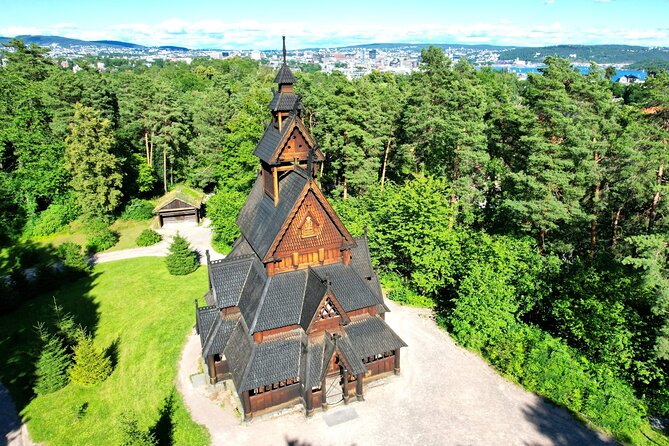
Reviewed · TICKETS
Norsk Folkemuseum Oslo Private Tour & Skip-the-Line Tickets
History feels close here. This private tour combines the 13th-century Gol Stave Church with Norway’s largest open-air museum, where more than 150 relocated buildings show how people lived, worked, worshipped, and made things across different periods. I especially like the personal guide and the chance to shape the visit around your interests. The main caution is that guide quality can vary, and some buildings may be closed.
At about $196.84 per person for roughly two hours, this is not a bargain museum entry. You are paying for a private English-language guide, pre-booked admission, and a more focused visit than you would get wandering alone. The tour also runs in rain or sun, so good shoes and suitable clothing matter.
In This Review
- Key points to know before booking
- Why this museum belongs on an Oslo itinerary
- Meeting your guide at Museumsveien 10
- Gol Stave Church and Norway’s wooden past
- Walking through 150 historic buildings
- Crafts, folk art, and daily Norwegian life
- Is $196.84 per person good value?
- Who will enjoy this private visit most?
- Practical planning for the two-hour visit
- Should you book Norsk Folkemuseum with a private guide?
- FAQ
- Where does the Norsk Folkemuseum private tour begin?
- How long does the tour last?
- Is admission included?
- Does skip-the-line include the museum entrance and security checks?
- Are food and drinks included?
- Can I cancel for a full refund?
Key points to know before booking

- Gol Stave Church is the visual centerpiece: This 13th-century wooden church gives the tour an immediate sense of old Norway.
- More than 150 historic buildings fill the grounds: The open-air setting makes Norwegian social history easier to understand than a row of objects in glass cases.
- The private format lets you set the pace: Guides such as Mari and Lisa have adjusted visits around individual interests.
- The Sami exhibition adds an important national perspective: You will see Norway’s indigenous culture included within the museum’s wider story.
- Skip-the-line has limits: Your ticket lets you bypass the ticket office queue, but not entrance or security checks.
- Allow for changing conditions: Ice, rain, sun, and closed buildings can affect how much of the museum you see.
Why this museum belongs on an Oslo itinerary

Norsk Folkemuseum, also called the Norwegian Museum of Cultural History, is a useful place to get your bearings in Norway. Instead of presenting only famous rulers, battles, or archaeological finds, it focuses on ordinary life. Houses, churches, workshops, tools, clothing, crafts, and domestic objects help you picture how communities functioned over time.
That makes the museum a good first or early stop in Oslo. One enthusiastic guest even suggested taking this tour as a first Oslo experience, and I understand why. A guide can explain customs and objects before you encounter similar themes elsewhere in Norway.
The museum is also different from a standard indoor collection. The grounds contain more than 150 historic buildings moved from their original locations. You walk between them rather than viewing everything from one long corridor. That physical setting gives the visit a clear sense of place, even though the buildings have been relocated.
You will see more than old structures. The tour includes displays about traditional textiles, woodworking, folk art, and other crafts. These subjects show how useful objects could also carry skill, pride, and local identity. The Sami exhibition broadens the picture further by presenting the heritage and traditions of Norway’s indigenous people.
The two-hour length is both a strength and a limit. It works well if you want an introduction without giving up most of your day. It is not enough time to see every building and read every display in detail. One guide, Mari, reportedly made a shorter visit feel tailored to the group, while also noting that the site could easily fill five or six hours. Plan on an overview, not a complete museum study.
Other Oslo trips travellers book alongside this one:
- Oslo: Scenic Fjord Cruise with Audio Guide Commentary
★ 4.5 · 5,375 reviews - Oslo Nature Walks: Island Hopping Tour
★ 4.8 · 2,713 reviews - Oslo: 100% Electric Oslofjord Sightseeing Cruise
★ 4.4 · 2,041 reviews
Meeting your guide at Museumsveien 10
The tour begins at the main entrance at Museumsveien 10, 0287 Oslo. This detail matters because the meeting instructions are specific: meet your guide on the left side of the main entrance, and do not enter the museum alone first.
Your admission is arranged as part of the tour. Going inside on your own could make it harder for the guide to find you and could create confusion at the ticket area. Check the email sent the day before, since it contains important information for the meeting.
The museum is near public transportation, though the supplied details do not specify a particular bus, tram, or ferry route. Give yourself enough time to reach the entrance without rushing. The activity ends back at the same meeting point, which makes the visit easy to fit into a larger Oslo day.
This is a private activity, so only your own group takes part. That is one of the clearest reasons to consider the price. You do not have to match the pace of a large party, and you can ask questions without waiting for a crowd to move along.
Gol Stave Church and Norway’s wooden past
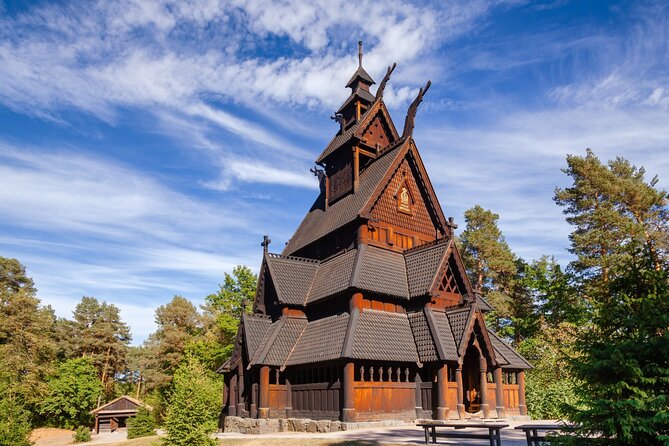
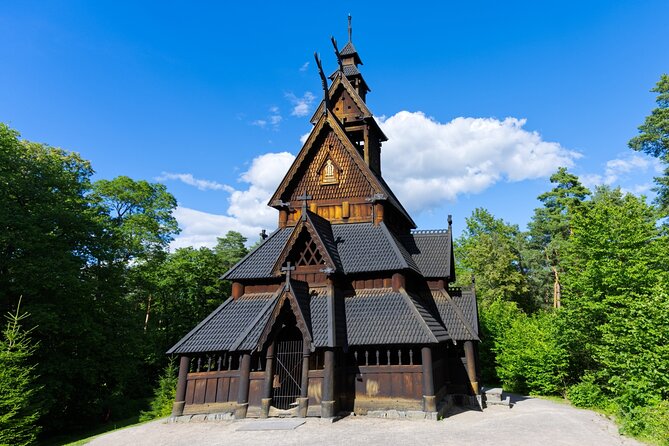
The first major stop is Gol Stave Church, where you spend about 50 minutes. Built in the 13th century, it is known for its wooden construction, detailed carvings, and medieval character.
Stave churches are among Norway’s most distinctive historic buildings. Here, the value is not only in seeing an old church. The structure gives you a direct look at a building tradition based on timber, craftsmanship, and careful joinery. The carvings add another layer, showing how decoration and religious meaning were worked into the building itself.
Your guide can help you notice details you might otherwise pass without understanding. The woodwork is easy to admire on its own, but a good explanation can connect the church to Norwegian building traditions and the broader story of rural life.
This stop is especially useful for anyone with an interest in architecture, medieval Europe, or traditional craft. It is also the part most likely to appeal to people who want a strong visual highlight early in the visit.
Conditions can affect the experience. One person found walking difficult because of heavy ice. The museum continues operating in poor weather, so the church and the open-air grounds are not a rain-or-shine phrase used only for marketing. You should take it literally. Wear shoes with dependable grip in winter and clothing that can handle rain or cold.
Walking through 150 historic buildings
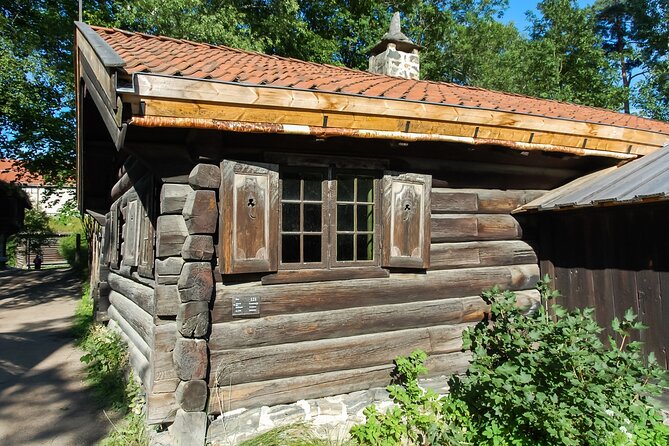
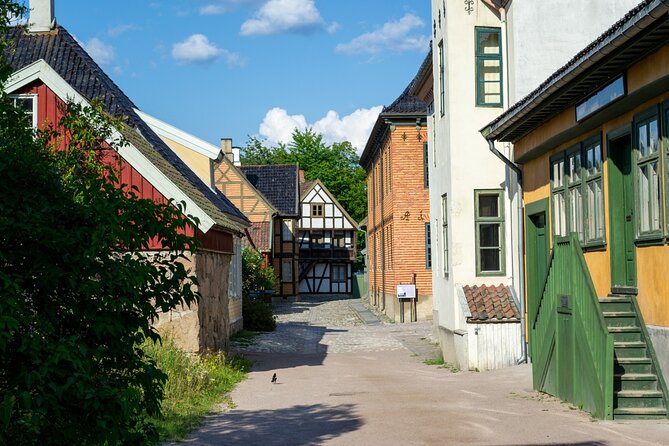
After the church, the tour moves through the museum grounds. About 150 relocated historic buildings represent different periods and aspects of Norwegian life. You might pass homes, working buildings, religious structures, and other examples of traditional construction, depending on the route and what is open during your visit.
The open-air format gives you a better feel for scale. A tool displayed indoors tells you what an object is. A complete building can show how people arranged space, worked, stored supplies, gathered, and lived with the seasons. You can understand more when the object is placed within the kind of building that once used it.
The route is on foot, so expect regular walking rather than a short series of stops. Comfortable shoes are strongly recommended. The tour description does not promise a particular accessibility arrangement, but it says most people can participate. If your group has specific mobility needs, contact the provider before booking rather than assuming every part of the grounds will be easy.
Not every building is guaranteed to be open. One person enjoyed the visit but was disappointed that some buildings could not be entered. That is a fair concern, especially if you are choosing the museum mainly for its interiors. Maintenance, seasonal schedules, or other operating needs can change access.
A private guide can help make the best of this. If one structure is closed, you can ask for more context elsewhere instead of simply waiting for a group to move on. Still, you should not book expecting every building to be available for interior visits.
A few more trips worth weighing up
- Oslo: Fjord Evening Cruise with Shrimp Buffet
★ 4.5 · 1,956 reviews - Oslo: 3-Hour Highlights Bike Tour
★ 4.8 · 1,609 reviews - Oslo: 24 or 48-Hour Hop-On Hop-Off Sightseeing Bus Ticket
★ 4.1 · 1,470 reviews - Oslo: Guided Sightseeing Fjord Cruise on Premium Silent Boat
★ 4.7 · 1,390 reviews
Crafts, folk art, and daily Norwegian life
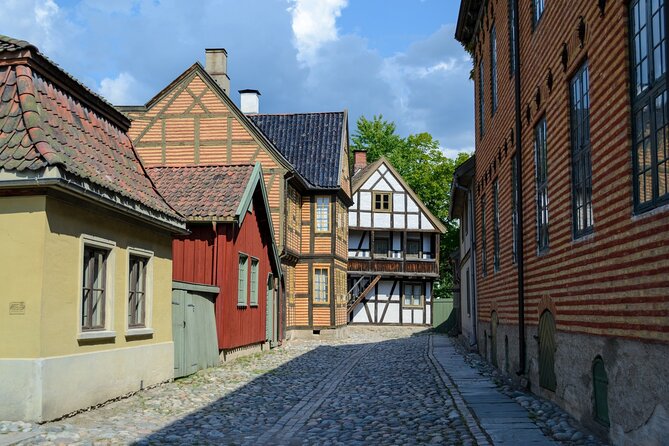
The indoor museum portion lasts about an hour and focuses on traditional Norwegian crafts and folk culture. The exact route is tailored to your interests, which gives you a chance to ask for more attention to textiles, woodworking, folk art, or another subject that catches your eye.
I like this approach because craft displays can otherwise feel disconnected. A carved object or woven textile becomes more useful when you understand who made it, what it was for, and why the technique mattered. The tour is designed to provide those facts rather than leave you to decode every display alone.
The museum also regularly hosts cultural events, including live folk music performances. The information provided does not guarantee that a performance will take place during your visit, so treat this as a possible feature rather than part of the promised itinerary. If music matters to you, ask your guide what is happening that day.
The Sami exhibition is an important part of the visit. It presents the culture and traditions of Norway’s indigenous Sami people, giving the museum’s national story a wider and more accurate frame. If you have limited time in Oslo, this section helps you avoid seeing Norwegian culture as one single, uniform tradition.
Guides Lisa and Mari received particularly warm praise for bringing the subject to life and sharing interesting facts about Norway. That is exactly where a private visit can earn its cost. You are not just moving from one display to another. You can stop when a topic interests you and ask for context suited to your group.
Still, guide performance is not guaranteed to be perfect. One unhappy customer felt the guide seemed inexperienced, took personal photographs, and offered too little historical explanation. That complaint is worth taking seriously. The tour is sold around the quality of the private guide, so a weak guide affects the value more than it would on a simple museum admission.
Is $196.84 per person good value?
At $196.84 per person, the tour is expensive compared with entering Norsk Folkemuseum independently. The price makes the most sense for people who value a private guide, a planned route, and the chance to ask questions throughout the visit.
It is less attractive if you are happy reading labels, walking at your own pace, and spending several hours exploring without help. The museum is large enough that independent visitors may prefer having more time rather than being limited to a two-hour introduction.
The value improves for a couple, family, or small group that can share the private experience. Group discounts are available, though the exact reduction is not provided. Ask about the total price for your party before booking.
Pre-booked admission lets you skip the ticket office line. Be precise about what that means. You cannot skip the entrance or security checks, so this is not a guaranteed instant entry. It is still useful on a busy day, but do not arrive expecting every queue to disappear.
The guide’s local tips are another small part of the value. Included advice covers other things to do in Oslo, which can help you plan the rest of your day. Food and drinks are not included, but you can buy them at Café Arkadia near the main entrance or Piperviken Cafe in the middle of the open-air museum.
Who will enjoy this private visit most?
I would recommend this tour to you if you want a clear introduction to Norwegian culture and prefer explanations to self-guided reading. It suits couples, families, and small groups with different interests because the route can be adjusted.
It is also a good fit for anyone drawn to wooden architecture, traditional crafts, folk art, or Sami culture. The combination of Gol Stave Church and the open-air buildings gives you more variety than a visit focused only on indoor displays.
Families may appreciate the private format because children can ask questions and move at a pace that suits them. The two-hour duration is also easier to manage than a full-day museum visit, though walking and outdoor conditions still matter.
You might prefer visiting independently if your main goal is to enter as many buildings as possible or spend five or six hours examining every display. The private tour gives you an informed sample, not unlimited museum time.
The experience is offered in English, with a licensed guide fluent in your chosen language according to the booking details. Confirmation arrives at booking, and the activity is available to most people. It is best to read the pre-tour email carefully and dress for the forecast.
Practical planning for the two-hour visit
Build your day around the museum rather than treating it as a quick indoor stop. Even though the guided portion lasts about two hours, reaching the meeting point, walking the grounds, and buying a drink can take more time.
Arrive at Museumsveien 10 and look for the guide on the left side of the main entrance. Do not go inside first. Bring comfortable shoes, especially if rain, snow, or ice is forecast.
The tour operates in all weather. On a bright day, the open-air setting should be pleasant, but sun protection may be useful. On a wet or cold day, waterproof layers will make the visit much more comfortable. The museum’s outdoor nature means weather is not a minor detail.
If you need food, plan to purchase it separately at Café Arkadia by the entrance or Piperviken Cafe farther inside the open-air museum. Since the tour ends at the starting point, you can also continue your Oslo plans from there.
Free cancellation is available up to 24 hours before the start time for a full refund. Changes or cancellations made less than 24 hours ahead are not accepted or refunded, based on the stated policy.
Should you book Norsk Folkemuseum with a private guide?
Book it if you want personal attention, historical context, and a compact introduction to Norwegian culture. The strongest parts are the Gol Stave Church, the Sami exhibition, the open-air buildings, and the ability to tailor the visit. Guides such as Lisa and Mari appear to have made the experience especially rewarding.
Think twice if $196.84 per person feels high for two hours, or if you want to explore every building at leisure. You should also accept that some structures may be closed and that guide quality can vary.
For a first cultural stop in Oslo, I think the tour has real value, particularly for a small group that wants a human explanation of what it is seeing. Just book with realistic expectations: skip the ticket office line, not every entrance queue; expect walking; and dress for Norway’s weather, which rarely asks permission.
FAQ
Where does the Norsk Folkemuseum private tour begin?
The tour begins at the main entrance at Museumsveien 10, 0287 Oslo, Norway. Meet the guide on the left side of the entrance and do not enter the museum alone first.
How long does the tour last?
The tour lasts approximately two hours. About 50 minutes are assigned to Gol Stave Church, followed by about one hour at Norsk Folkemuseum, with time also used for meeting and moving between stops.
Is admission included?
Yes. The private tour includes pre-booked admission tickets to Norsk Folkemuseum and skip-the-line access at the ticket office.
Does skip-the-line include the museum entrance and security checks?
No. The pre-booked ticket allows you to skip the ticket office line, but you cannot skip entrance or security checks.
Are food and drinks included?
No. You can buy food and drinks at Café Arkadia near the main entrance or Piperviken Cafe in the middle of the open-air museum.
Can I cancel for a full refund?
Yes, if you cancel at least 24 hours before the experience start time. Cancellations or changes made less than 24 hours ahead are not accepted, and the amount paid is not refunded.
Just added around Oslo
- Visit the Instaworthy Spots of Oslo’s Vigeland Park with a Local★ 5.0 · 4 reviews
- Oslo: 3-hour Cross Country trip with equipment and guide★ 5.0 · 4 reviews
- Oslo: 2-hour Christmas Private Walking Tour★ 3.0 · 4 reviews
- Art and Museum Tour of Oslo★ 5.0 · 4 reviews
- Flavors of Oslo: Food & Beer Tour★ 4.8 · 4 reviews
- Private Transfer from Oslo City Centre to Oslo Airport★ 5.0 · 4 reviews
- 3-Hour Vattkørt Beginner Kayak Course on Oslo Fjord★ 5.0 · 4 reviews
- Hipstoric Grünerløkka Private Walking Tour★ 5.0 · 4 reviews
Tickets, compared.
Midnight Concert Ticket at the Tromsø Cathedral
Read our review →




Browse the lists this tour appears in