
Reviewed · CITY SIGHTSEEING & HOP-ON HOP-OFF
Oslo: 24 or 48-Hour Hop-On Hop-Off Sightseeing Bus Ticket
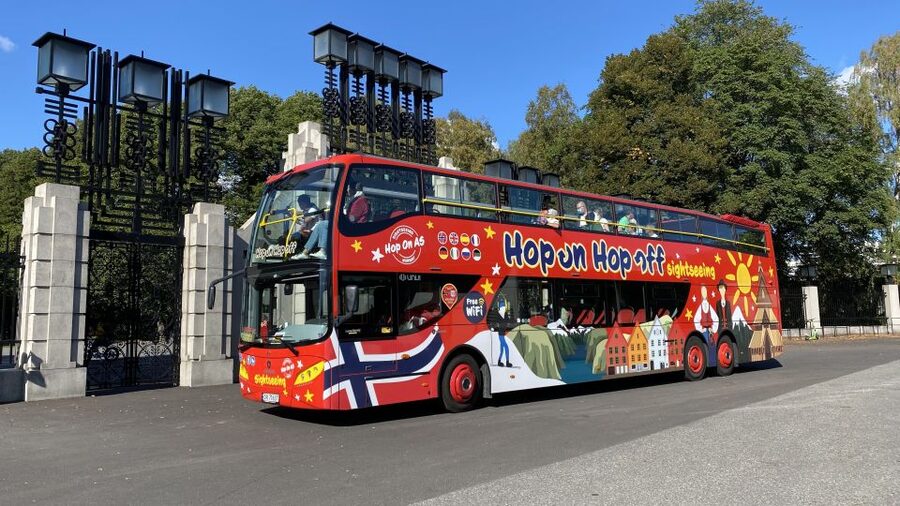
See Oslo in one ride. This hop-on hop-off bus links the city center with Frogner Park, Bygdøy’s museums, Akershus Fortress, and the Opera House, making it a useful first look at a spread-out capital. I especially like the 30-minute planned departures and the freedom to spend as little or as much time as you want at each stop.
The free headphones, multilingual audio guide, onboard Wi-Fi, and museum discounts add useful extras. I also like that a two-day ticket gives you room to split the route into manageable pieces. The main caution is timing: a single day can feel rushed if you want to visit several museums, and buses may occasionally arrive less often than the advertised schedule.
In This Review
- Key points to know before you book
- How the Oslo bus route fits together
- Karl Johans gate and Oslo’s central landmarks
- Frogner Park and the Vigeland sculptures
- Bygdøy’s museums: four useful stops in one area
- Akershus Fortress brings Oslo’s past closer
- The Oslo Opera House and the final waterfront stretch
- Audio commentary, headphones, and onboard comfort
- Is $41 a fair price for one or two days?
- Best ways to plan your day
- Who will get the most from this bus?
- Should you book the Oslo hop-on hop-off bus?
- FAQ
- How long is the Oslo hop-on hop-off ticket valid?
- Where does the bus tour begin?
- How often do the buses depart?
- Which languages are available on the audio guide?
- Which languages are available from the host or greeter?
- Are headphones included?
- Does the ticket include museum admission?
- Is the Viking Ship Museum open?
- Can I cancel the booking?
Key points to know before you book
- The route reaches Oslo’s museum district: The Bygdøy stops put the Fram, Kon-Tiki, Maritime, and Norwegian Museum of Cultural History close to your sightseeing plan.
- Two days is the smarter choice for museum visits: A 24-hour pass works for a city overview, but the 48-hour option gives you breathing room.
- Vigeland Sculpture Park is a strong stop: You can pair one of Oslo’s most famous outdoor sights with the nearby Frogner Park area.
- Museum discounts help offset the $41 price: Four museums offer 10 percent off admission, with extra dining offers at Louise and Rorbua.
- The audio guide is useful but not always dependable: Most of the commentary is informative, but faulty headphones or connectors can spoil parts of the ride.
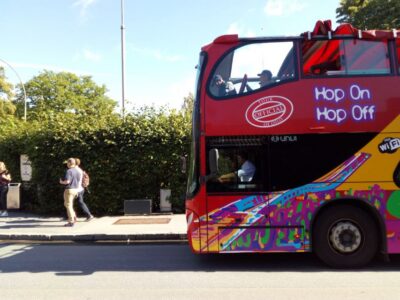
- Look carefully for the correct bus: Similar-looking yellow and white buses have caused confusion, so confirm the operator and stop before boarding.
How the Oslo bus route fits together
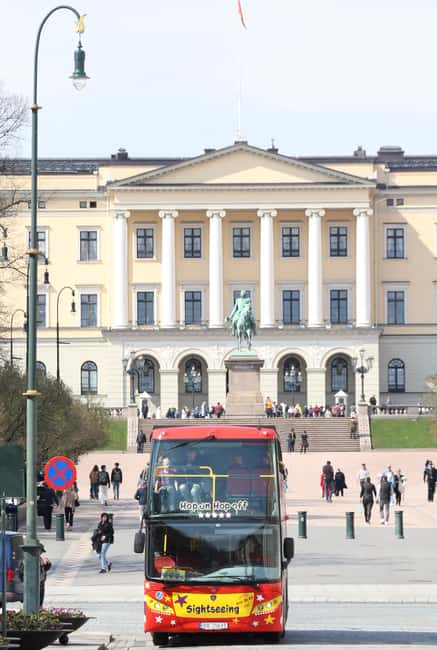
The route begins at the Gunnar Sønsteby Statue on Karl Johans gate 47, with the exact starting point depending on the option you book. The city center is an easy place to begin because it puts you near Oslo’s principal shopping street, the Royal Palace, the National Theatre, and the harbor-side attractions reached later in the loop.
A full circuit gives you an overview before you decide where to get off. That first ride is valuable because Oslo’s sights are not all clustered in one compact old town. The central landmarks sit inland, while the major museums are across the water on Bygdøy.
The stated schedule calls for a bus about every 30 minutes at each stop. In practice, allow extra time. A few passengers have had to wait closer to an hour, and confusion between similar buses has added to the delay. Keep the brochure handy, check the printed timetable, and do not assume every bus in the same colors belongs to the same service.
The bus returns to the meeting point at the end of the activity. There is no hotel pickup or drop-off, and food and drinks are not included.
More city sightseeing:
- Oslo: City Sightseeing Hop-On Hop-Off Bus Tour
★ 3.6 · 724 reviews - Oslo: Grand City Sightseeing Tour by Bus with Fjord Cruise
★ 4.6 · 647 reviews - City Sightseeing Oslo Hop-On Hop-Off Bus Tour
★ 3.0 · 455 reviews
Karl Johans gate and Oslo’s central landmarks
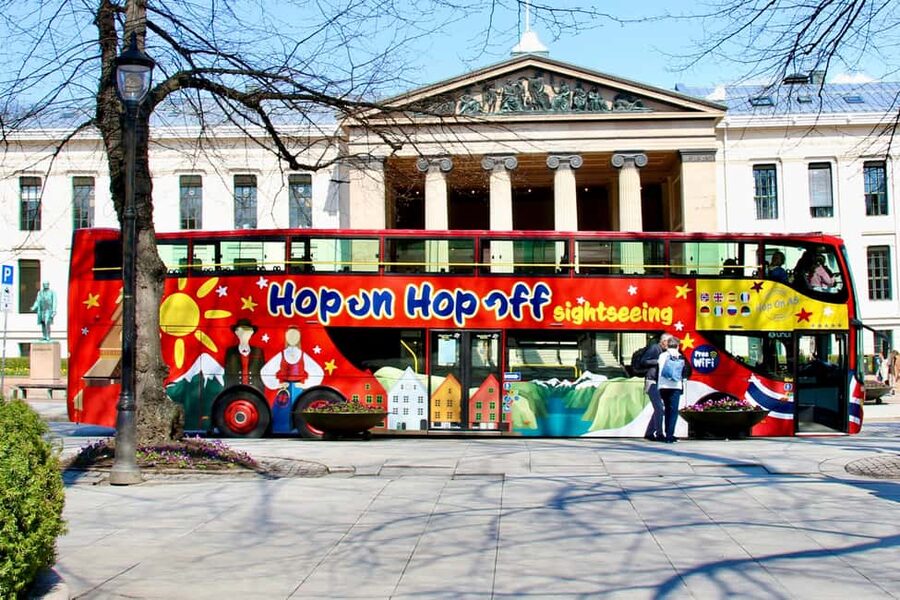
The opening section passes the Norwegian National Theatre, Royal Palace, and Karl Johans gate. These are listed as pass-by sights, so you should not expect a dedicated stop at each one.
Karl Johans gate is Oslo’s main ceremonial street, running through the heart of the center. From the bus, you get a quick orientation to the city’s grand civic core. The National Theatre is closely tied to Norway’s literary and performing arts tradition, while the Royal Palace anchors the upper end of the avenue.
This part of the ride is most useful at the start of your day. It helps you understand where the central railway area, palace district, and pedestrian streets sit in relation to one another. If you want photographs, sit by an open window when available. One passenger found that a good open-window seat made it much easier to take pictures and short videos.
Do not treat this section as a substitute for walking. The bus gives you the layout, but the central streets reward a slower look on foot.
Frogner Park and the Vigeland sculptures
The route then moves toward Frogner Park and the Vigeland Sculpture Park. These appear as separate stops, giving you a good chance to spend time in Oslo’s best-known public art setting.
Vigeland Sculpture Park is a particularly strong reason to choose this bus. It is outdoors, easy to explore at your own pace, and very different from the museum stops later in the day. Gustav Vigeland’s sculptures line the park’s paths and create one of Oslo’s most memorable sightseeing experiences.
I would allow more time here than a quick photograph from the bus. The park is one of the stops where getting off makes a real difference. You can walk among the sculptures rather than simply hearing a short audio description while passing by.
Frogner Park and Vigeland Sculpture Park are close enough in theme that you may want to treat them as one substantial visit. If your ticket is valid for only one day, this stop can compete with Bygdøy’s museums for your time. That is another reason the 48-hour ticket is more comfortable for a sightseeing-heavy visit.
Bygdøy’s museums: four useful stops in one area
The bus is especially practical for reaching Bygdøy, the peninsula that holds several of Oslo’s best-known museums. The Norwegian Museum of Cultural History, Viking Ship Museum, Kon-Tiki Museum, Fram Museum, and Norwegian Maritime Museum appear in sequence on the route.
The Viking Ship Museum is listed as temporarily closed from September 2021 until 2025 or 2026 because of renovation. Since the supplied information gives a possible reopening range rather than a firm date, check its current status before building your day around it. The stop may still be part of the route, but the museum visit itself may not be possible.
The Norwegian Museum of Cultural History is an open-air museum with buildings and cultural displays from across Norway. Its scale means you should not squeeze it between several other major stops. It works best when you have enough time to wander rather than simply check it off.
The Kon-Tiki Museum focuses on Thor Heyerdahl’s famous expeditions. It is a compact, distinctive stop and may fit more easily into a packed day than the larger open-air museum.
The Fram Museum houses the polar ship Fram, a powerful attraction for anyone interested in exploration and life at sea. The ship itself gives the visit a strong physical focus, and the museum pairs naturally with the nearby Maritime Museum.
The Norwegian Maritime Museum adds a broader look at Norway’s relationship with the sea. If you enjoy ships, navigation, polar travel, or coastal life, the two maritime-focused stops make Bygdøy worth serious time.
The practical benefit is clear: the bus provides transport between these attractions without asking you to repeatedly work out local connections. The practical drawback is just as clear: you can lose much of a day if you try to visit all of them thoroughly.
A few more trips worth weighing up
- Oslo: Scenic Fjord Cruise with Audio Guide Commentary
★ 4.5 · 5,375 reviews - Oslo Nature Walks: Island Hopping Tour
★ 4.8 · 2,713 reviews - Oslo: 100% Electric Oslofjord Sightseeing Cruise
★ 4.4 · 2,041 reviews - Oslo: Fjord Evening Cruise with Shrimp Buffet
★ 4.5 · 1,956 reviews
Akershus Fortress brings Oslo’s past closer
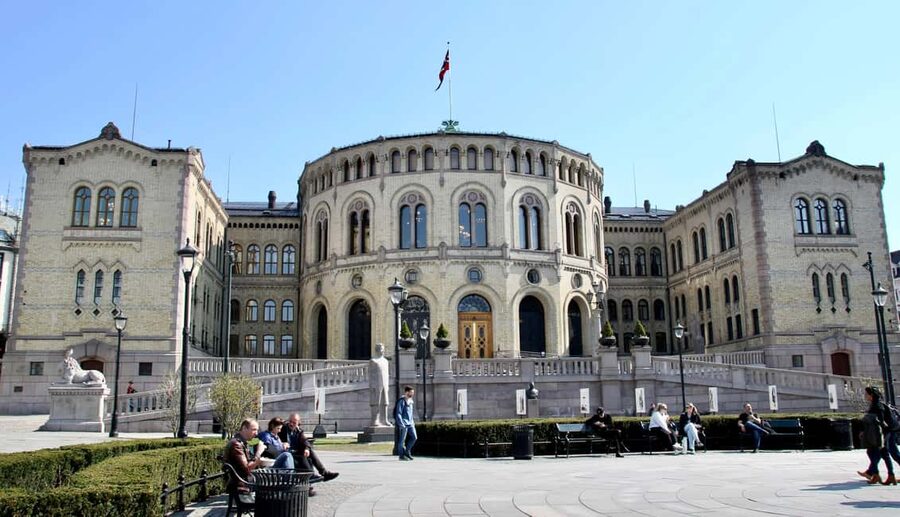
Akershus Fortress is the route’s major historic stop. The fortress and castle sit beside Oslo’s harbor and offer a change of pace after the museums and parks.
This is a good place to get off for a walk and a sense of Oslo’s older defensive center. The bus makes the fortress easy to combine with the Opera House later in the circuit, though you should check the timetable before leaving the stop.
The attraction works well for visitors who want more than modern architecture and museum displays. It also gives you a useful harbor setting, with the city’s central waterfront nearby. Since the route only provides transportation and audio commentary, any detailed exploration of the fortress itself takes place independently and is not included as a guided visit.
The Oslo Opera House and the final waterfront stretch
The Oslo Opera House is the final major landmark listed before the route returns to Oslo. Its striking modern form makes it easy to recognize from the bus, but this is another sight worth seeing from ground level.
The Opera House is part of Oslo’s newer waterfront identity. From outside, you can appreciate its broad architectural shape and its place within the harbor district. The hop-on hop-off format lets you pair it with Akershus Fortress, creating a useful contrast between old Oslo and new Oslo.
The route is strongest when you use it as transport between distinct parts of the city, not just as a continuous ride. A full circuit gives you orientation, while getting off at the Opera House, fortress, park, or museums turns the ticket into a practical sightseeing tool.
Audio commentary, headphones, and onboard comfort
The ticket includes a recorded audio guide in Arabic, English, French, German, Italian, Norwegian, Russian, Spanish, and Dutch. A free set of headphones is provided, and the commentary gives you background as the bus moves through the city.
The English commentary has been praised for being clear and accurate. Several passengers found the guide interesting and useful for getting a quick sense of Oslo’s past and major sights. The host or greeter languages are broader still, including English, German, Italian, Dutch, Spanish, Norwegian, and French.
The weak point is equipment. Some headphone connectors have not worked, some buses have had audio fixed to one language, and one bus operator’s equipment has been described as less reliable than another’s. Carry your own wired headphones if you have them, but do not assume they will solve every connector problem.
The buses are generally described as clean, comfortable, and carefully driven. In winter, the interior heating may feel light, so dress warmly rather than relying on the bus to feel cozy. On rainy days, the service still offers a useful way to see the city, though the experience is less scenic if you cannot use an open window.
Wi-Fi is included onboard. The key value, though, is not the internet connection. It is the combination of transport, orientation, and commentary in a city where the attractions are spread across several districts.
Is $41 a fair price for one or two days?
At $41 per person, this is not cheap if you use the bus only for one short ride. Oslo is an expensive city, so the price may feel reasonable to some visitors, but you still need to use the pass actively to make it pay.
The 24-hour ticket makes sense if you want one complete circuit plus two or three stops. It is also useful if you arrive early and need an organized way to occupy time before hotel check-in. One passenger used the bus in that situation and found it a convenient introduction to the city.
The 48-hour ticket offers better value for a museum-focused visit. You can take the full route on the first day, choose your favorite museum or park stop, then return the next day for the places you skipped. This approach avoids turning every stop into a rushed visit.
Museum discounts are 10 percent at the Kon-Tiki Museum, Norwegian Museum of Cultural History, Fram Museum, and Norwegian Maritime Museum. You also get 20 percent off food at Louise restaurant and a free dessert at Rorbua when you purchase a meal.
Those offers are helpful, but they do not automatically make the ticket a bargain. You need to visit enough included sights, or use the bus several times, for the savings and transport convenience to balance the fare.
Best ways to plan your day
Start with a complete circuit if you have never been to Oslo. Resist the urge to get off immediately at the first interesting sight. The first ride shows you how the center, Frogner, Bygdøy, the fortress, and the waterfront connect.
For a one-day visit, choose your priorities before boarding:
- Pick Vigeland Sculpture Park if outdoor art is your main interest.
- Pick one or two Bygdøy museums rather than trying to see all of them.
- Pair Akershus Fortress with the Opera House for a strong historic and modern contrast.
- Use the brochure timetable to plan the next bus before leaving each stop.
The advertised start time can be as late as 10:30, which may feel too late if you want a full day of sightseeing. Check the available departure time before booking, especially in winter or on a short port visit.
For two days, use day one for orientation and the central sights. Use day two for Bygdøy and any stop that deserved more time. This is the least stressful way to use the pass.
The buses may not run exactly every 30 minutes at every moment, so build a buffer into your plans. If you are catching a ship, train, or timed museum entry, do not schedule the final possible bus.
Who will get the most from this bus?
I would recommend it to first-time visitors who want a quick picture of Oslo before choosing where to spend their time. It is also a sound option for older visitors, families, and anyone who prefers not to plan several separate transport connections.
It suits cruise passengers and people with only one day in the city, provided the departure schedule matches your arrival. It is also useful in poor weather, since the bus still links the major areas when a long walk is less appealing.
Museum lovers should choose 48 hours. The pass is less convincing for visitors who prefer slow neighborhood walks, already know Oslo, or plan to visit only one attraction. In those cases, ordinary public transport or walking may cost less, though this ticket provides a simpler sightseeing structure and recorded commentary.
Should you book the Oslo hop-on hop-off bus?
Book it if you want easy access to Oslo’s scattered headline sights, especially Bygdøy, Vigeland Sculpture Park, Akershus Fortress, and the Opera House. The 48-hour ticket is the better pick if museums matter to you or if you dislike rushing.
Choose the 24-hour pass for a quick overview, a rainy day, or a short visit before check-in. I would skip it if your plan is mostly central Oslo on foot and you are unlikely to use the museum discounts.
Before boarding, confirm the correct bus, test your headphones, and photograph the timetable. Those small steps address the main practical complaints and help turn a decent city loop into a useful Oslo sightseeing day.
FAQ
How long is the Oslo hop-on hop-off ticket valid?
You can choose a ticket valid for 24 or 48 hours. Check the available starting times when booking.
Where does the bus tour begin?
One listed starting point is the Gunnar Sønsteby Statue at Karl Johans gate 47. The meeting point may vary depending on the option booked.
How often do the buses depart?
The service is advertised with departures every 30 minutes from each stop. Allow extra time because the actual wait can sometimes be longer.
Which languages are available on the audio guide?
The recorded audio guide is available in Arabic, English, French, German, Italian, Norwegian, Russian, Spanish, and Dutch.
Which languages are available from the host or greeter?
Host or greeter support is available in English, German, Italian, Dutch, Spanish, Norwegian, and French.
Are headphones included?
Yes. The ticket includes a free set of headphones for the onboard commentary.
Does the ticket include museum admission?
No. Museum entrance is not included, but the ticket provides 10 percent off admission at the Kon-Tiki Museum, Norwegian Museum of Cultural History, Fram Museum, and Norwegian Maritime Museum.
Is the Viking Ship Museum open?
The supplied information says the Viking Ship Museum is temporarily closed for renovation from September 2021 until 2025 or 2026. Check its current status before visiting.
Can I cancel the booking?
Yes. You can cancel up to 24 hours in advance for a full refund. The reserve-now, pay-later option allows you to delay payment when available.
Just added around Oslo
- Visit the Instaworthy Spots of Oslo’s Vigeland Park with a Local★ 5.0 · 4 reviews
- Oslo: 3-hour Cross Country trip with equipment and guide★ 5.0 · 4 reviews
- Oslo: 2-hour Christmas Private Walking Tour★ 3.0 · 4 reviews
- Art and Museum Tour of Oslo★ 5.0 · 4 reviews
- Flavors of Oslo: Food & Beer Tour★ 4.8 · 4 reviews
- Private Transfer from Oslo City Centre to Oslo Airport★ 5.0 · 4 reviews
- 3-Hour Vattkørt Beginner Kayak Course on Oslo Fjord★ 5.0 · 4 reviews
- Hipstoric Grünerløkka Private Walking Tour★ 5.0 · 4 reviews
City Sightseeing & Hop-On Hop-Off, compared.
Grand City Sightseeing Tour by Bus with Fjord Cruise
Read our review →




Browse the lists this tour appears in