
Reviewed · OSLO TOURS
Unknown war. Oslo and Norway during 1940-45
Oslo’s wartime past is hiding in plain sight. This private walking tour uses the city center as a classroom, linking familiar sights with Norway’s German occupation, everyday life under Nazi rule, and the resistance movement that challenged it.
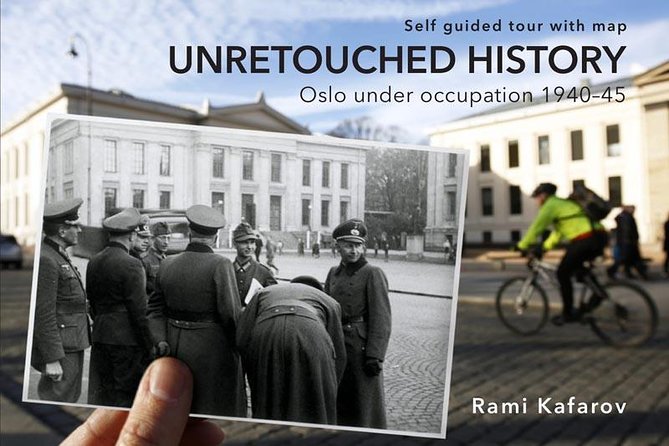
I especially like the guide’s use of period photographs, shown at the very places where the original scenes took place. I also like the private format, which lets Rami adjust the pace and focus on your interests. The main drawback is simple: this is an outdoor walking tour, so rain, cold, or unclear speech while walking can reduce the comfort of the experience.
Rami is praised for his calm presentation, strong command of the subject, and ability to make a complex period easy to follow. Bring an umbrella if rain is in the forecast, and consider watching The King’s Choice or NR24 beforehand if you want extra context.
In This Review
- Key points to know before booking
- Why this Oslo war tour is different
- Starting at the Karl Johan monument
- The Royal Palace and Karl Johans gate
- Parliament and Stortorvet
- University Square and the Faculty of Law
- Nationaltheatret and Gunnar Sønsteby
- Walking toward Akershus Fortress
- How the timing works on the ground
- The value of a $307.50 private group price
- Who will get the most from this walk?
- Practical preparation for a stronger experience
- Should you book this Oslo history tour?
- FAQ
- Where does the tour begin?
- Where does the tour finish?
- How long does the experience last?
- How many people can join the private tour?
- What language is the tour offered in?
- Is admission to the attractions included?
- Is the tour suitable for most people?
- What happens if the weather is poor?
Key points to know before booking
- A private 2.5-hour walk for up to five people: The flat group price of $307.50 works out to $61.50 per person when five people join.
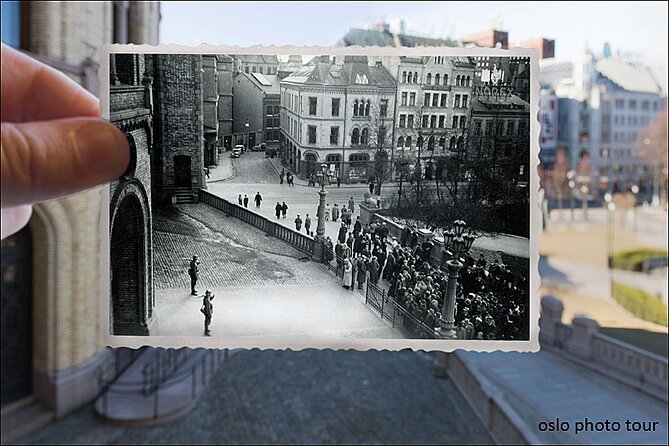
- Historic photos are central to the tour: Rami places wartime images beside the modern buildings and streets you see today.
- The route crosses Oslo’s historic center: You begin at the Karl Johan monument and finish at Akershus Fortress near the Norway’s Resistance Museum.
- The focus is occupation and resistance: You learn about German control of Norway, daily life in Oslo, and Norwegian resistance figures.
- The tour is conducted in English: It includes outdoor stops, city walking, and time for questions.
- Weather matters: Poor weather can lead to a new date or a full refund, and rain protection is sensible even when the forecast looks uncertain.
Why this Oslo war tour is different
Oslo has no shortage of city walks, but this one gives you a clear lens through which to read the center. The Royal Palace, Parliament, University Square, Nationaltheatret, and Akershus Fortress are not treated as disconnected sights. Instead, the guide links them to the years from 1940 to 1945.
That approach matters because wartime history can feel abstract when it is presented only through dates and military movements. Here, you are encouraged to look at the street beneath your feet, the building across the square, or the monument beside the theater and ask what happened there during the occupation.
The strongest feature is Rami’s collection of historic photographs. He shows you what many of the same places looked like during the war, then explains the scene while you are still standing in front of the modern view. The contrast helps you grasp how much of Oslo’s physical setting remains familiar, even though the lives around those buildings changed sharply.
The tour also gives attention to ordinary people, not only famous leaders and resistance heroes. That wider focus is useful. You hear about how the occupation affected daily life, then connect those experiences with the organized resistance movement and Norway’s wider role in the war.
A few more trips worth weighing up
- Oslo: Scenic Fjord Cruise with Audio Guide Commentary
★ 4.5 · 5,375 reviews - Oslo Nature Walks: Island Hopping Tour
★ 4.8 · 2,713 reviews - Oslo: 100% Electric Oslofjord Sightseeing Cruise
★ 4.4 · 2,041 reviews
Starting at the Karl Johan monument

The meeting point is the Karl Johan monument in central Oslo, at the beginning of Karl Johans gate. This is a practical place to start because the route immediately puts you in the city’s main historic axis.
The first part of the walk introduces Oslo through its most recognizable central spaces. Rather than rushing straight into a lecture, Rami uses the streets and buildings around you to explain the wartime setting. His photographs help anchor the story in specific locations.
Because this is a private tour, you can ask for more detail about a particular subject. You might want to focus on the resistance, the occupation itself, the experience of civilians, or Norway’s place in the larger conflict. The guide has been praised for adapting the material to different interests and for answering questions as the walk progresses.
The route is not designed as a museum visit with long indoor stops. You are moving through the city, with the history unfolding in short sections. That makes it a good early-visit activity if you want to learn Oslo’s layout at the same time.
The Royal Palace and Karl Johans gate
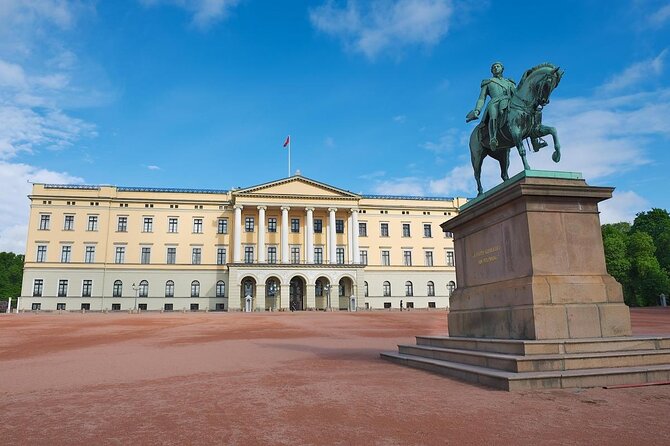
The Royal Palace receives a short stop of about 10 minutes. The palace is a natural place to discuss Norway’s wartime leadership and the role of the monarchy in the national story, though the supplied tour details do not promise an interior visit.
You should expect to view the palace from outside. Admission is not included, and the experience is built around the surrounding streets rather than a palace tour.
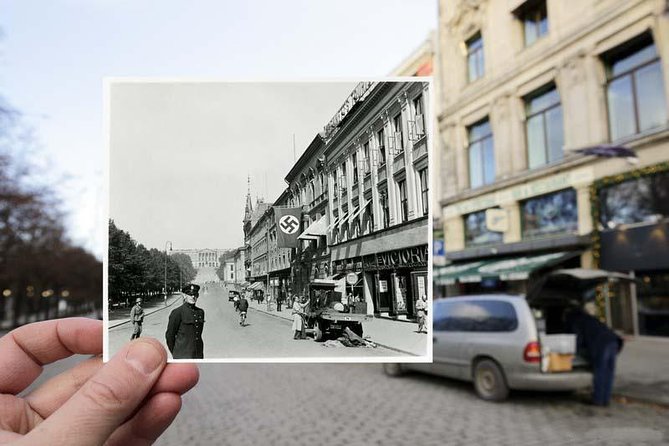
From there, the walk continues along Karl Johans gate. This broad central street contains several locations connected with World War II, so the stop is less about one single monument and more about reading the avenue as a historical setting.
This is where the photo comparisons can be especially helpful. A busy modern street may not immediately suggest wartime Oslo, but an old image can show how the same buildings and public spaces looked during the occupation. The method gives you something concrete to study rather than asking you to picture the past from words alone.
Parliament and Stortorvet
The Norwegian Parliament is the next named stop, with about 10 minutes devoted to the area. Parliament gives the guide another important civic setting for explaining Norway’s political experience during the war.
Again, this is an outdoor stop. Admission is not included, and the tour does not promise an interior visit to the Parliament building.
The walk then reaches Stortorvet, the market square. The stop is listed as Stortorvet Kebab, but the historic interest is the square itself, not a scheduled food break. Admission is free, and you can expect another short discussion connected to events and places in wartime Oslo.
Short stops like these work best if you want a moving city lesson rather than a long, seated presentation. The tradeoff is that you may need to concentrate while standing outdoors, with city noise and weather around you. One family found that older members sometimes had trouble catching every word while walking, though the guide clarified points and answered questions. If anyone in your group has hearing difficulty, tell Rami at the start and ask him to pause in quieter spots.
A completely different kind of day out from Oslo:
- Oslo: Fjord Evening Cruise with Shrimp Buffet
★ 4.5 · 1,956 reviews - Oslo: 3-Hour Highlights Bike Tour
★ 4.8 · 1,609 reviews - Oslo: 24 or 48-Hour Hop-On Hop-Off Sightseeing Bus Ticket
★ 4.1 · 1,470 reviews - Oslo: Guided Sightseeing Fjord Cruise on Premium Silent Boat
★ 4.7 · 1,390 reviews
University Square and the Faculty of Law
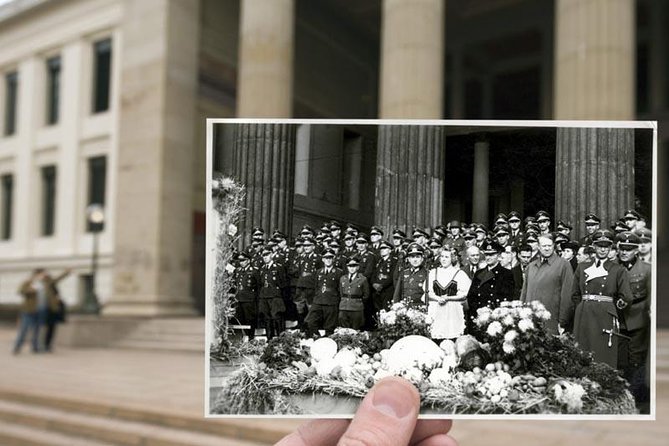
The University of Oslo’s Faculty of Law, at University Square, is another 10-minute stop. This gives the tour a different setting from the palace and government buildings.
The university area helps broaden the story beyond formal politics. The guide’s focus includes the effect of occupation on everyday life and the choices made by people living under German control. The details supplied for this experience do not identify a specific building interior or promise a particular wartime artifact here, so think of the stop as a place-based explanation rather than a museum display.
This section may appeal to you if you enjoy the human side of history. Rami is repeatedly praised for explaining the period in a balanced way, using facts and photographs rather than turning the walk into a dramatic performance. That measured approach is valuable when a subject includes occupation, collaboration, resistance, and difficult personal choices.
Nationaltheatret and Gunnar Sønsteby
At Nationaltheatret, the tour includes the Gunnar Sønsteby monument. You receive about 10 minutes here, and the stop connects the city walk directly with one of Norway’s best-known resistance figures.
The monument gives the guide a clear point from which to discuss resistance activity and the people who opposed Nazi rule. Rami’s personal photographs and stories are intended to make the period feel present at the exact place where you are listening.
This is one of the tour’s strongest moments for history fans because it combines a visible memorial with a wider account of the resistance. You do not simply hear a name and move on. The guide places the person and the resistance story into the physical center of Oslo.
The stop is still brief, so you should not expect a full biography or an exhaustive account of every resistance group. If Sønsteby or the resistance is your main interest, use the private format to ask for more detail.
Walking toward Akershus Fortress
The final major destination is Akershus Castle and Fortress, with about 10 minutes listed for the stop. The tour ends here, near the Norway’s Resistance Museum.
That ending works well. After walking through streets and civic spaces, you arrive at a fortified site with a direct connection to Oslo’s military and wartime story. The fortress also gives you the option of continuing your historical visit independently, including a visit to the nearby museum. Museum admission is not included in the walking tour price.
One useful way to plan the day is to take this walk before visiting the Resistance Museum. The guide can give you a citywide framework first, and the museum can then add objects, documents, and displays. One person who followed that order found the tour a strong counterpoint to the museum visit.
The route ends at the fortress rather than returning to the starting point. That is convenient if you plan to continue sightseeing in the area, but you should account for it when arranging transport or meeting a group elsewhere.
How the timing works on the ground
The advertised duration is about 2 hours and 30 minutes. Seven named stops are listed at roughly 10 minutes each, but the total experience is longer because you also spend time walking between locations, viewing photographs, and listening to explanations.
Do not treat the stop times as strict limits. A private tour can shift its attention depending on your questions and interests. Rami has been praised for managing time well while still giving a substantial amount of information.
You should be ready to walk outdoors for the full experience. The information provided does not give a distance or a specific accessibility rating, but most people can participate, and service animals are allowed. Wear comfortable shoes and dress for Oslo’s changeable weather. Rain was a problem for at least one group, yet the tour remained worthwhile because the content stayed strong.
The tour is offered in English and uses a mobile ticket. It runs Monday through Thursday from 9:00 in the morning to 4:00 in the afternoon during the stated operating period. Confirmation is sent within 48 hours of booking, subject to availability.
The value of a $307.50 private group price
The cost is $307.50 for a group of up to five people. For a full group, that is $61.50 per person. For two people, the effective price is much higher, so value depends heavily on how many are in your party.
I think the price makes the most sense for a family or small group that would otherwise book separate activities. You are paying for a private guide, a tailored conversation, and access to Rami’s collection of wartime photographs, not simply for transport between sights.
The price does not include admission to the Royal Palace, Parliament, Nationaltheatret, Akershus Fortress, or the Resistance Museum. Several stops are viewed from outside, and the walk itself is the main product.
If you mainly want a quick overview of Oslo’s landmarks, a general city walk may offer better value. If you want a focused explanation of Norway during World War II and the freedom to ask questions, the private format gives the higher return.
The fact that the experience is often booked about 77 days ahead suggests that you should reserve early if your Oslo dates are fixed. That matters especially for cruise passengers or anyone with only one day in the city.
Who will get the most from this walk?
You will get the most from this tour if you enjoy history but do not want to spend the entire day inside a museum. It is also a good choice if your group includes people with different levels of interest, since the guide can adjust the depth and answer questions as you go.
The experience suits:
- World War II history fans who want Norway placed into the wider conflict
- Families with older children or teenagers who learn better from stories and images
- Small groups seeking a private guide rather than a large walking party
- Cruise passengers with limited time in Oslo
- People who want to pair a city walk with the Resistance Museum
- Visitors who want an introduction to Oslo’s central sights through a historical lens
It may be less suitable if you dislike walking in poor weather, want extensive indoor sightseeing, or prefer a broad overview of Oslo without a war-focused theme. It is also not the best match if you need a fully detailed mobility plan, since the available information does not specify the route’s exact distance or surface conditions.
Practical preparation for a stronger experience
I would schedule this tour early in your Oslo stay. You get your bearings on Karl Johans gate, see major central sights, and finish at Akershus Fortress. That makes it easier to decide which nearby places deserve more of your time afterward.
Bring a rain jacket or umbrella. The tour requires good weather, and poor conditions may lead to another date or a full refund, but Oslo weather can also make an otherwise enjoyable walk less comfortable even when the tour proceeds.
If you are preparing before arrival, The King’s Choice and NR24 can provide useful background. One person found that watching those films helped make Norway’s wartime story easier to follow, though you do not need prior study to enjoy the walk.
Ask questions early. Since the tour is private, you have a better chance of shaping the discussion around your group’s interests than you would on a standard public walk. If you need the guide to speak more slowly or repeat points, say so at the beginning rather than waiting until the end.
Free cancellation is available if you cancel at least 24 hours before the start time. Changes or cancellations inside that window are not accepted for a refund. The experience can also be canceled if a minimum number is not met, with a different date, another experience, or a full refund offered.
Should you book this Oslo history tour?
Book it if you want Oslo’s World War II story tied to real streets, civic buildings, monuments, and photographs. Rami’s strongest qualities are his detailed command of the subject, his personal image collection, his clear and balanced approach, and his willingness to adapt the walk to your group.
I would especially recommend it to history fans, families, and cruise passengers who want more than a quick look at Oslo’s postcard sights. The price is easiest to justify with four or five people, and the experience is best on a reasonably dry day.
Skip it if you want a fast landmark checklist, a fully indoor activity, or a tour with no fixed war theme. For everyone else, this is a thoughtful way to understand how a major European city lived through occupation, resistance, and the difficult years of 1940 to 1945.
FAQ
Where does the tour begin?
The tour begins at the Karl Johan monument in central Oslo, at Karl Johan-monumentet, Sentrum, 0010 Oslo, Norway.
Where does the tour finish?
It ends at Akershus Fortress, near the Norway’s Resistance Museum, at 0150 Oslo, Norway.
How long does the experience last?
The walking tour lasts approximately 2 hours and 30 minutes.
How many people can join the private tour?
The price covers one private group of up to five people. Only your group participates.
What language is the tour offered in?
The experience is offered in English.
Is admission to the attractions included?
Admission is not included for the Royal Palace, the Norwegian Parliament, Nationaltheatret, or Akershus Fortress. Stortorvet and the University of Oslo Faculty of Law are listed as free stops. The tour ends near the Norway’s Resistance Museum, but museum admission is not included.
Is the tour suitable for most people?
Most people can participate, and service animals are allowed. The available information does not provide a detailed route distance or specific accessibility information.
What happens if the weather is poor?
The experience requires good weather. If it is canceled because of poor weather, you will be offered a different date or a full refund.
Just added around Oslo
- Visit the Instaworthy Spots of Oslo’s Vigeland Park with a Local★ 5.0 · 4 reviews
- Oslo: 3-hour Cross Country trip with equipment and guide★ 5.0 · 4 reviews
- Oslo: 2-hour Christmas Private Walking Tour★ 3.0 · 4 reviews
- Art and Museum Tour of Oslo★ 5.0 · 4 reviews
- Flavors of Oslo: Food & Beer Tour★ 4.8 · 4 reviews
- Private Transfer from Oslo City Centre to Oslo Airport★ 5.0 · 4 reviews
- 3-Hour Vattkørt Beginner Kayak Course on Oslo Fjord★ 5.0 · 4 reviews
- Hipstoric Grünerløkka Private Walking Tour★ 5.0 · 4 reviews
Oslo Tours, compared.

Scenic Fjord Cruise with Audio Guide Commentary
Read our review →



Guided Sightseeing Cruise on Oslofjord by Premium Silent Boat
Read our review →Browse the lists this tour appears in