
Reviewed · WHALE WATCHING
Skjervøy: Orca and Whale-Watching comfort heated Boat Trip
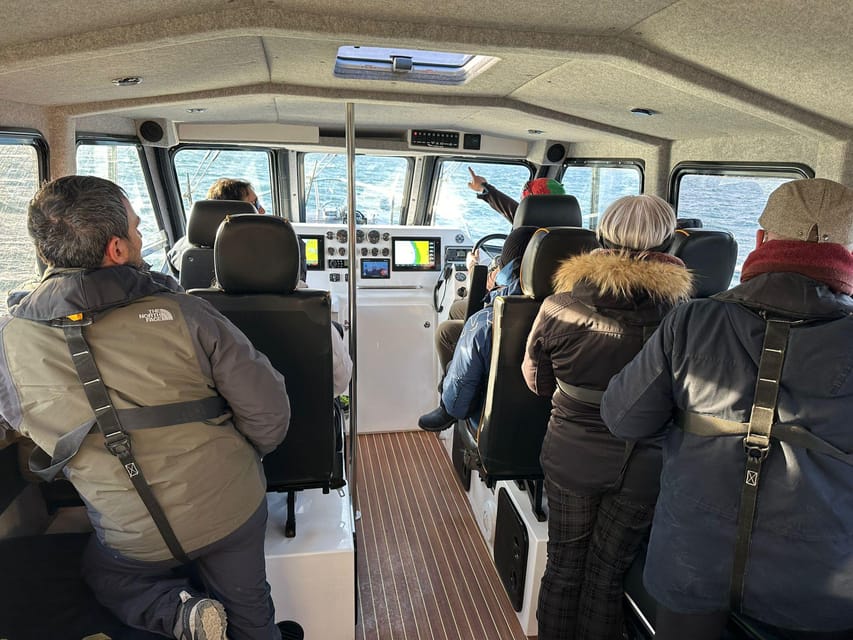
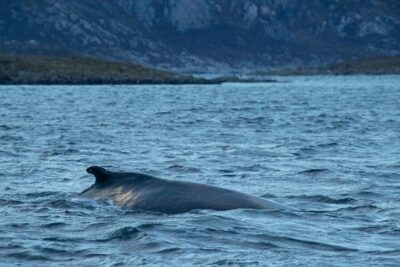
Orcas reward patience. This Skjervøy safari pairs Arctic wildlife with a covered, heated boat, giving you a warmer and steadier ride than a standard RIB. You may see orcas, humpback whales, minke whales, and fin whales in the Barents Sea, with a guide helping you read the water and spot movement.
I especially like the large outdoor terrace for photography and the onboard hydrophone, which lets you listen for underwater calls. Guides Filippo and Jacob also appear to handle sightings with care, shutting off the engine near whales instead of chasing them.
The main drawback is simple: wildlife follows its own timetable. Sightings are not guaranteed, and the $301 price is a serious spend for a 3.5-hour trip. If you are prone to seasickness, take suitable medication well in advance.
In This Review
- Key points at a glance
- Why this Skjervøy whale trip feels different
- Meeting the boat at the Skua Nature banner
- Setting out across the Barents Sea
- Watching orcas without chasing them
- Humpbacks, minkes, and fin whales
- A practical boat for Arctic photography
- Warmth, facilities, and seasickness
- What the $301 price buys you
- Who should book this experience
- Should you book the Skjervøy orca safari?
- FAQ
- How long does the Skjervøy whale-watching trip last?
- Where does the activity start and end?
- What whales might I see?
- Is the boat heated?
- Do I need to wear a special suit?
- What languages are available?
- Can I cancel the booking?
Key points at a glance
- Heated comfort without bulky special suits: Warm up in the covered cabin between sightings, then step outside when whales appear.
- A boat built for photography: The spacious outdoor terrace gives you open views and room to work with a camera and telephoto lens.
- Hydrophone and night vision camera: These unusual tools add sound and low-light viewing to the usual whale-watching experience.
- Orca and humpback focus: The main targets are orcas and humpbacks, with minke and fin whales also possible.
- Wildlife-first guiding: Filippo and Jacob have been praised for switching off the engine and allowing whales to approach.
- A short Arctic outing: The trip lasts about 3 hours and 30 minutes, starting and ending at the Skua Nature banner in Skjervøy.
Why this Skjervøy whale trip feels different
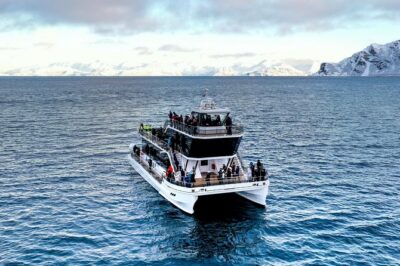
Many whale excursions make you choose between warmth and a clear view. Here, you can move between both. The boat is covered and heated, but it also has an outdoor terrace where you can watch the sea and prepare for photographs.
That setup matters in northern Norway. Even if the air feels manageable at the dock, wind on open water can quickly change your comfort level. A heated cabin gives you a place to warm your hands, check your camera, and wait for the next sighting without treating discomfort as part of the adventure.
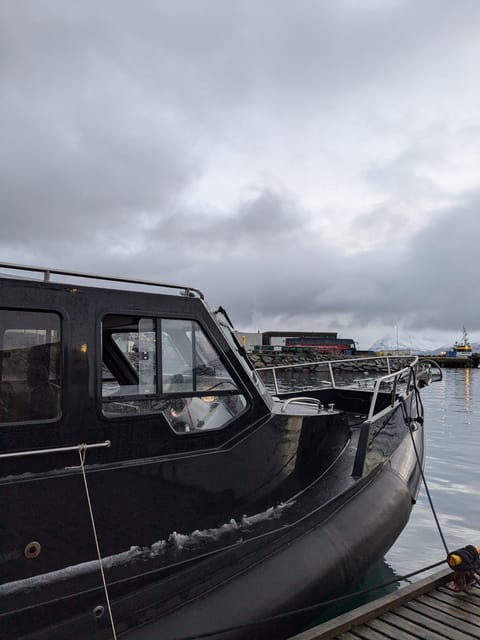
The boat is also designed for greater stability than a traditional RIB. That does not make the sea perfectly calm, and it does not remove the risk of motion sickness. It does mean the ride should feel less harsh, particularly for photographers trying to hold a long lens steady.
I like the balance here. You are not confined to a viewing cabin, but you are also not expected to spend the whole trip outside in Arctic weather. The terrace is the place for clear views and photographs. The cabin is your sensible retreat when the cold starts winning.
More whale watching:
- Tromsø: Whale Watching Tour by Hybrid-Electric Boat
★ 4.5 · 4,217 reviews - Tromsø Whale Safari with MS Gabriele
★ 4.3 · 1,937 reviews - From Tromsø: All-Inclusive Whale & Orca Safari
★ 4.5 · 1,221 reviews
Meeting the boat at the Skua Nature banner
The starting point is marked by a Skua Nature banner or flag at the location listed as 2XPM+98X. The activity finishes back at the same meeting point, so you do not need to arrange a separate return transfer after the boat ride.
The experience begins with a short orientation and safety briefing. Pay close attention, even if you have taken whale trips before. You will receive instructions about moving around the boat, listening to the crew, and responding when the captain positions the vessel near marine life.
The exact starting time depends on availability. Since the excursion lasts around 3 hours and 30 minutes, I would keep enough space around it rather than scheduling a tight connection immediately afterward. The description also refers to about four hours of whale watching within the itinerary, but the stated overall duration is 3.5 hours. Use the confirmed booking time as your guide.
There is no listed transport beyond the boat cruise itself. Plan to reach the meeting point in Skjervøy on your own, and confirm the exact location before setting out.
Setting out across the Barents Sea
Once the briefing is finished, the boat heads from Skjervøy into the surrounding Arctic waters. The scenery is part of the reward, but the real task is to keep watching the sea for signs of life.
Your guide will help you search for blows, fins, splashes, and the movement of a pod. This is not a zoo visit with animals appearing on cue. You might spend quiet stretches scanning the water before a distant spout changes the mood on board.
That waiting period is where the boat design earns its keep. You can stand on the terrace for a clear view, then return to the warm cabin when the wind picks up. Hot drinks are included, along with biscuits according to one of the available comments about the trip, a small touch that matters when you are sitting still in cold weather.
The boat carries a night vision camera and a hydrophone. The night vision equipment may help the crew observe marine life in darker conditions, while the hydrophone lets you hear underwater sounds. The experience is not only about photographing a fin at the surface. You also get a sense that whales occupy a much larger world below the boat.
Watching orcas without chasing them
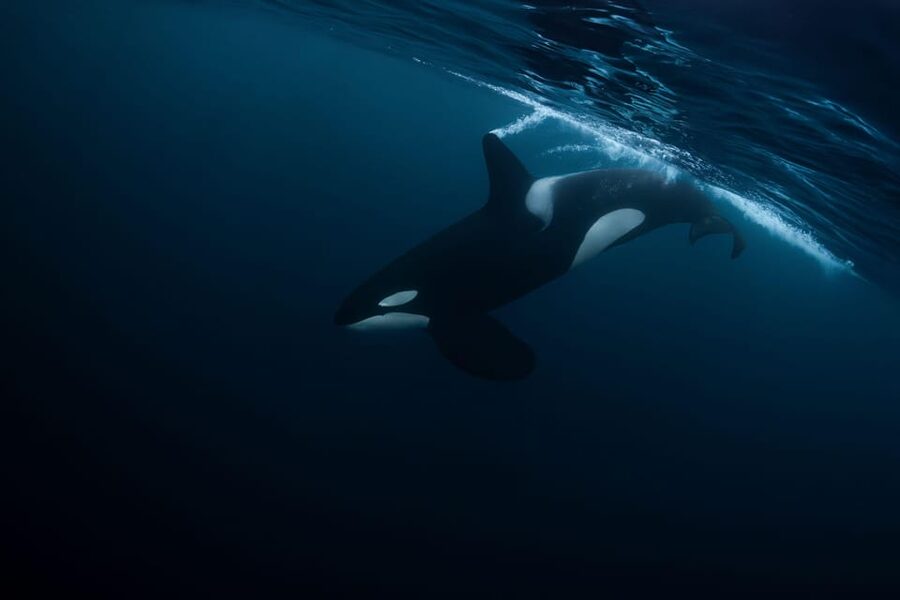
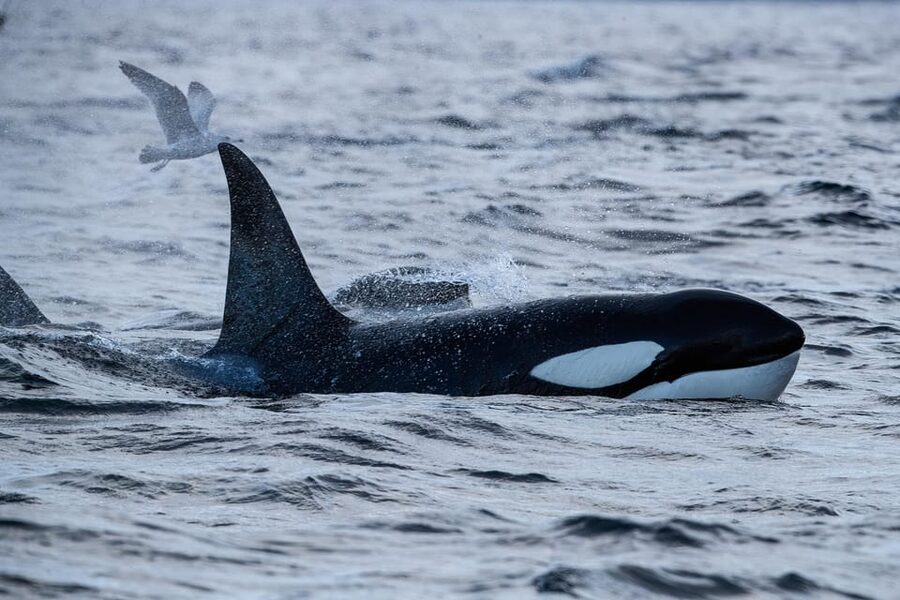
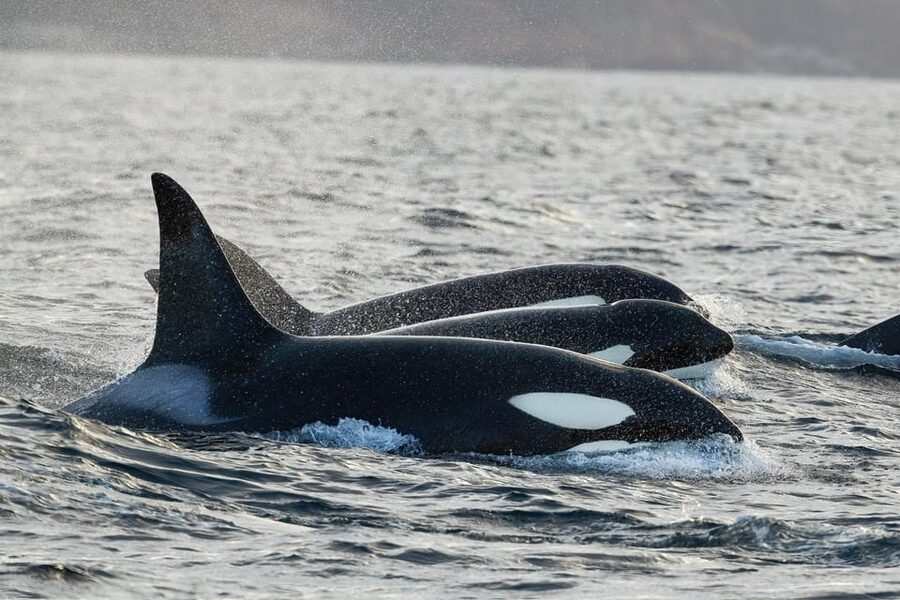
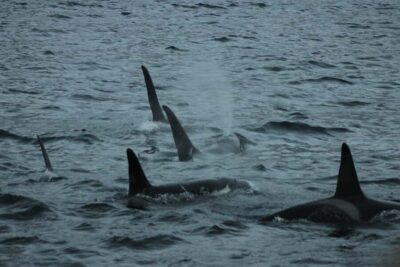
Orcas are the main attraction, and the trip is designed around finding them in their natural setting. You may see a single animal, a small group, or a larger pod moving through the water.
The strongest details from the available accounts involve several pods, with some groups described as numbering roughly 10 to 15 orcas. That level of activity cannot be promised on any given departure, but it shows what conditions can produce when the animals are in the area.
The handling of the boat is just as important as the sighting itself. Filippo and Jacob have been praised for stopping the engine when they reached whales and allowing the animals to come closer on their own. One account describes orcas approaching after the engine was switched off, which is exactly the sort of encounter that feels less forced.
You should still expect the captain to manage distance and time carefully. The boat may move away from one pod rather than remain with it for too long. That can feel frustrating if the whales are close, but it helps reduce pressure on the animals and gives the crew a better chance of finding other groups.
Bring patience and keep your camera ready. Orcas do not pose for long, and their movement can be hard to predict. A telephoto lens is recommended if you have one. It gives you a better chance of filling the frame without asking the boat to approach too closely.
More boat trips:
- From Bergen: The Original Fjord Cruise to Mostraumen
★ 4.7 · 8,440 reviews - Stavanger: Scenic Fjord Cruise to Lysefjord and Preikestolen
★ 4.6 · 5,791 reviews - Oslo: Scenic Fjord Cruise with Audio Guide Commentary
★ 4.5 · 5,375 reviews - Tromsø’s Top-Rated Fjord & Fishing Cruise – All-Inclusive
★ 4.7 · 4,017 reviews
Humpbacks, minkes, and fin whales
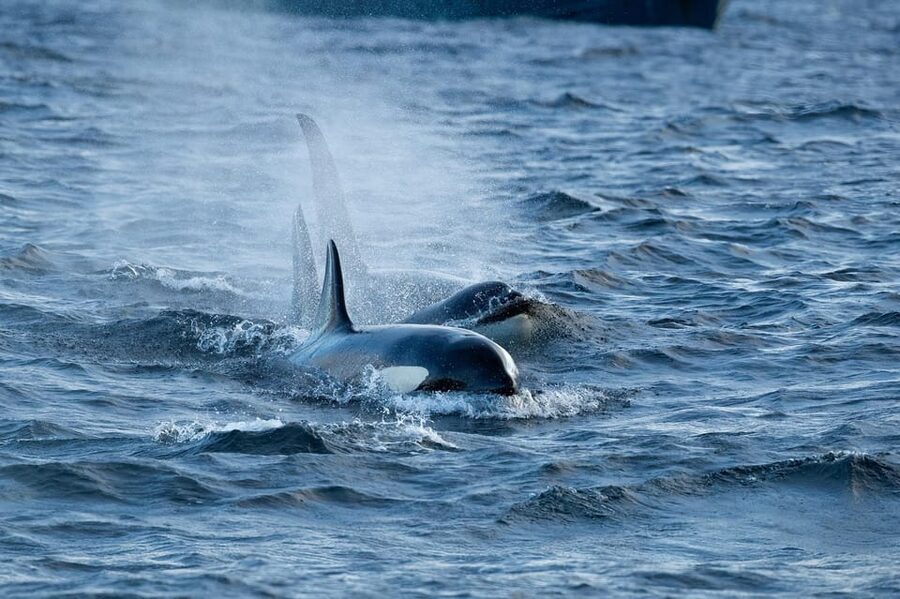
Orcas may be the headline act, but the possible sightings include humpback whales, minke whales, and fin whales. Each species creates a different kind of encounter.
Humpbacks can be especially rewarding for photography because their larger bodies and surface behavior may offer more visual detail. Several accounts describe humpbacks appearing along with orcas, including one sighting toward the end of the outing.
Minke and fin whales are also possible, though the information provided does not promise any particular species on each trip. You might see only one type of whale, several species, or no cetaceans at all. That uncertainty is part of the honest calculation behind the price.
The crew’s job is to help you make sense of what you see. You will hear about animal behavior and habitat, not just receive a quick species name. The guide can also offer advice on timing photographs, positioning yourself on the terrace, and making the most of short surface appearances.
If your goal is a particular photograph, keep your expectations flexible. A whale-watching trip can produce a memorable image even when the animal surfaces farther away than hoped. The guide’s natural-history explanations add value during the periods when the camera stays down.
A practical boat for Arctic photography
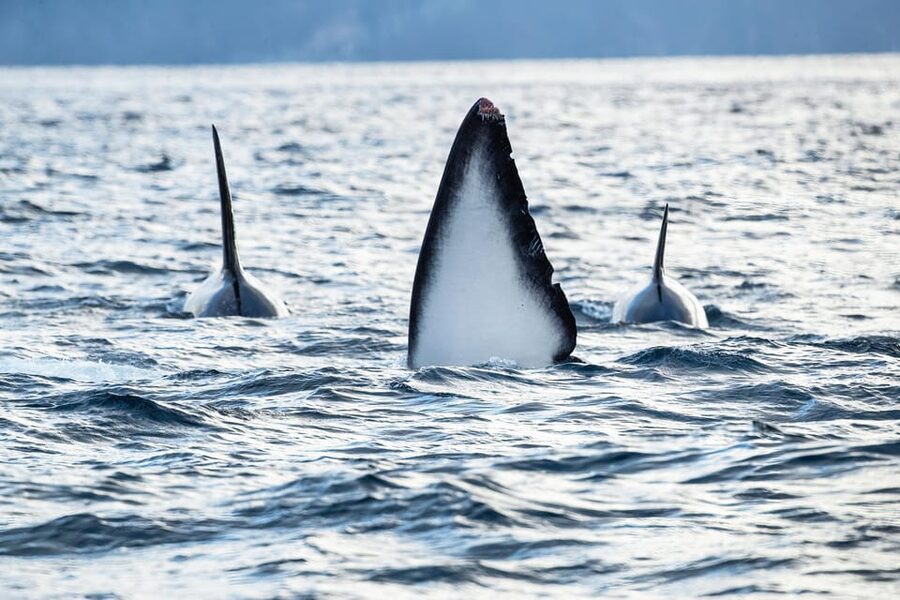
The terrace is one of the most useful features for anyone bringing serious camera equipment. It gives you an open view rather than forcing you to photograph through a window, and it lets you react quickly when an animal surfaces.
You should bring your camera and telephoto lens if you have them. The guide can provide photography tips, but you remain responsible for managing your equipment in a moving boat and cold conditions. Keep your setup practical and avoid bringing more gear than you can handle comfortably.
The boat’s stability is another advantage. A traditional RIB can be exciting, but its movement and spray can make long-lens photography difficult. This vessel is intended to offer a smoother ride, giving you a better platform for watching and shooting.
Still, no boat can guarantee perfect photographic conditions. Wind, light, distance, and whale behavior all matter. The best approach is to enjoy the sighting first, then take photographs when the moment allows. You may return with excellent pictures, but the trip should not be judged only by whether you captured a frame suitable for a wall.
The guides can also help you find the best position. Listen when they ask people to shift or leave space. A clear view benefits everyone, and the outdoor terrace works best when people cooperate rather than crowd one rail.
Warmth, facilities, and seasickness
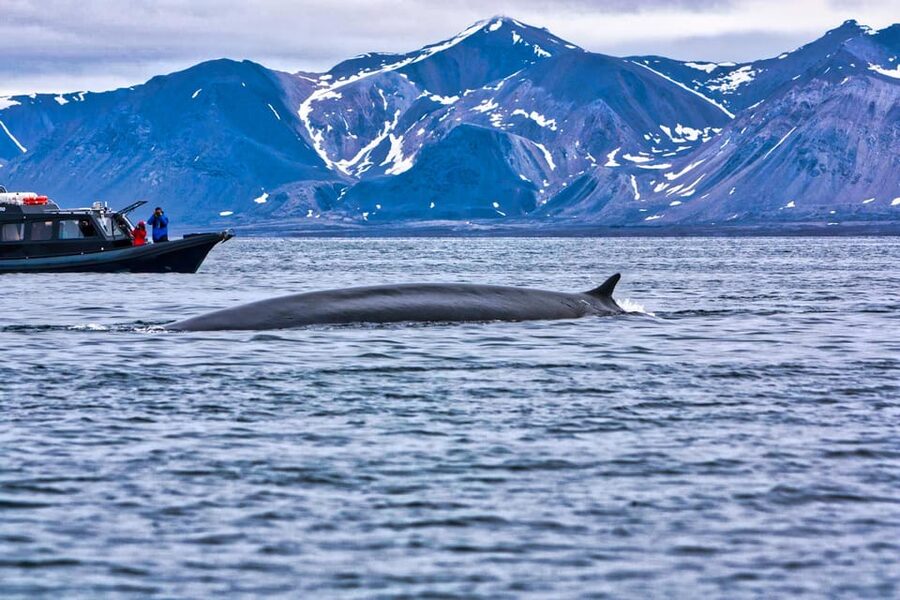
The heated cabin is the strongest comfort feature on this outing. You can watch from outside when conditions are good and warm up inside when they are not. The boat also has an onboard toilet, which is useful during a several-hour trip far from shore.
You do not need to wear a special suit on this covered boat. That makes packing easier and removes one common worry about cold-water excursions. You should still dress sensibly for Arctic weather, especially if you plan to spend time on the terrace, but the boat gives you more protection than an open craft.
Seasickness remains a real possibility. The more stable design may help, but it cannot cancel the motion of the sea. If you know you are susceptible, take appropriate medication in advance, usually about two hours before departure, as advised in the trip information.
The experience is not suitable for children under six or for pregnant women. Those restrictions should guide your plans before you pay. The listed tour languages are English and Italian, so you should choose the departure only if you can follow the safety instructions in one of those languages.
What the $301 price buys you
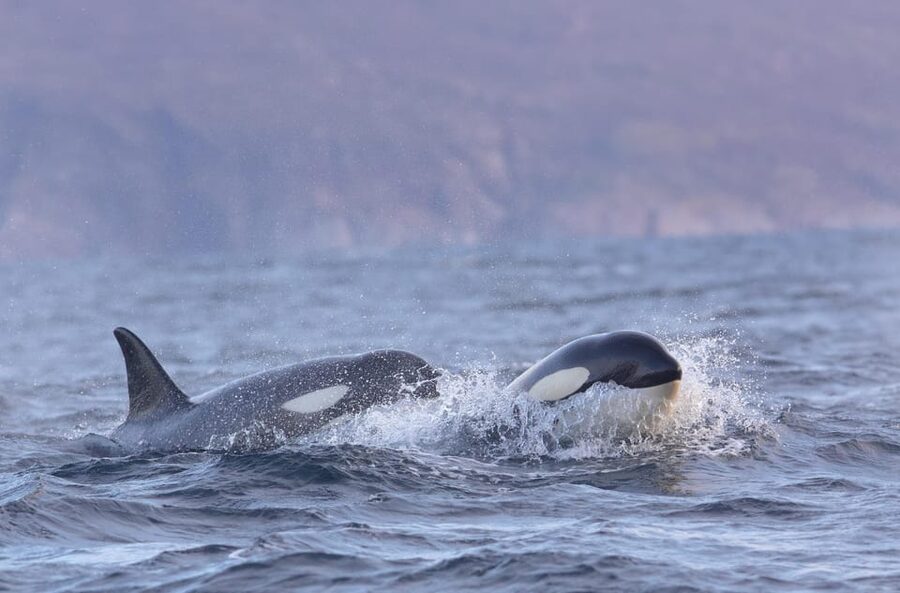
At $301 per person, this is not a casual add-on. I would compare it with the cost of other Arctic activities before booking, especially if you are traveling as a family or group.
The price includes the boat cruise, captain, environmental guide, safety briefing, hot drinks, use of the heated covered vessel, toilet, and photography advice. It also buys you a more comfortable platform than a basic open boat, plus equipment such as the hydrophone and night vision camera.
The value depends heavily on your priorities. If you want the cheapest possible way to get on the water, this may feel expensive. If you care about staying warm, having a steadier boat for photography, and receiving wildlife guidance in English or Italian, the cost becomes easier to justify.
The short duration also matters. You get about 3.5 hours, not a full-day expedition. That is convenient if you have limited time in Skjervøy, but it gives the crew a narrower window to find whales. A lucky trip may bring several pods and humpbacks close to the boat. A quiet day may leave you feeling that the price was high for the time spent searching.
The 4.9 rating from 27 reviews suggests strong satisfaction, with praise focused on the boat, the guides, close sightings, warmth, and respectful wildlife handling. I would treat that as encouraging rather than a promise. The animals still control the schedule.
Who should book this experience
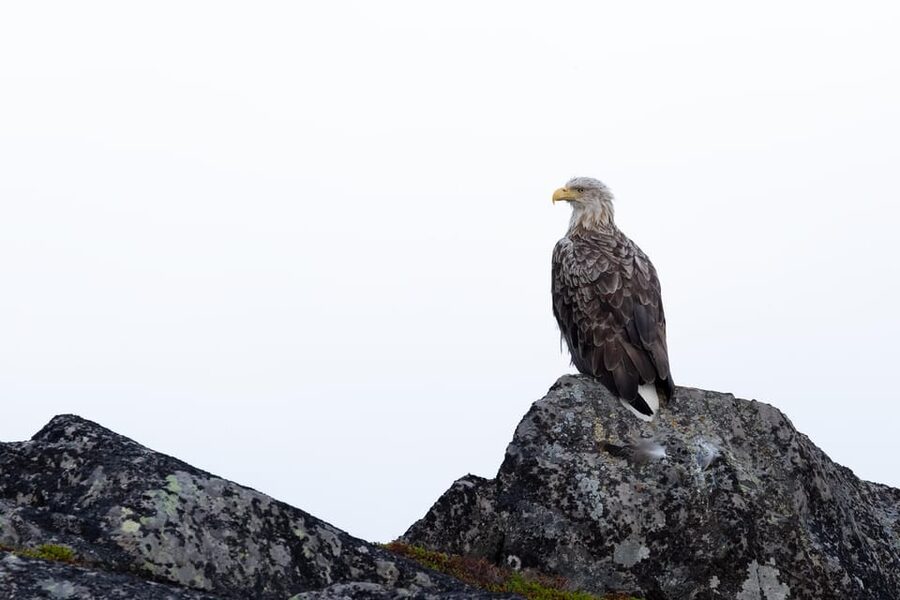
I would recommend this trip most strongly to wildlife photographers, first-time whale watchers who dislike open RIBs, and anyone who wants a shorter outing with a warm place to retreat.
It is also a good fit if you care about how wildlife encounters are managed. The reported practice of switching off the engine and letting orcas approach is a meaningful detail. You can enjoy close sightings without asking the crew to pursue the pod aggressively.
This may be less suitable if you need guaranteed animal sightings, dislike boat motion, or want a full-day expedition with more time on the water. It is also not the right choice for children under six or pregnant women.
For photography, bring the best telephoto lens you own, but do not forget to look up from the viewfinder. The hydrophone, guide commentary, and sudden movement of a pod are part of the experience. A technically imperfect photo can still mark a remarkable encounter.
Should you book the Skjervøy orca safari?
Book it if the heated boat, steady platform, and wildlife-first guiding matter as much to you as the possibility of seeing orcas. The combination is unusually practical for Arctic conditions, and the reports of multiple pods, close approaches, and humpbacks make this a tempting choice.
I would skip it if $301 feels too steep for an outing with no sighting guarantee, or if you need a longer tour to feel the cost is worthwhile. Check the weather, allow time for seasickness medication, arrive at the Skua Nature banner, and keep your expectations open.
For the right person, this is a thoughtful whale trip rather than a simple boat ride. You get comfort without losing the open-air view, photography help without pressure to perform, and a chance to watch powerful animals on their own terms.
FAQ
How long does the Skjervøy whale-watching trip last?
The stated duration is about 3 hours and 30 minutes. Starting times vary, so check availability when booking.
Where does the activity start and end?
You meet at the Skua Nature banner or flag at the listed starting location, 2XPM+98X. The boat returns to the same meeting point.
What whales might I see?
Possible sightings include orcas, humpback whales, minke whales, and fin whales. Wildlife sightings are not guaranteed.
Is the boat heated?
Yes. The vessel is covered and heated, with a warm cabin and an outdoor terrace for viewing and photography.
Do I need to wear a special suit?
No. The activity information says special suits are not needed on the covered boat. You should still dress suitably for Arctic weather if you plan to use the terrace.
What languages are available?
The live guide is available in English and Italian.
Can I cancel the booking?
You can cancel up to 24 hours in advance for a full refund. A reserve-now, pay-later option is also available.
Just added around Norway
- Private hiking tour Bergen mountains like a local★ 5.0 · 4 reviews
- From Alta: Experience Seiland National Park★ 4.3 · 4 reviews
- Oslo: 3-hour Cross Country trip with equipment and guide★ 5.0 · 4 reviews
- Visit the Instaworthy Spots of Oslo’s Vigeland Park with a Local★ 5.0 · 4 reviews
- Flexible tour to Hardangerfjord vøringsfossen cruise include★ 5.0 · 4 reviews
- Oslo: 2-hour Christmas Private Walking Tour★ 3.0 · 4 reviews
- Art and Museum Tour of Oslo★ 5.0 · 4 reviews
- Bergen: Private Waterfalls and Wonders of Fjord Norway★ 5.0 · 4 reviews
Whale Watching, compared.
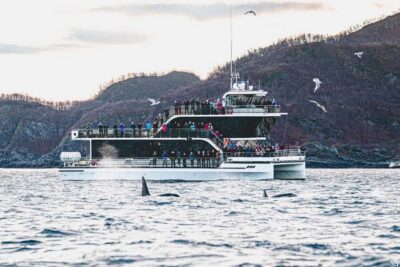
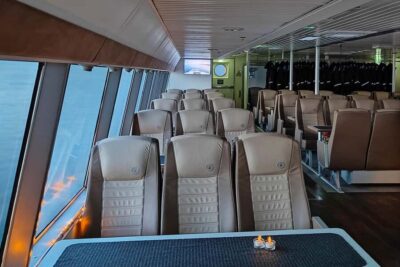
Silent Whale Watching by Hybrid-Electric Boat from Tromsø
Read our review →
Bleik: Whale Watching by Speedboat with Puffins and Muffins
Read our review →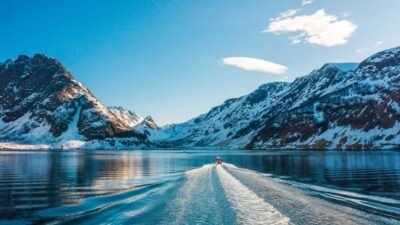
Browse the lists this tour appears in