
Reviewed · WHALE WATCHING
Tromsø Whale Safari with MS Gabriele
Whales make the Arctic feel wonderfully wild. This six-hour trip from Tromsø heads toward Skjervøy, where orcas and humpback whales often follow herring, and it combines serious wildlife watching with a warm, comfortable catamaran. I especially like the large viewing areas and the chance to learn from guides such as Lorenzo, Raul, and Bjørnar. The main catch is simple: whales move with the fish, so sightings are never guaranteed.
I also like the operator’s practical approach to nature and bad weather. You get an indoor saloon, outdoor decks, a bar, and a second-chance whale ticket if no whales appear. Still, this is a long Arctic sea trip, and rough water can leave even seasoned sailors reaching for a sick bag.
In This Review
- The quick take
- Leaving Nerstrandkaia for the open water
- The long run toward Skjervøy
- Finding orcas and humpback whales
- The scenery is part of the value
- Winter timing: December, January, or February?
- Comfort aboard MS Gabriele
- How the crew handles wildlife and weather
- Practical advice for a better day
- Who should book this Tromsø whale safari?
- FAQ
- Where does the Tromsø whale safari depart?
- How long does the whale safari last?
- Which whales might I see?
- Is whale watching guaranteed?
- What happens if the weather is too rough?
- What should I bring?
The quick take
- The whale route runs toward Skjervøy: Expect roughly six hours on the water, with up to eight hours if the whales are farther away.
- MS Gabriele is built for comfort: The catamaran has indoor seating, large windows, several outdoor decks, toilets, and a kiosk with hot and cold food and drinks.
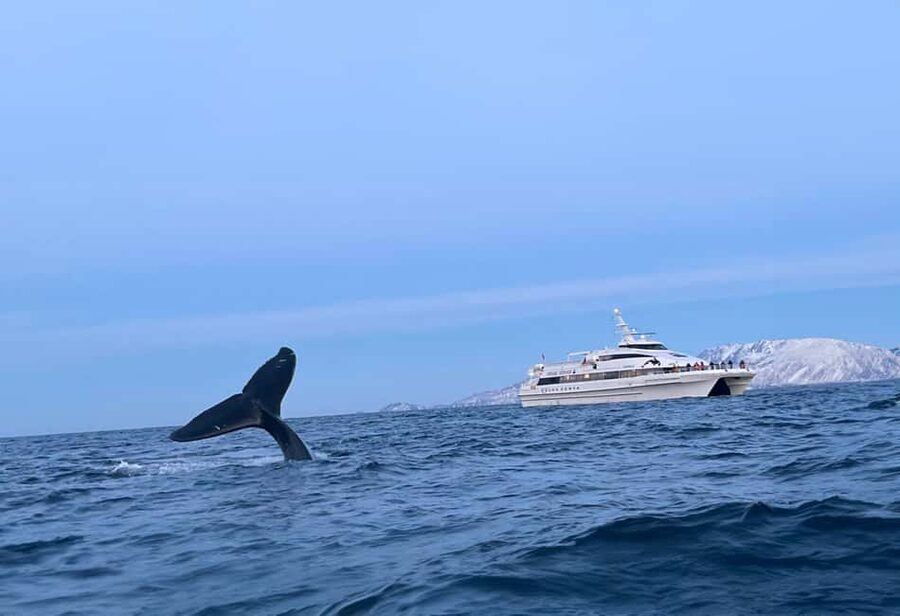
- Orcas and humpbacks are the usual prize: Fin whales, minke whales, and sperm whales also visit these waters.
- February needs special thought: Whales may still be present, but the main season is usually December and January.
- The boat can turn the day into a fjord cruise: If whales have moved on or weather blocks the route, you may visit Sommarøy instead.
- Motion sickness is the biggest practical concern: Bring warm clothes and consider taking your usual seasickness medicine before departure.
Leaving Nerstrandkaia for the open water
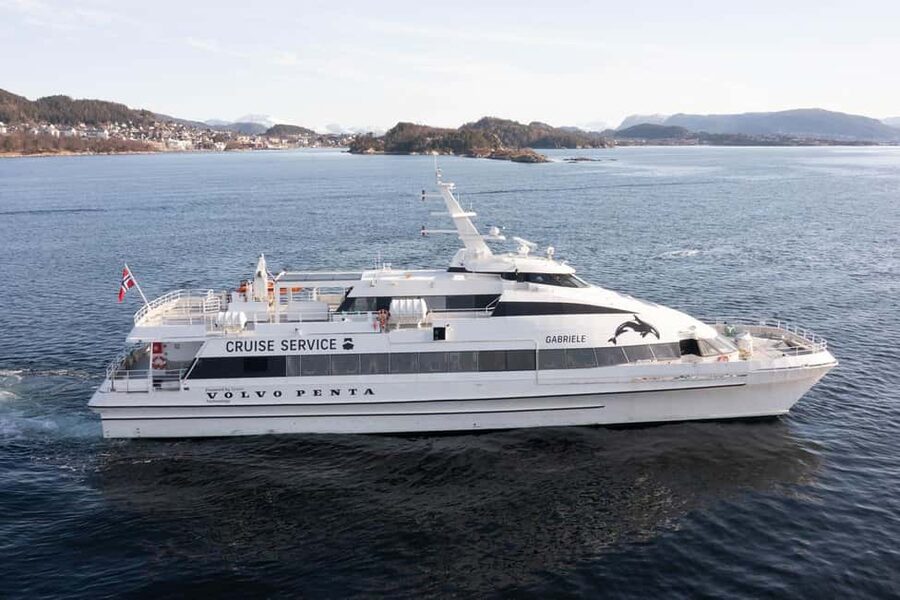
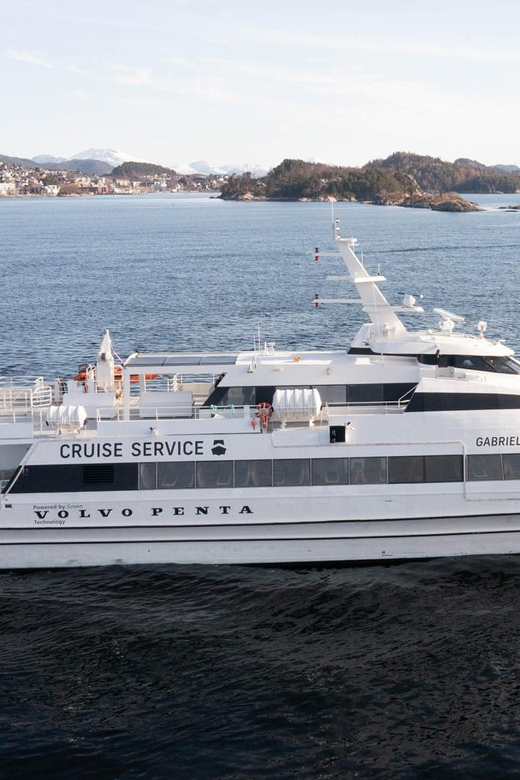
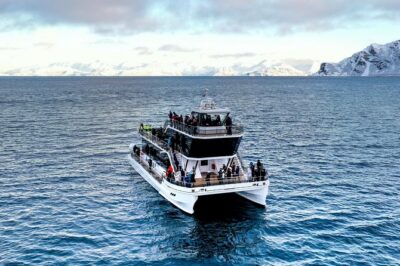
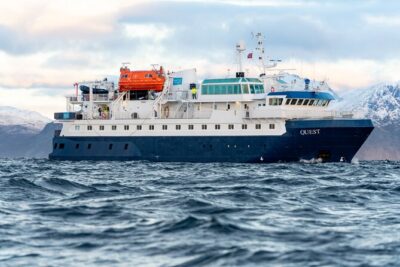
The meeting point is Nerstrandkaia, the pier just outside the Alti Shopping Center in Tromsø. Look for the white catamaran MS Gabriele. This is a useful central location, but do not arrive looking only for a tour office. The boat itself is the landmark.
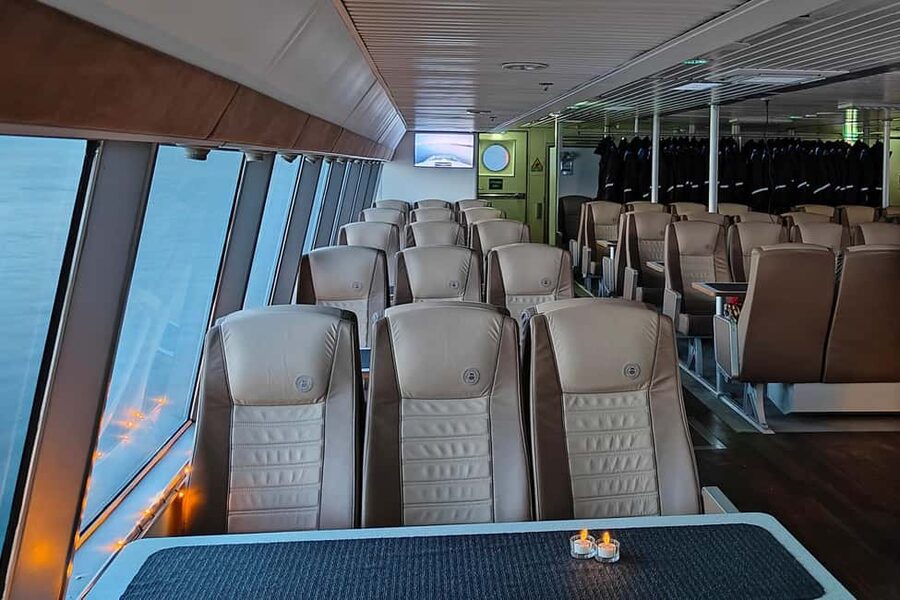
Once aboard, you can settle into a warm saloon with large windows or head outside to one of the viewing decks. The vessel has seats for every passenger, and the layout gives you more flexibility than a small open boat. You can warm up inside, then step out quickly when a whale appears.
That matters in winter. You will not want to stand outside for six hours, but you also will not want to watch every sighting through glass. MS Gabriele lets you move between both options without giving up your place.
The onboard kiosk sells warm and cold drinks, snacks, and light meals. Food is not included, so I would bring a lunch as well, especially if you tend to get hungry on long boat trips. You can buy items such as hot dogs onboard, but the information provided does not promise a full meal service.
More Whale Watching in Tromso
- Tromsø: Whale Watching Tour by Hybrid-Electric Boat
★ 4.5 · 4,217 reviews - From Tromsø: All-Inclusive Whale & Orca Safari
★ 4.5 · 1,221 reviews - Silent Whale Watching by Hybrid-Electric Boat from Tromsø
★ 4.5 · 1,017 reviews
The long run toward Skjervøy
The first part of the outing is less about immediate whale watching and more about covering distance. The crew heads toward the waters around Skjervøy, where herring can draw large groups of orcas and humpbacks. The whales are not parked in one fixed place, so the crew uses current reports from other sailors along with its own experience to choose where to search.
This is why the trip can last six to eight hours. Six hours is normal, but the boat may spend longer at sea if the animals are farther away. The extra time gives the crew a better chance of finding whales, though it also means you should avoid scheduling a tight activity immediately afterward.
The passage can be smooth, but several people have found parts of the route choppy. The sea may feel calm around the whale site and rougher during the open-water crossing. If you get motion sickness, take your normal remedy before boarding rather than waiting until you feel ill. The crew carries sick bags and helps passengers who struggle, but prevention is much more pleasant.
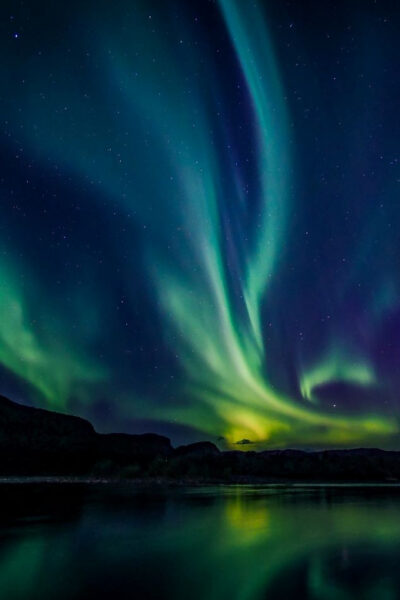
This is also the part where the Arctic scenery earns its keep. Snowy mountains, fjords, glaciers, islands, and changing winter light fill the view. In December, limited daylight can make the schedule feel rushed, especially when the boat must return before darkness deepens. In one of the more striking possibilities, the northern lights have appeared during the afternoon return trip.
Finding orcas and humpback whales
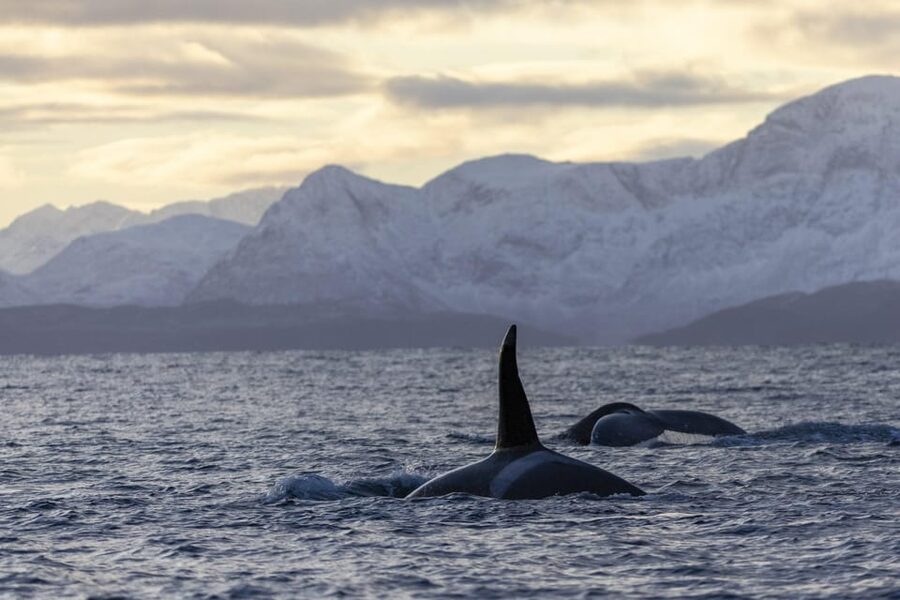
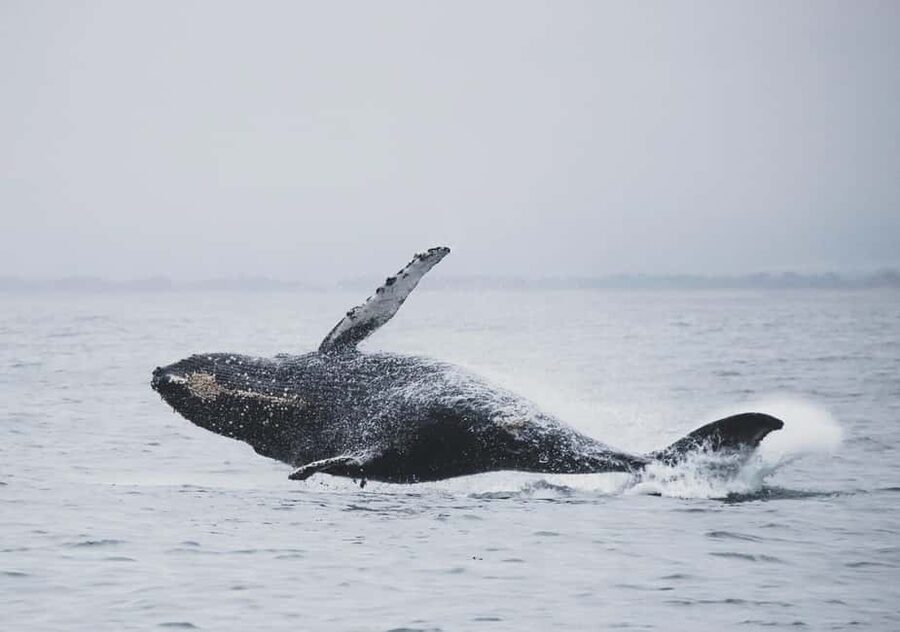
The usual target is a mixed scene of orcas and humpback whales hunting herring. Orcas may travel in pods, while humpbacks can appear nearby as they feed. The crew’s job is not simply to find one animal, but to position the boat so people on different decks have a fair chance to see the action.
The front deck can be a strong viewing spot when the boat first reaches the whales. The back and upper decks give you other angles, and the large indoor windows help when wind and cold become too much. Some sightings may be close, while others remain at a respectful distance. That distance is part of responsible wildlife watching, even if it makes photography harder.
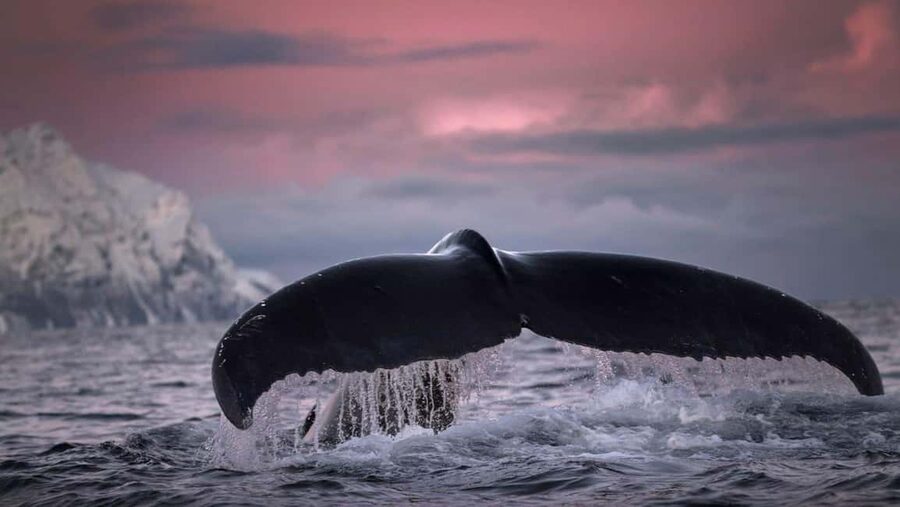
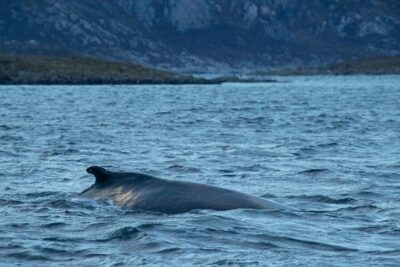
You should expect waiting between sightings. A whale may surface once, vanish, and reappear somewhere else. Orcas can move quickly, and humpbacks can be surprisingly hard to predict. The most memorable moments may be brief: a tail, a blow, a dark back, or a sudden breach.
The guides add real value here. Lorenzo has been praised for his humor, local knowledge, and clear explanations of whale behavior and hunting methods. Raul and Bjørnar have also been singled out for attentive service and enthusiasm. A good guide helps you understand what you are seeing instead of leaving you to stare at distant fins and guess.
The tour is conducted in English. Most of the guiding is conversational, with time to ask questions. One report found one guide harder to understand, so communication may vary slightly among the crew, but the main message is clear: watch the animals without crowding them, and learn why their presence changes from day to day.
The scenery is part of the value
At $207 per person, this is not a cheap half-day outing. The price makes more sense when you view it as a full Arctic day on a larger vessel, not as a short boat ride with a guaranteed animal encounter.
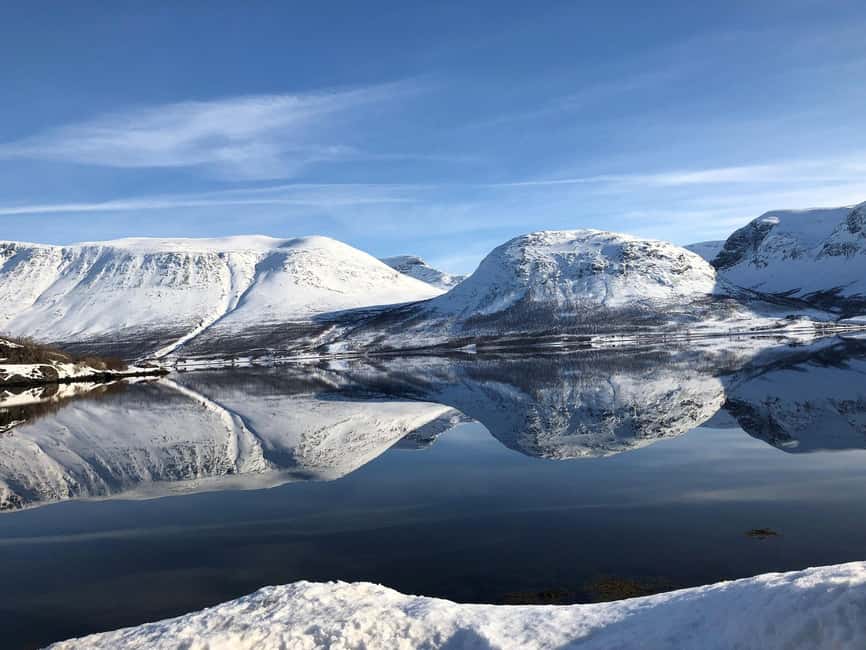
Even without whales, you are still crossing some of northern Norway’s most impressive fjord country. Recent February trips that found the whales had already left were changed to scenic outings with a stop at Sommarøy Island. Those days included mountain views, sea eagles, and other possible wildlife such as seabirds, seals, dolphins, an Arctic fox, and a sea otter.
That backup plan does not replace seeing an orca. It does, however, reduce the risk of spending $207 on a cold, empty crossing. The operator offers a free ticket for another available whale safari during the same season if no whales are seen. If the whales have clearly moved on, you may instead choose a full refund or a fjord trip, depending on the situation and the stated seasonal offer.
The scenery also helps during slow stretches. I would not choose this excursion if you only care about checking off whales. I would choose it if you want a full day of Arctic coast views, wildlife watching, and the possibility of a major marine encounter.
A completely different kind of day out from Tromso:
- Tromsø: Reindeer Sledding & Feeding with a Sami Guide
★ 4.8 · 6,417 reviews - From Tromsø: Aurora Borealis Tour
★ 4.8 · 4,206 reviews - Tromsø’s Top-Rated Fjord & Fishing Cruise – All-Inclusive
★ 4.7 · 4,017 reviews - Tromsø: Fjords and Sommarøy Islands Tour with Salmon Picnic
★ 4.7 · 3,922 reviews
Winter timing: December, January, or February?
December and January are generally the strongest months for whale watching around Tromsø. Herring movements bring whales into the area, but the timing is controlled by nature rather than the calendar.
December offers beautiful low winter light, but daylight is limited. A late-December departure may involve a fast run to the viewing zone, a search period, and a quick return before conditions become too dark. If you want the best balance of whale opportunity and usable daylight, earlier winter dates may be easier to manage.
January can deliver remarkable sightings. Orcas and humpbacks have appeared in large numbers, sometimes feeding actively around the boat. It can also bring rough water, so pack warm layers and prepare for motion.
February is more uncertain. Whales are often still present, but they may begin leaving the area. The operator keeps February departures open because its faster, larger Tier 3 certified vessel can travel farther in open-sea conditions than some smaller boats. If whale activity ends, the stated alternatives are a Sommarøy fjord cruise or a full refund.
If seeing whales is your top reason for visiting Tromsø, avoid making a February departure your only chance. If you are happy with dramatic fjords and island scenery, February can still work well.
Comfort aboard MS Gabriele
MS Gabriele is one of the strongest parts of the package. The heated interior gives you a dependable refuge, while the open deck lets you get closer to the weather and wildlife. The catamaran has upper and lower outdoor areas, including front and rear viewing positions.
The seating has received particularly strong praise. Several people describe the seats as very comfortable, and blankets may be available when needed. Clean toilets, Wi-Fi, a bar, and the ability to move freely between indoor and outdoor spaces make a difference during a six-hour outing.
Families should find the setup manageable. An 11-month-old has been taken aboard, and the crew helped the family during the trip. A young child who became frightened by the rocking of the boat also received personal attention from the guide. Still, the open sea can be tiring for children, and parents should bring warm clothing, snacks, and a plan for rest.
Pets are not allowed. Food and drinks cost extra, and the bar is a convenience rather than a replacement for a packed lunch. You may find hot dogs, snacks, and drinks onboard, but bring anything specific you need.
How the crew handles wildlife and weather
The crew’s approach is strongest when it combines enthusiasm with restraint. The guides do not simply chase every whale. They work to find good viewing positions while avoiding unnecessary pressure on the animals.
The company describes its operation as focused on sustainable care for whales and their habitat. In practical terms, that means you should not expect the boat to force an unnaturally close encounter. Sometimes a whale will approach. Sometimes it will remain well away. A respectful sighting is still a worthwhile sighting.
Weather can change the plan. In severe wind and waves, the tour may be cancelled, with a full refund or a change to another available date. In less serious but still difficult conditions, the crew may choose a sheltered fjord route with less chance of whales. That alternative can include scenic views and wildlife watching, with a refund matching the lower fjord tour price.
This policy is worth understanding before you book. The trip is not a promise that the vessel will charge into unpleasant seas simply to preserve the advertised route. That is good seamanship, but it also means your actual day can change.
Practical advice for a better day
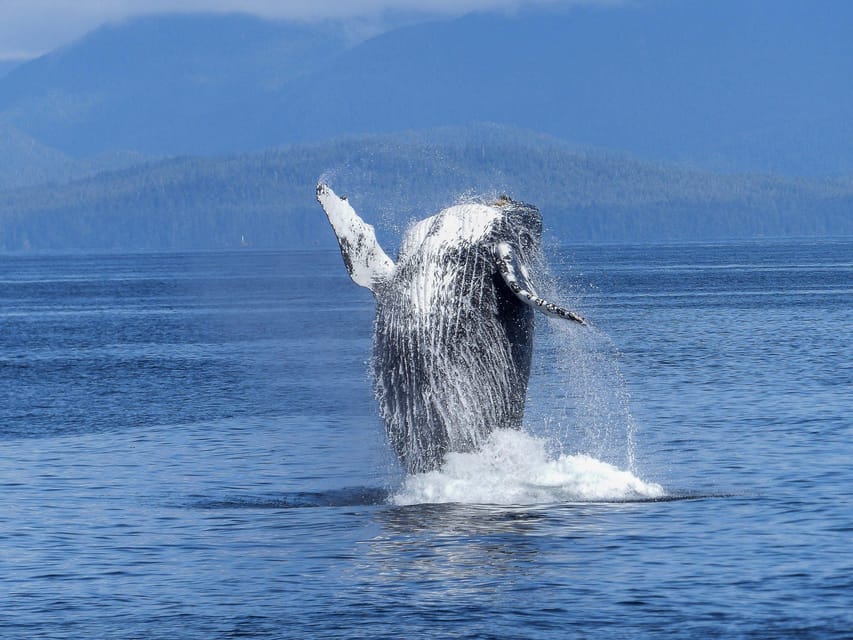
Wear warm layers, waterproof outer clothing, gloves, a hat, and sturdy shoes. The indoor saloon is heated, but you will want to step outside when the crew announces whales.
Take seasickness medicine before departure if you are prone to nausea. The crossing can include rough patches, even when the overall ride feels calm. Sit inside and focus on the horizon if needed, then step outside once the boat reaches the viewing area.
Bring lunch, water, and spare camera batteries. The kiosk offers snacks and drinks, but a long day at sea creates a bigger appetite than you might expect.
Keep your schedule open after the trip. The normal duration is six hours, but the tour can stretch to eight when the whales are farther away. You return to Nerstrandkaia in Tromsø, but the exact arrival time depends on the search.
The overall rating is 4.3 from 1,937 ratings, which fits the experience’s profile: very strong boat comfort, excellent crew energy, and impressive sightings for many departures, balanced against nature’s refusal to follow a timetable.
Who should book this Tromsø whale safari?
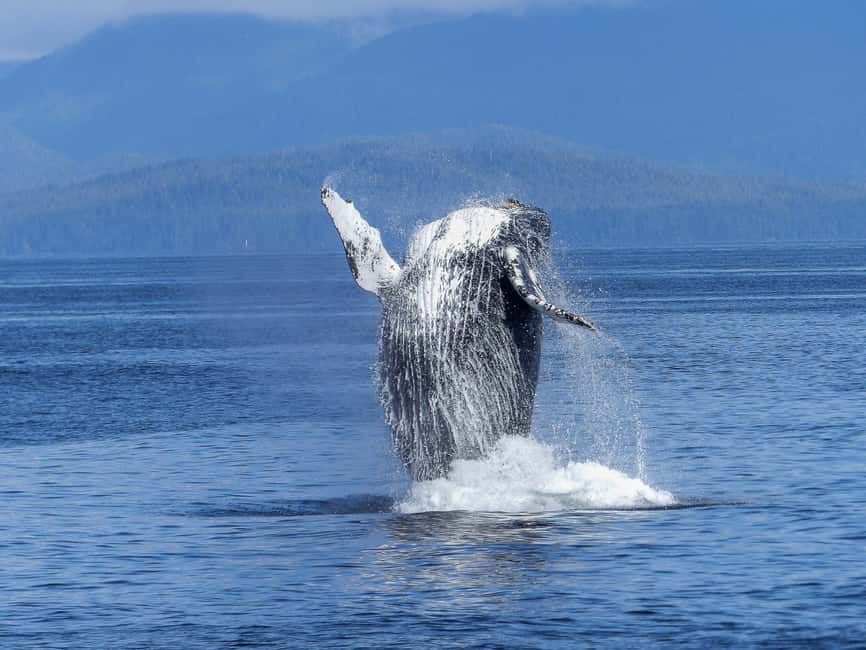
I would recommend MS Gabriele if you want the best chance of seeing orcas and humpbacks without spending the day on a small, exposed boat. It suits families, first-time whale watchers, photographers who need several viewing angles, and anyone who values good guiding and Arctic scenery as much as the animal encounter.
I would be more cautious if you dislike long boat rides, get motion sick, or have only one free day in Tromsø and cannot accept a fjord cruise instead. February also requires a realistic attitude about the season.
Book it if the price fits your budget and you see the journey itself as part of the experience. The whales may be the headline, but MS Gabriele gives you a warm cabin, open-air viewing, passionate guides, and a sensible fallback when the Arctic changes the script.
FAQ
Where does the Tromsø whale safari depart?
The tour departs from Nerstrandkaia, the pier just outside the Alti Shopping Center in Tromsø. Look for the white catamaran MS Gabriele.
How long does the whale safari last?
The normal duration is six hours. Depending on where the whales are, the trip can last up to eight hours.
Which whales might I see?
Orcas and humpback whales are the most common sightings. Fin whales, minke whales, and sperm whales also visit the waters around Tromsø.
Is whale watching guaranteed?
No. The whales follow herring and can move from one day to the next. If no whales are seen, the operator offers a free ticket for another available whale safari during the same season.
What happens if the weather is too rough?
The tour may be cancelled in very bad weather, with a full refund or a change to another available date. If the sea is difficult but a cruise is possible, the crew may use a more sheltered route with sightseeing and wildlife watching. A refund matching the lower-priced fjord tour applies in that case.
What should I bring?
Bring warm clothing, since you may spend time outside on deck. If you get seasick, bring or take your usual motion sickness medicine before the trip. Food and drinks are not included, although snacks, drinks, and light meals are available for purchase onboard.
More Safari
- Tromsø: Northern Lights Safari
★ 4.5 · 1,916 reviews - Tromsø: Scenic Arctic snowmobile safari in the Lyngen Alps
★ 4.8 · 377 reviews - Tromsø: Aurora Safari Chase by big bus with Camp meal
★ 4.0 · 301 reviews - Tromsø: Fishing Sea Safari
★ 4.9 · 215 reviews
Just added around Tromso
- Paris of the North: Explore Tromsø on foot★ 5.0 · 4 reviews
- Arctic Panorama cable car excursion★ 4.0 · 5 reviews
- Full Night Magic of the Arctic Lights in Tromso★ 4.6 · 5 reviews
- Tromsø: Guided Polar Bear Walk incl. Polaria & Polar Museum★ 5.0 · 5 reviews
- Tromsø & Sommarøy – Private coastal tour with a local★ 5.0 · 5 reviews
- Midnightsun- Eco friendly Tesla Model X★ 5.0 · 5 reviews
- Tromsø City Walk★ 4.5 · 5 reviews
- Reindeer Feeding and Sledding, Sami Storytelling Night Tour★ 4.0 · 5 reviews
Whale Watching, compared.
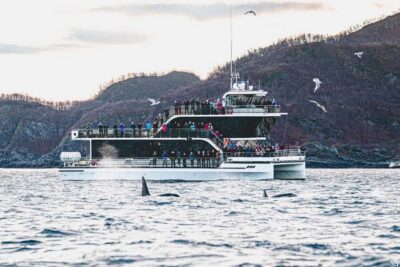
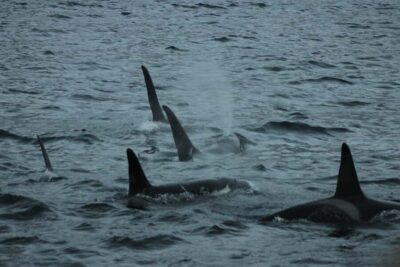
Silent Whale Watching by Hybrid-Electric Boat from Tromsø
Read our review →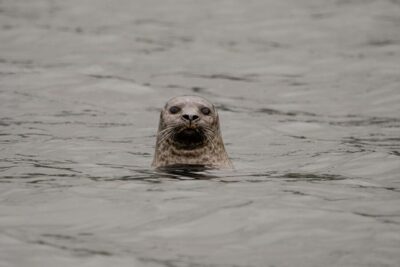
Bleik: Whale Watching by Speedboat with Puffins and Muffins
Read our review →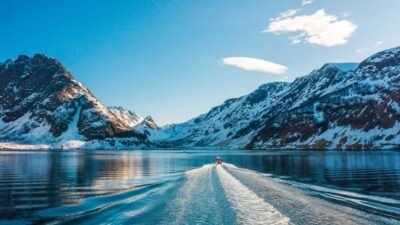
24hr Northern Lights & Whale Watching Cruise
Read our review →Browse the lists this tour appears in