
Reviewed · CITY TOURS
Oslo City Walks: The City of Contrasts
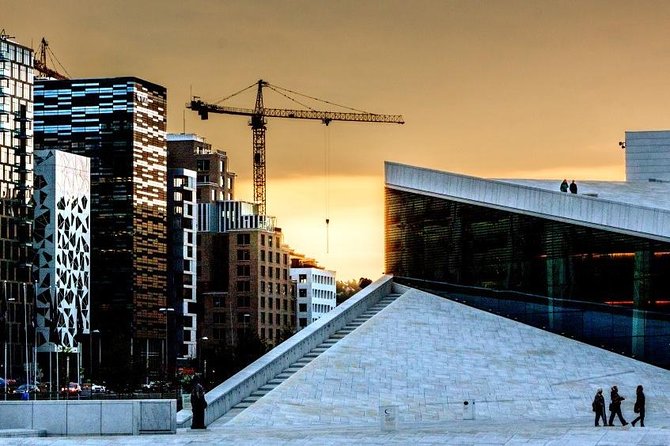
Oslo changes under your feet. This two-hour walk makes the city’s building boom its main subject, tracing the shift from industrial capital to modern European center. I like the authorized Oslo guide and the clear focus on architecture, especially the walk across the Acrobat bridge into Bjørvika.
I also like the easy central meeting point inside Østbanehallen and the finish near the Opera House and Deichman Library. The main drawback is focus: if you want Oslo’s famous historic sights in a quick sweep, this route may feel limited, and one past account found the walk rather flat and the group too large.
The pace should suit you if you enjoy asking questions and looking closely at how old and new buildings meet. Still, the quality depends on the individual guide, and the $52 price is easier to justify if modern Oslo interests you more than a standard sightseeing checklist.
In This Review
- Key points to know before you book
- Why Oslo’s contrasts make a useful walking theme
- Starting at Østbanehallen near Oslo Central Station
- Crossing the Acrobat bridge into Bjørvika
- Reading the old and new sides of Bispevika
- The new Munch Museum and Oslo’s cultural shift
- Ending by Deichman Library and the Opera House
- How much value do you get for $52?
- Who will enjoy this two-hour Oslo walk?
- Practical planning for a Monday evening departure
- Should you book Oslo City Walks?
- FAQ
- Where does the Oslo City Walks tour begin?
- How long does the tour last?
- What languages are available?
- Where does the tour finish?
- What places are included on the route?
- How early should I arrive?
- What should I wear?
- Can I cancel or pay later?
Key points to know before you book
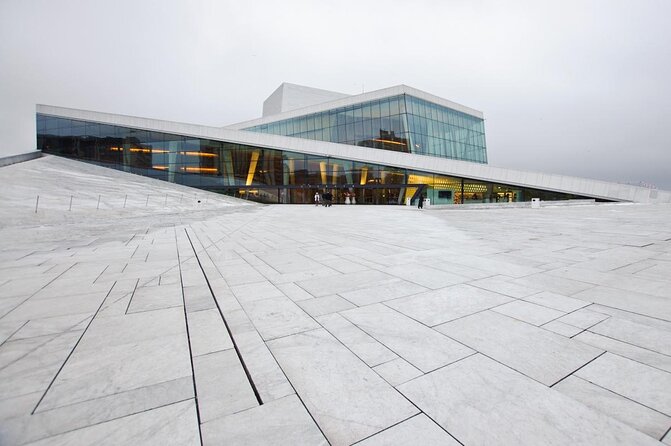
- The route centers on Bjørvika: You cross the Acrobat pedestrian bridge, pass Bispevika, see the new Munch Museum, and finish by the Opera House and Deichman Library.
- Architecture is the real subject: This is less about ticking off old monuments and more about understanding Oslo’s industrial growth and present-day building projects.
- The tour lasts two hours: That gives you enough time for a measured city walk, but not a full survey of Oslo.
- You meet inside Østbanehallen: Find the Oslo Visitor Centre at Jernbanetorget 1, then meet the guide in front of it.
- English and Norwegian are available: The tour includes a live guide in either language.
- Good shoes matter: The walk covers city streets and a pedestrian bridge, so wear comfortable footwear and dress for the weather.
Why Oslo’s contrasts make a useful walking theme
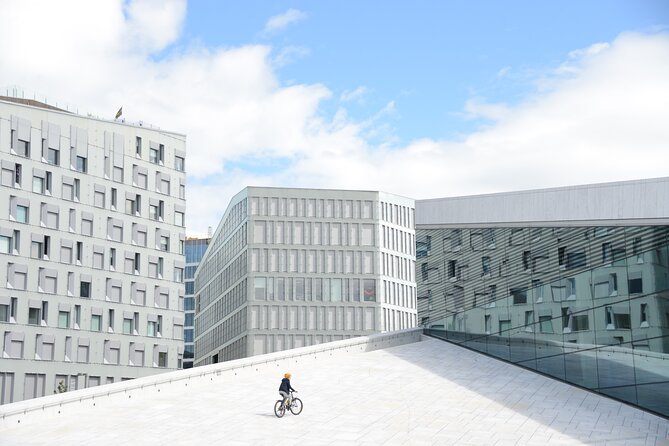
Oslo is changing quickly, and this tour gives that change a clear shape. Instead of treating the city as a collection of unrelated sights, the guide connects transportation, industrial expansion, new neighborhoods, and modern architecture.
That approach can make the city easier to understand. You see how a capital grows around its rail station, waterfront, public buildings, and former industrial areas. For me, that is more useful than simply hearing a list of dates while walking past attractive buildings.
The title, The City of Contrasts, is fairly literal. You should expect older structures alongside newer construction, traditional forms beside bold contemporary designs, and working-city infrastructure near cultural buildings. The point is not that every stop is beautiful. The point is to see why Oslo looks the way it does.
This is also an educational sightseeing walk. You are not simply sent from one photo stop to another. The guide explains the city’s modernization and the forces behind its expansion. If you like urban planning, public transport, architecture, or the story of how cities adapt, the subject should hold your attention.
A few more trips worth weighing up
- Oslo: Scenic Fjord Cruise with Audio Guide Commentary
★ 4.5 · 5,375 reviews - Oslo Nature Walks: Island Hopping Tour
★ 4.8 · 2,713 reviews - Oslo: 100% Electric Oslofjord Sightseeing Cruise
★ 4.4 · 2,041 reviews
Starting at Østbanehallen near Oslo Central Station
The meeting point is practical. You meet in front of the Oslo Visitor Centre inside Østbanehallen, at Jernbanetorget 1. That places you beside Oslo Central Station, a useful location if you have just arrived by train or are staying near the center.
Arrive 10 minutes early. The station area can be busy, and finding the correct entrance is easier when you are not rushing. Look for the visitor center inside the main hall rather than waiting somewhere outside the station.
The setting also introduces one of the tour’s main ideas. This is a transport hub, a public meeting place, and part of a city center being reshaped around new uses. Your walk begins with infrastructure rather than an old church or palace, which tells you what kind of experience this will be.
The guide is authorized by Oslo, and tours are offered in English or Norwegian. That official status should give you a reliable starting point, though the personality and delivery can vary from one guide to another. One account praised a guide called Flink, while another found the guide rather lacking in personality. I would treat that as a reminder to keep expectations realistic: the subject is strong, but the guide’s presentation matters.
Crossing the Acrobat bridge into Bjørvika
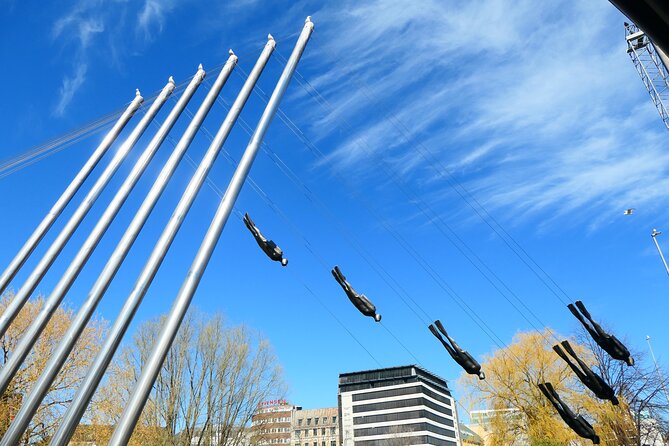
The walk over the Acrobat pedestrian bridge is one of the clearest physical moments on the route. The bridge crosses near Oslo Central Station and leads you toward Bjørvika, an area closely linked with the city’s modern redevelopment.
A bridge gives you a useful pause. You are not just viewing a building from street level. You are moving between parts of the city and seeing how roads, rail lines, walkways, and new construction fit together. The name itself is memorable, and the crossing should offer good photo opportunities.
From here, the walk shifts away from the station and toward Oslo’s newer waterfront district. The guide’s comments should help you read the area as part of a larger urban project rather than as a set of isolated modern buildings.
There is a possible weakness here. The route is not designed around one grand attraction. Its interest comes from connections and comparison. If you need a dramatic monument every few minutes, a two-hour architecture walk may feel slow. If you enjoy noticing how a city is planned, the bridge and surrounding streets give the tour a strong opening.
Reading the old and new sides of Bispevika
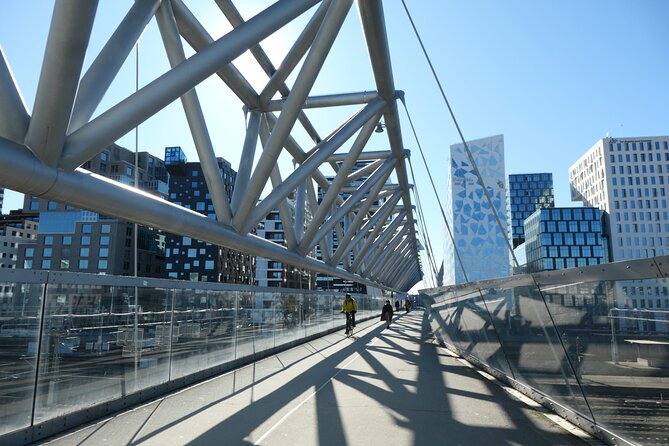
Bispevika continues the modern-city story. Here, you can expect to see the contrast between older parts of Oslo and newer buildings shaped by the city’s expansion.
The supplied route description does not promise interior visits or long stops inside major attractions. You are mainly walking, listening, and viewing the city from public spaces. That matters when you plan your day. You are paying for interpretation and access to a guide, not for museum admission or a private architectural tour.
I like this part of the route because it puts Oslo’s growth in ordinary surroundings. New buildings are not presented as isolated works of art. They sit beside streets, older structures, rail infrastructure, and areas connected with the city’s industrial past.
You should also keep the scale of the tour in mind. Two hours is enough to explore a focused section of central Oslo, but not enough to cover every district or major sight. The route description refers to suburbs and industrial areas as part of the modernization story, yet the named stops concentrate around the station, Bjørvika, Bispevika, and the waterfront cultural buildings. This is a selective look at Oslo, not a complete city tour.
A completely different kind of day out from Oslo:
- Oslo: Fjord Evening Cruise with Shrimp Buffet
★ 4.5 · 1,956 reviews - Oslo: 3-Hour Highlights Bike Tour
★ 4.8 · 1,609 reviews - Oslo: 24 or 48-Hour Hop-On Hop-Off Sightseeing Bus Ticket
★ 4.1 · 1,470 reviews - Oslo: Guided Sightseeing Fjord Cruise on Premium Silent Boat
★ 4.7 · 1,390 reviews
The new Munch Museum and Oslo’s cultural shift
Passing the new Munch Museum gives the walk one of its most recognizable modern landmarks. Even if you do not enter the museum, its presence helps show how culture has become part of the redevelopment of Bjørvika.
The museum is useful here as an example of modern Oslo’s priorities. The city is not only expanding housing, transport, and commercial areas. It is also creating major public cultural buildings that reshape how residents and visitors use the waterfront.
Expect the guide to place the museum within the wider story of Oslo’s architectural change. The value comes from context. You can take photographs on your own, but the guide helps explain why this building belongs in a discussion about industrial growth, city expansion, and new public spaces.
Do not book this walk mainly because you want an in-depth museum visit. Admission is not included, and the experience does not promise time inside the Munch Museum. If you want to visit it properly, plan a separate museum stop before or after the walk.
Ending by Deichman Library and the Opera House
The tour concludes at Deichman Library, next to the Opera House. This is a convenient finish because you end near two major contemporary public buildings and in an area where you can continue exploring independently.
The Opera House is especially useful as a final reference point. It gives the tour a strong visual ending and reinforces the theme of public architecture. The library adds another side of the same idea: modern buildings are not only offices or private developments. They can also be places for art, reading, gathering, and daily city life.
This ending is better for independent exploring than for a quick return to the meeting point. Since the walk does not return you to Østbanehallen, you should be comfortable finding your way onward from the Opera House area. The activity information does not provide a return transfer, and none should be expected.
If you have only one evening in Oslo, the finish may work well. You can continue photographing the waterfront or arrange another nearby activity. If you need to collect luggage at the station immediately afterward, allow extra time for the walk back.
How much value do you get for $52?
At $52 per person, this is not the cheapest way to spend two hours in central Oslo. The city is walkable in many areas, and you can see the outside of several buildings without paying for a guide.
The price makes more sense if you want a professional explanation of Oslo’s changes. You are paying for an authorized guide, a planned route, and a coherent subject. At two hours, that works out to about $26 per hour, before considering the convenience of meeting at a central location and finishing near major cultural buildings.
I would call the value fair rather than automatic. It is stronger for first-time visitors who want help understanding modern Oslo. It is weaker for people who mainly want historic sights, broad city coverage, or museum entry.
The rating information attached to the activity is mixed, at 3.4 out of 5 from seven reviews. That matches the sensible conclusion here: the route and topic are appealing, but the experience can depend heavily on group size and guide style. One person found the group much too large. Another praised the guide, the pace, the chance to ask questions, and the way the walk helped make the city understandable.
That difference matters. A large group can make it harder to hear, ask questions, or stay close to the guide. Since no maximum group size is stated, you should be prepared for some variation. The walk may be excellent with an engaging guide and less satisfying if the presentation feels flat.
Who will enjoy this two-hour Oslo walk?
I would recommend it most strongly to you if you enjoy:
- Modern architecture and urban design
- The connection between industry, transport, and city growth
- Guided walks with time for questions
- Photographing new public buildings and older structures together
- A focused route rather than a long list of unrelated sights
It should also suit visitors who have already seen Oslo’s basic historic center and want a different angle. The walk can add meaning to areas you might otherwise pass through quickly.
I would be more cautious if you want the main historic sights, a castle-focused tour, or a guide with a highly theatrical style. The available feedback includes both strong praise for a friendly pace and questions, and criticism of a dull presentation. You should choose this for the subject, not because it guarantees a particular kind of entertainer.
The route also requires ordinary walking comfort. High-heeled shoes are not allowed, and good walking shoes are recommended. Drones are not allowed. Dress for the weather, since this is an outdoor walk and the route includes the Acrobat bridge and public streets.
Practical planning for a Monday evening departure
The experience is described as beginning on a typical Monday evening. Check the available starting time when you book, since the exact departure time is not given in the activity details.
Evening light may make the modern buildings especially photogenic, but weather will affect your comfort. Oslo can be cool or wet, so bring suitable outerwear rather than relying on a polished city outfit. You do not need high heels, and you should not bring a drone.
The tour lasts approximately two hours. Arriving 10 minutes early is important, both to find the Oslo Visitor Centre and to avoid missing the departure. The activity includes the guide only, so account for any museum visits, food, or other transport separately.
The booking terms are flexible. You can cancel up to 24 hours before the activity for a full refund, and you can reserve now and pay later. Those terms are useful if your Oslo plans are still shifting.
Should you book Oslo City Walks?
Book it if you want to understand how modern Oslo was built, especially the relationship between the station, Bjørvika, Bispevika, the Munch Museum, the library, and the Opera House. The central meeting point, two-hour length, English or Norwegian guiding, and question-friendly pace make it a practical introduction.
Skip it if your priority is a broad tour of Oslo’s historic sights or a guaranteed small group. The route is selective, and guide quality can vary. At $52, the tour earns its price through explanation and urban context, not through a large number of admissions or landmark interiors.
My call: this is a worthwhile specialist walk for architecture-minded visitors and curious first-time arrivals, but not the best single Oslo tour for everyone. Choose it when the city’s transformation interests you. If your ideal afternoon involves old fortifications, famous historic buildings, and a fast list of major sights, spend your money elsewhere.
FAQ
Where does the Oslo City Walks tour begin?
Meet the guide in front of the Oslo Visitor Centre inside Østbanehallen, at Jernbanetorget 1, 0154 Oslo.
How long does the tour last?
The walk lasts approximately two hours.
What languages are available?
The live guide provides the tour in English or Norwegian.
Where does the tour finish?
The tour ends at Deichman Library, next to the Opera House.
What places are included on the route?
The route includes the area around Oslo Central Station, the Acrobat pedestrian bridge, Bjørvika, Bispevika, the new Munch Museum, and Deichman Library beside the Opera House.
How early should I arrive?
You should arrive at the listed departure point 10 minutes before the tour begins.
What should I wear?
Wear good walking shoes and dress according to the weather. High-heeled shoes are not allowed.
Can I cancel or pay later?
You can cancel up to 24 hours in advance for a full refund. You can also reserve your place and pay later.
Just added around Oslo
- Visit the Instaworthy Spots of Oslo’s Vigeland Park with a Local★ 5.0 · 4 reviews
- Oslo: 3-hour Cross Country trip with equipment and guide★ 5.0 · 4 reviews
- Oslo: 2-hour Christmas Private Walking Tour★ 3.0 · 4 reviews
- Art and Museum Tour of Oslo★ 5.0 · 4 reviews
- Flavors of Oslo: Food & Beer Tour★ 4.8 · 4 reviews
- Private Transfer from Oslo City Centre to Oslo Airport★ 5.0 · 4 reviews
- 3-Hour Vattkørt Beginner Kayak Course on Oslo Fjord★ 5.0 · 4 reviews
- Hipstoric Grünerløkka Private Walking Tour★ 5.0 · 4 reviews
City Tours, compared.
Grand City Sightseeing Tour by Bus with Fjord Cruise
Read our review →
Oslo Combo Tour: Grand City Tour and Oslo Fjord Cruise
Read our review →

Browse the lists this tour appears in