
Reviewed · WALKING TOURS
Oslo: City Walking Tour
Oslo’s story unfolds block by block. I like the way this private three-hour walk links medieval Akershus Fortress with Oslo’s modern Opera House, rather than treating the city as a string of unrelated photo stops. I also like that admission to the fortress and City Hall is included, giving you access to two important interiors.
The main concern is the price: $503 per group of up to 10 is good value for a full group, but costly for one or two people. City Hall access may also need confirming, since one past booking could not enter the building and no equal replacement was offered.
In This Review
- Key points about this Oslo walking tour
- Why this three-hour route works
- Starting inside Akershus Fortress
- From Christiania to Oslo City Hall
- The National Theater, Royal Palace, and University
- Parliament and Oslo’s main street
- Finishing on the Oslo Opera House roof
- What the guide adds to the experience
- Price, group size, and overall value
- Who should book this Oslo tour?
- Should you book it?
- FAQ
- How long is the Oslo City Walking Tour?
- What language is the tour offered in?
- Is this a private tour?
- Where does the tour begin?
- Where does the tour end?
- Are entrance fees included?
- Are meals and drinks included?
- Is the tour wheelchair accessible?
- Can I cancel the booking?
Key points about this Oslo walking tour
- Seven centuries at Akershus Fortress: Spend about 45 minutes inside the fortress grounds and see the defensive heart of old Oslo.
- City Hall with Nobel Peace Prize history: The tour includes entrance to Oslo City Hall and its main hall, the annual setting for the Nobel Peace Prize ceremony.
- A walk through several eras: The route moves from medieval stonework to 17th century Christiania, 18th century civic buildings, 19th century architecture, and bold modern design.
- A rooftop finish: The Oslo Opera House lets you walk onto its roof for views toward the Oslo fjord.
- Private guiding in English or Norwegian: Your group has an authorised Oslo guide, with hotel pickup or a meeting at the Fortress Visitor Centre.
- Strong guide feedback: Anne and Anne Lene received especially warm praise for clear, engaging presentations and good company.
Why this three-hour route works

Oslo is easy to cross on foot, but its major sights do not all belong to the same period. A castle, a Nobel ceremony hall, a royal residence, a parliament, and a modern opera house can feel disconnected if you visit them without context.
This tour gives you that connecting thread. You begin at the city’s old defensive stronghold, pass through the former town of Christiania, continue along Oslo’s main street, and finish with contemporary architecture by the water. I like this structure because each section changes the mood without requiring a bus or a long transfer.
The tour is private, so your group can ask questions without competing with a crowd. The guide speaks English or Norwegian, and the route is listed as wheelchair accessible. You should still wear comfortable shoes and dress for the weather. Three hours outdoors in Oslo can feel very different on a clear day than on a wet one.
More Walking Tours in Oslo
- Oslo: Best of Oslo Walking Tour
★ 4.5 · 458 reviews - Oslo: Guided Walking Tour of Central Oslo
★ 4.7 · 438 reviews - Oslo: Historic Myths & Legends Evening Walking Tour
★ 4.8 · 408 reviews
Starting inside Akershus Fortress
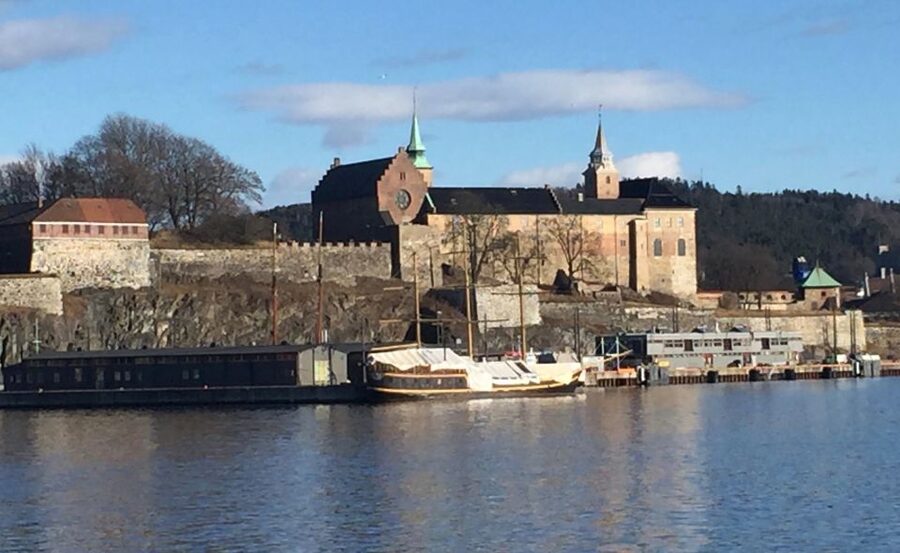
The tour begins at Akershus Fortress, either with a hotel pickup or at the Fortress Visitor Centre. This is the right opening scene. The fortress gathers about 700 years of Oslo’s story into one compact place, with walls that protected the city from raiders and soldiers.
You spend around 45 minutes here on a guided visit. That is long enough to do more than glance at the walls and take a photograph. Your guide can explain how the fortress relates to Oslo’s medieval beginnings and how the city developed around it.
I would pay close attention to the change in scale as you walk. A fortress is built for defense, while the later parts of the tour show Oslo as a capital designed for government, culture, and public life. Beginning here gives the rest of the route a useful point of reference.
The fortress is also one of the best places on the route for understanding Oslo’s age. Much of the city you see later feels orderly and modern, but Akershus reminds you that Oslo did not begin with sleek waterfront buildings. It began with protection, power, and a strategic position.
From Christiania to Oslo City Hall
After the fortress, the route moves into the area connected with Christiania, the town that followed medieval Oslo. Here you see the first City Hall building from the 17th century, along with cafes and restaurants occupying the old urban setting.
This section is less about a single grand monument and more about reading the city’s layers. You get a sense of how Oslo changed from a fortified medieval settlement into a working town with civic buildings and public gathering places.
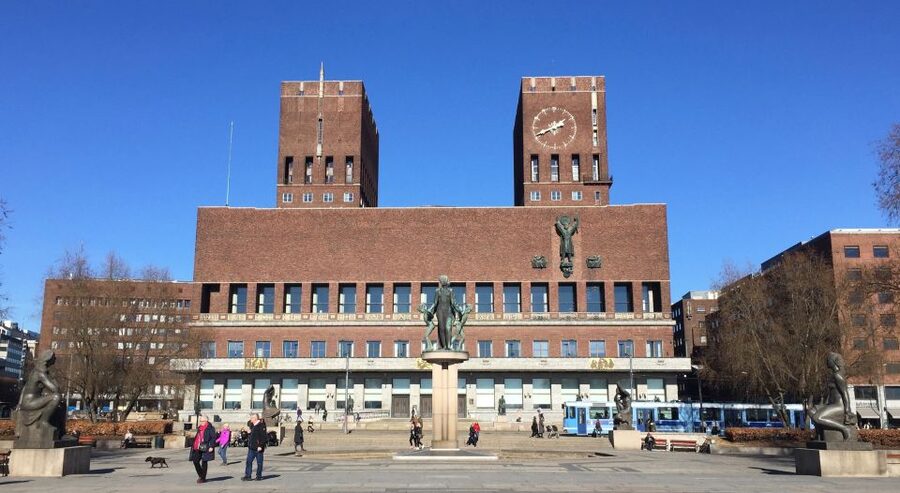
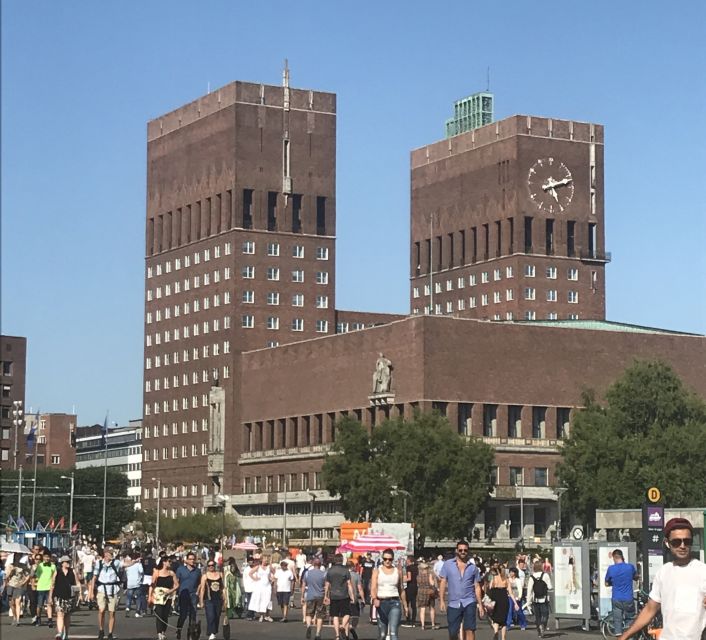
The next major stop is Oslo City Hall. About 30 minutes are set aside for a guided visit, and entrance is included. The main hall is especially important because it hosts the annual Nobel Peace Prize ceremony.
That detail gives City Hall unusual weight. It is not simply a government building or a convenient stop near the harbor. It is part of one of the world’s best-known annual prize ceremonies. I would expect the guide to place the room and its decoration within Oslo’s civic identity, rather than treating it as a quick interior photo opportunity.
There is one practical caution. Access to City Hall should be confirmed when you book or shortly before the tour. A past booking could not visit the building, and the planned alternative did not feel equal to the original stop. That does not erase the value of the route, but it matters if City Hall is your main reason for booking.
The National Theater, Royal Palace, and University
From City Hall, the route continues to the Norwegian National Theater for a photo stop of about 10 minutes. You do not get a long theater visit here, so think of it as an architectural and cultural marker.
The National Theater helps shift the tour from government to public culture. It belongs to the central Oslo corridor, where theater, education, monarchy, and politics sit within walking distance of one another.
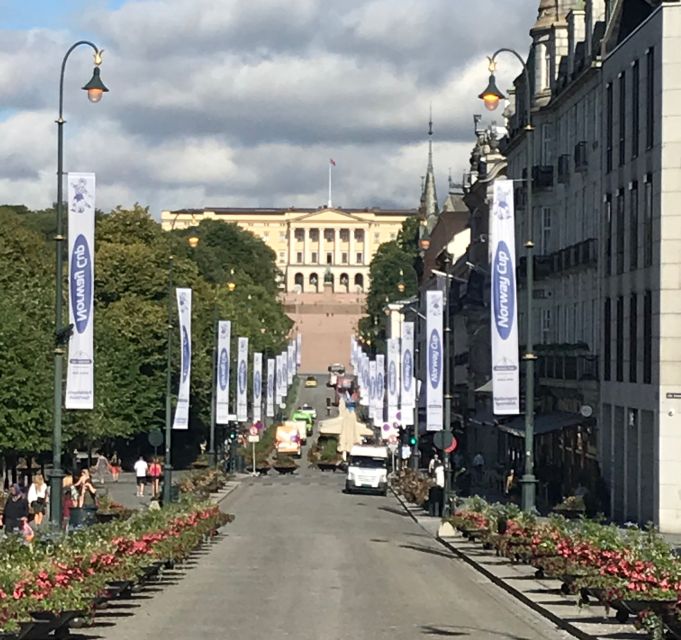
The Royal Palace follows as another short stop. You spend about 10 minutes photographing and viewing the palace from outside, then pass by its gardens. This is not a palace interior tour, so you should book this experience for the setting and exterior rather than for rooms, royal collections, or ceremonial access.
The gardens offer a more open pause in the middle of the city walk. You can look toward the palace and see how the royal site fits into Oslo’s formal center. The stop is brief, but it breaks up the sequence of facades and public institutions.
The University of Oslo is a five-minute pass-by. It is a short inclusion, yet the neoclassical building helps complete the picture of 19th century Oslo. You are not stopping for an academic visit. Instead, the guide uses the building as part of the city’s architectural progression.
This is where a good guide matters. The route includes several buildings that may look similar if you do not know why they were built or what role they play. Anne and Anne Lene were praised for explaining Oslo clearly and with real energy, which is exactly what makes these short stops worthwhile.
A completely different kind of day out from Oslo:
- Oslo: Scenic Fjord Cruise with Audio Guide Commentary
★ 4.5 · 5,375 reviews - Oslo Nature Walks: Island Hopping Tour
★ 4.8 · 2,713 reviews - Oslo: 100% Electric Oslofjord Sightseeing Cruise
★ 4.4 · 2,041 reviews - Oslo: Fjord Evening Cruise with Shrimp Buffet
★ 4.5 · 1,956 reviews
Parliament and Oslo’s main street
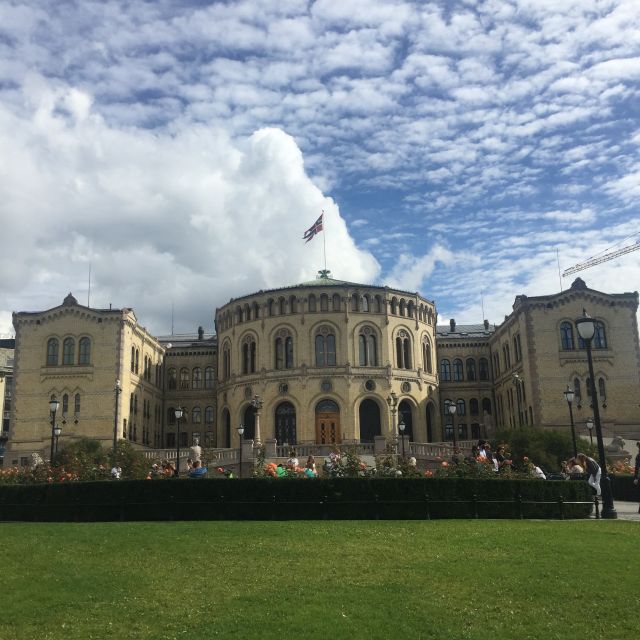
The Norwegian Parliament receives around 10 minutes for a photo stop and sightseeing. Its inclusion gives the walk a strong civic focus alongside City Hall and the Royal Palace.
Again, this is an exterior visit. You should not expect to enter the parliamentary building unless your guide specifically confirms otherwise. The value comes from seeing the building in relation to the rest of central Oslo and understanding how the city’s political institutions are arranged.
The walk then continues through Sentrum, Oslo’s central district, for about 15 minutes. This is one of the more everyday parts of the tour. You pass shops, cafe terraces, restaurants, and the public activity of the main street.
I like this stretch because it keeps the tour from becoming a parade of official buildings. You get a look at how Oslo feels between the landmarks. The city is not only fortress walls and national institutions. It is also people meeting for coffee, shopping, eating, and crossing the center on foot.
The route also reaches the central train station, where you can appreciate early 19th century architecture before moving toward newer buildings. This creates a clear visual comparison: older civic design on one side, contemporary Oslo on the other.
Finishing on the Oslo Opera House roof

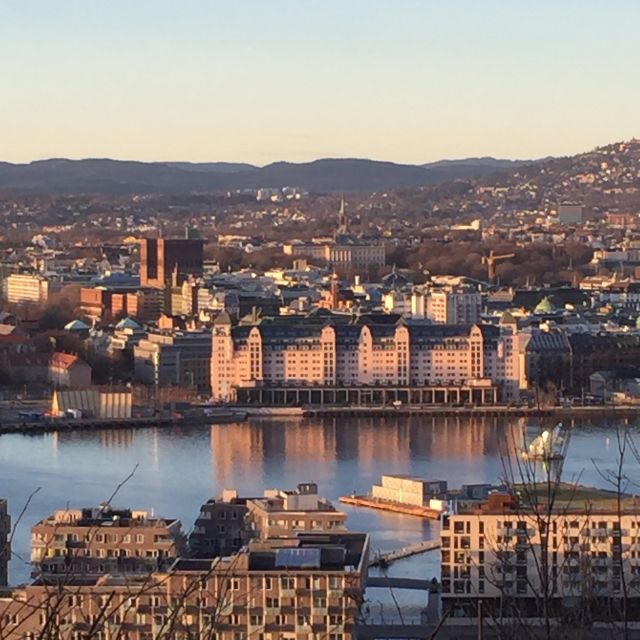
The final major stop is the Oslo Opera House, with about 45 minutes for a visit, guided sightseeing, and photographs. This is a strong finish because the building changes the rules of city architecture.
Instead of looking up at a monumental facade, you can walk onto the sloping roof. The roof is designed as public walking space, so the building becomes a route as well as a performance venue. From above, you get views toward the Oslo fjord and a different angle on the city’s newer waterfront development.
I find this more useful than a standard final photo stop. The roof gives you time to look back at Oslo and understand how the older center relates to the newer waterfront. It also leaves you with a sense of the city as a place still being reshaped.
The tour ends at the Opera House rather than returning you to the starting point. That matters for your plans. If you have a train, ferry, meal, or another timed activity after the walk, finishing in this part of Oslo can be convenient. If you need to return to your hotel, you will need to arrange that separately.
What the guide adds to the experience
A route like this depends heavily on the person leading it. Many of the stops are exteriors, and some are short. Without clear explanation, the National Theater, Parliament, University, palace, and station could become a blur of handsome buildings.
The strongest feedback centers on Anne and Anne Lene. Anne was praised for presenting information in an easy and passionate way, while Anne Lene was described as excellent company during a full three-hour walk. That tells you something important about the experience: the guide is not just there to point at buildings. The best version of this tour turns architecture into a readable story.
One less positive assessment described the guide as friendly but said some information felt unclear. That is worth keeping in mind. You should feel free to ask for clarification, especially when moving quickly through several historical periods.
Because the group is private, you have a better chance of shaping the conversation around your interests. If you care about architecture, ask for more detail on the neoclassical buildings. If Nobel history interests you, focus your questions at City Hall. If you prefer city life to formal history, ask your guide to explain the cafes, restaurants, and central streets you pass.
Price, group size, and overall value
The listed price is $503 for a private group of up to 10 people. At the maximum group size, that works out to about $50.30 per person. For a family or group of friends, that is a reasonable way to secure a private guide, two included admissions, and three hours of walking through central Oslo.
For two people, the same price becomes about $251.50 each. For a solo visitor, it is a major expense. I would consider this tour mainly if you can share the cost with several people or place a high value on private guiding.
The price includes an authorised Oslo guide, entrance to Akershus Fortress, and entrance to Oslo City Hall. Meals and drinks are not included, but that is easy to manage in central Oslo. You pass cafes and restaurants along the way, though the three-hour schedule may not leave time for a proper meal.
The tour also offers free cancellation up to 24 hours before departure and lets you reserve now while paying later. Those terms are useful if your Oslo schedule is still shifting, but they do not change the basic value calculation: the group size is the key.
Who should book this Oslo tour?
I would recommend it to first-time visitors who want a strong orientation without spending a full day on a large organized excursion. It also suits families and private groups that prefer a guide who can adjust the pace and explain details along the way.
It is a good choice if you want a blend of history, architecture, civic life, and modern Oslo. The fortress and City Hall provide the most substantial visits, while the palace, theater, Parliament, University, station, and Opera House build a broader picture of the capital.
You may want a different experience if you prefer long interior visits, museum collections, or lots of free time at each sight. Several stops are short photo opportunities, and the palace and Parliament are viewed from outside. You should also think twice if you are booking alone and the $503 price would strain your budget.
Bring comfortable shoes and weather-appropriate clothing. The route lasts three hours, and even an accessible city walk is more enjoyable when you are prepared for Oslo’s conditions.
Should you book it?
Book this tour if you want a private, guide-led introduction that connects Akershus Fortress, City Hall, central Oslo, and the Opera House in one efficient route. The strongest reason to choose it is the guide-led context, especially with guides such as Anne or Anne Lene, who received the warmest praise for clarity and enthusiasm.
The value improves sharply with a group of six to 10 people. Before paying, confirm that City Hall access is available on your date. If it is, this is a well-shaped first look at Oslo, ending with one of the city’s best views from the Opera House roof.
FAQ
How long is the Oslo City Walking Tour?
The tour lasts three hours.
What language is the tour offered in?
The live guide speaks English or Norwegian.
Is this a private tour?
Yes. It is offered as a private group experience for up to 10 people.
Where does the tour begin?
It begins at Akershus Fortress. Pickup can also be arranged at your hotel, or you can meet at the Fortress Visitor Centre by specifying your preferred meeting point and time.
Where does the tour end?
The tour ends at the Oslo Opera House.
Are entrance fees included?
Entrance to Akershus Fortress and Oslo City Hall is included.
Are meals and drinks included?
No. Meals and beverages are not included.
Is the tour wheelchair accessible?
Yes. The activity is listed as wheelchair accessible. Comfortable shoes and clothing suited to the weather are recommended.
Can I cancel the booking?
Yes. You can cancel up to 24 hours in advance for a full refund. You can also reserve now and pay later.
Just added around Oslo
- Visit the Instaworthy Spots of Oslo’s Vigeland Park with a Local★ 5.0 · 4 reviews
- Oslo: 3-hour Cross Country trip with equipment and guide★ 5.0 · 4 reviews
- Oslo: 2-hour Christmas Private Walking Tour★ 3.0 · 4 reviews
- Art and Museum Tour of Oslo★ 5.0 · 4 reviews
- Flavors of Oslo: Food & Beer Tour★ 4.8 · 4 reviews
- Private Transfer from Oslo City Centre to Oslo Airport★ 5.0 · 4 reviews
- 3-Hour Vattkørt Beginner Kayak Course on Oslo Fjord★ 5.0 · 4 reviews
- Hipstoric Grünerløkka Private Walking Tour★ 5.0 · 4 reviews
Walking Tours, compared.
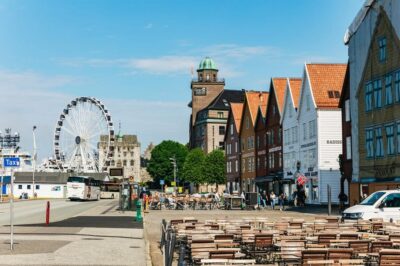
Past & Present Small Group Guided Walking Tour
Read our review →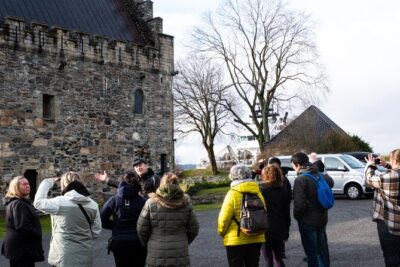
Walking Tour in Bergen of the Past and Present
Read our review →

Browse the lists this tour appears in