
Reviewed · WALKING TOURS
Oslo: 3-hour Private Walking Tour of Bohemian Grünerløkka
Oslo gets more interesting off the postcard route. This three-hour private walk links the city center with Grünerløkka’s riverfront, street art, old brick factories, wooden houses, and artist history. I especially like the stop at Our Savior’s Cemetery, where Edvard Munch lies near Ibsen and Bjørnson, and the finish at Mathallen, Oslo’s food hall, just in time for lunch.
I also like the tour’s small, personal feel and its mix of ordinary neighborhood streets with memorable sights such as Blå’s giant chandelier and the hillside houses of Telthusbakken. The main drawback is the price: $461 for a private group up to one person is a serious outlay for three hours, so the value depends heavily on how much you want a private guide rather than a standard group walk.
In This Review
- Key things to know before you book
- Starting at Youngstorget and crossing into another Oslo
- Grünerløkka beside the Akerselva
- Olaf Ryes plass, Blå, and Brenneriveien street art
- Damstredet and Telthusbakken’s wooden houses
- Our Savior’s Cemetery and Oslo’s literary trio
- Quan Thang Ancient House and the route’s small surprises
- Finishing at Vulkan and Mathallen
- What the $461 private price really buys
- Who will enjoy this Oslo walk most?
- Should you book the Grünerløkka tour?
- FAQ
- Where does the tour start?
- Where does the tour end?
- How long does the walking tour last?
- Is the tour private?
- Which languages are available?
- Is lunch at Mathallen included?
- How do I return to the starting point?
Key things to know before you book
- The walk begins at Youngstorget and ends at Mathallen, so you do not return to the starting point with the guide.
- Edvard Munch’s grave is one of the tour’s most distinctive stops, alongside the graves of Henrik Ibsen and Bjørnstjerne Bjørnson.
- Blå and Brenneriveien bring street art and music culture into a route that also includes older wooden homes and cemeteries.
- Damstredet and Telthusbakken offer some of Oslo’s best photo stops, with colorful houses, gardens, and a steep hillside setting.
- The three-hour route is private and guide-led, with tours available in English, Spanish, French, German, Italian, and Norwegian.
- Mathallen makes a practical ending point, especially if you want to stay for lunch after the walking portion is over.
Starting at Youngstorget and crossing into another Oslo
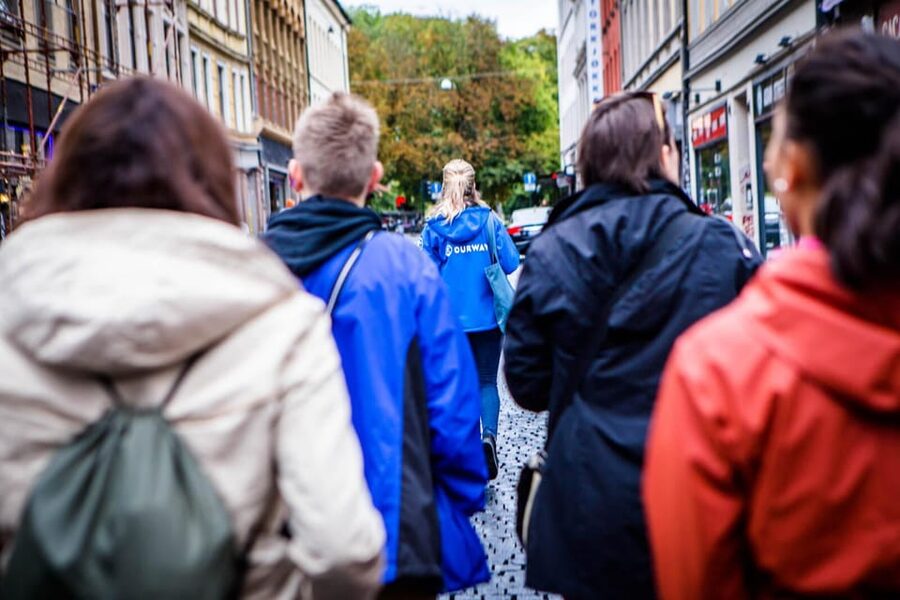
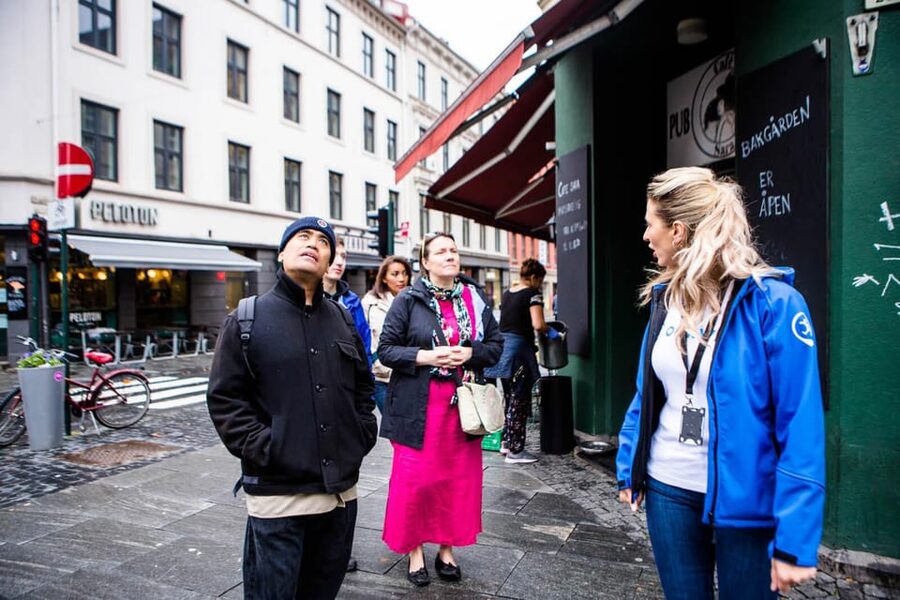
Meet your guide by the fountain in the middle of Youngstorget, at Youngstorget 2A. The guide arrives about 10 minutes before departure and carries a sign with the local partner’s name, which makes the meeting point easier to spot in a busy square.
The first part covers Sentrum and lasts about 30 minutes. This gives you a short introduction to central Oslo before the route moves toward Torggata, Kulturkirken Jakob, and Ankerbrua. These early stops help connect the familiar city center with the less polished, more creative streets ahead.
I like this change of mood. You are not simply driven or led straight to Grünerløkka’s headline sights. Instead, the walk shows how the center gives way to a district shaped by former industry, artists, free thinkers, music, and independent food businesses.
Torggata is a useful early stop because it helps set up the area’s urban character. Kulturkirken Jakob adds a cultural note, while Ankerbrua brings you toward the river and Grünerløkka proper. The route is less about checking off major monuments and more about understanding how different parts of Oslo fit together.
That also explains the first limitation. If you want a tour packed with Oslo’s grandest architecture or major national sights, this is not the best choice. Its pleasure comes from small details, local stories, and contrasts.
More Walking Tours in Oslo
- Oslo: Best of Oslo Walking Tour
★ 4.5 · 458 reviews - Oslo: Guided Walking Tour of Central Oslo
★ 4.7 · 438 reviews - Oslo: Historic Myths & Legends Evening Walking Tour
★ 4.8 · 408 reviews
Grünerløkka beside the Akerselva
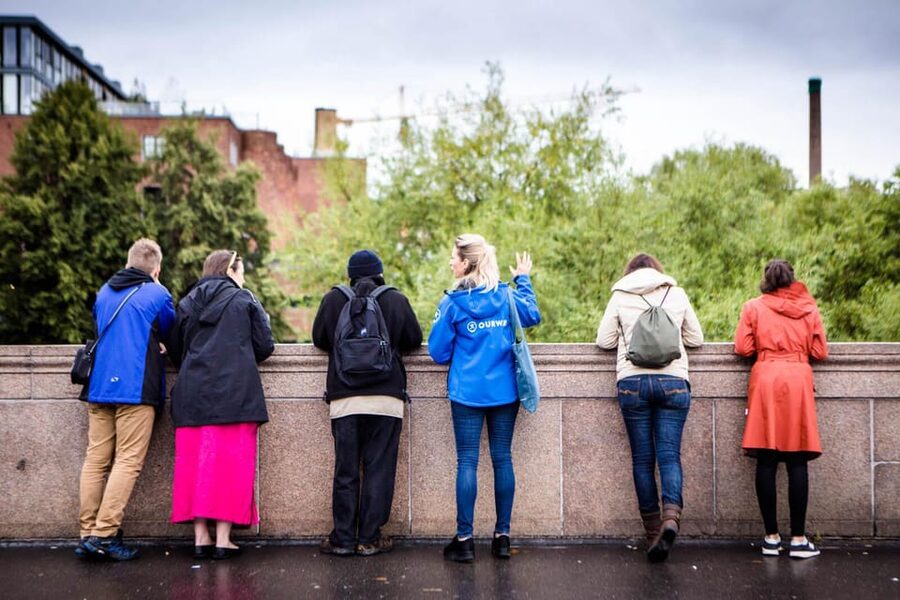
Most of the tour, about two and a half hours, takes place in Grünerløkka. The area is known for its bohemian character, but the walk gives that label some substance. You follow a bubbling river past colorful houses and industrial brick buildings, with street art and old working spaces appearing along the way.
The river is important to the feel of the route. It creates a welcome break from city streets and makes the district feel more open. At the same time, the old brick buildings remind you that Grünerløkka was not created as a stylish neighborhood for weekend browsing. Its identity grew from work, industry, housing, art, and later cultural change.
Your guide fills in the human side of those changes, covering artists, free thinkers, street art, parklands, and the people connected with the area. The exact stories will depend on the guide, but the available feedback points to strong guiding as a major part of the experience. Diana is praised for being flexible and well informed, while Tone is described as offering a strong command of local history and art.
That matters on a walk like this. Without a guide, you can see the brickwork, graffiti, river, and painted homes, but you may miss why they belong together. A private format also gives you more room to ask about the details that catch your eye.
Olaf Ryes plass, Blå, and Brenneriveien street art
Olaf Ryes plass gives the tour another view of Grünerløkka’s public life. From there, the route continues to Blå, a music venue surrounded by colorful street art.
Blå is one of the tour’s most memorable photo stops. The giant chandelier is an unusual sight, especially against the venue’s rougher industrial setting. The surrounding artwork adds strong color and texture, but this stop is not just a quick backdrop for a photograph. It shows how music, art, and reused industrial spaces have shaped the district’s modern identity.
Brenneriveien continues that theme. The route takes you through an area where old industrial buildings meet painted walls and creative projects. I like this part because it keeps the tour from becoming a simple wooden-house stroll. Grünerløkka is appealing precisely because it has several personalities at once.
The street art is also subject to change, so the exact visual details may not be the same on every departure. That is part of the nature of the stop. You are seeing a working cultural area rather than a fixed outdoor museum.
The tour’s positive comments also point to this balance. One particularly strong experience included a special interest in the industrial side of Oslo and its artwork. If those subjects appeal to you, this section may be the heart of the walk.
Damstredet and Telthusbakken’s wooden houses
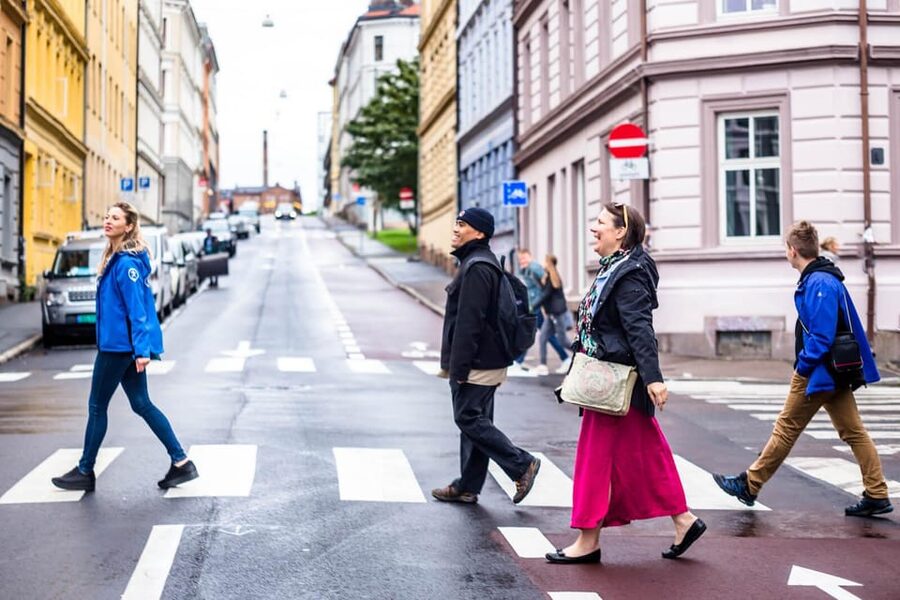
The route then shifts from industrial brick and street art to two of Oslo’s most charming old residential streets: Damstredet and Telthusbakken.
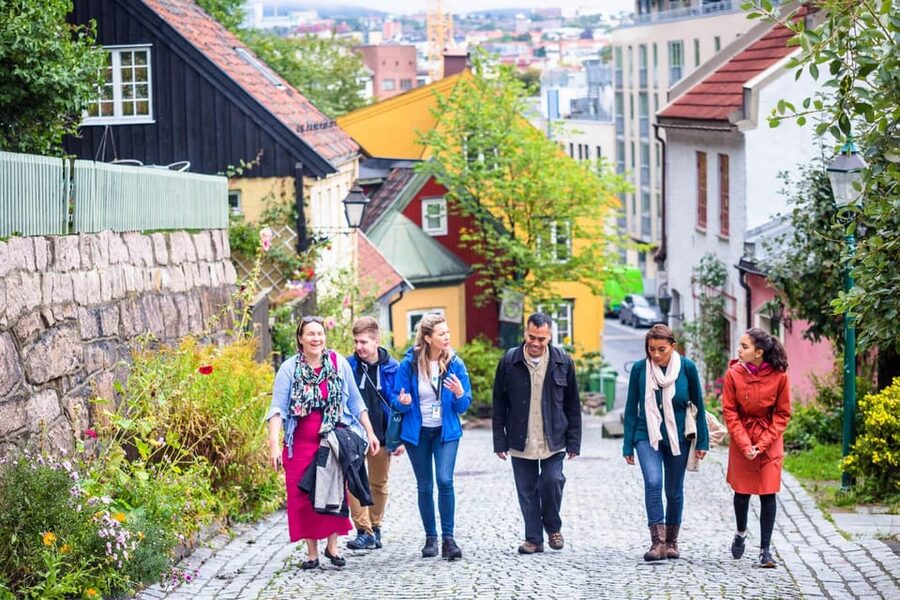
Damstredet is lined with colorful wooden houses. The scale is small and the mood is quiet, making it a good counterpoint to the louder urban scenes earlier in the walk. You will want your camera ready, though the route is still a walking tour rather than a dedicated photography outing.
Telthusbakken adds a hillside setting, with quaint homes and gardens running down the slope. It is specifically presented as a place to stop for photographs, and for good reason. The combination of painted houses, greenery, and the incline gives the street a storybook look without requiring a trip outside Oslo.
These lanes are valuable because they complicate the usual idea of Grünerløkka as only hip cafés, bars, and graffiti. The district also preserves older residential corners, and the guide helps you see how they sit beside newer creative spaces.
There is a practical point here: comfortable shoes matter. The tour lasts three hours, and the route includes a hillside street and a mix of city pavement, river paths, and neighborhood streets. Weather-appropriate clothing is also essential in Oslo, since much of the experience takes place outdoors.
A completely different kind of day out from Oslo:
- Oslo: Scenic Fjord Cruise with Audio Guide Commentary
★ 4.5 · 5,375 reviews - Oslo Nature Walks: Island Hopping Tour
★ 4.8 · 2,713 reviews - Oslo: 100% Electric Oslofjord Sightseeing Cruise
★ 4.4 · 2,041 reviews - Oslo: Fjord Evening Cruise with Shrimp Buffet
★ 4.5 · 1,956 reviews
Our Savior’s Cemetery and Oslo’s literary trio
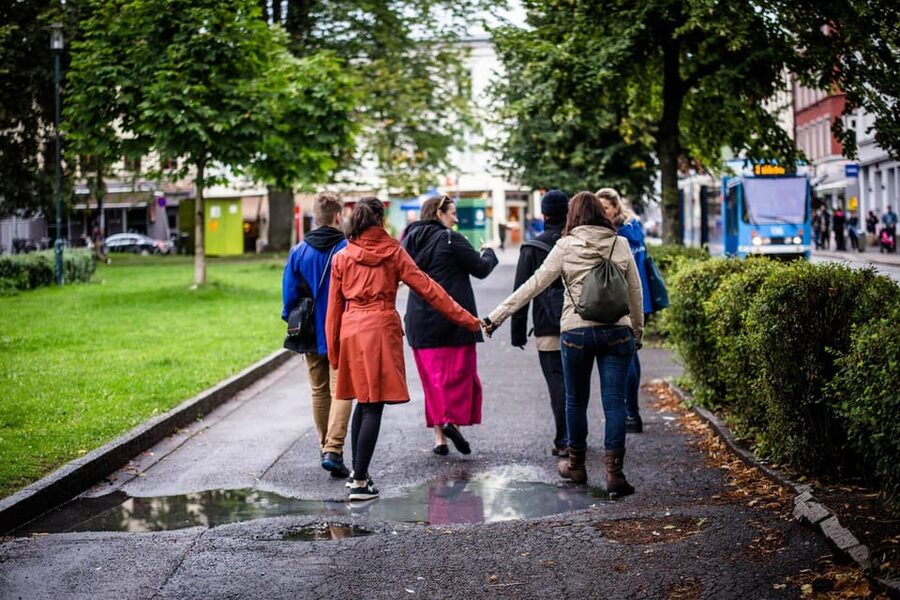
Our Savior’s Cemetery, also known as Vår Frelsers Gravlund, is one of the tour’s most meaningful stops. Here, you can see the graves of three major Norwegian figures: Henrik Ibsen, Bjørnstjerne Bjørnson, and Edvard Munch.
Munch’s grave is the special draw for many people. The painter lived at several Oslo addresses, including places connected with this part of the city. Seeing his final resting place adds a personal layer to the art and cultural stories heard earlier.
The cemetery also broadens the tour beyond street style. Ibsen and Bjørnson connect the stop to Norwegian literature and national culture, while Munch connects it to modern art. Together, the three graves offer a compact way to understand how Norway’s creative identity reaches across writing, drama, and painting.
This stop will suit you best if you enjoy context rather than only scenery. The cemetery is not a theatrical attraction. Its value comes from the names, the setting, and the chance to pause and consider the people who shaped Norwegian culture.
One practical caution: the tour listing uses both Edvard and Edward Munch in its description, but Edvard Munch is the correct name. The grave itself is the key point, and your guide can provide the local context around his connection to Oslo.
Quan Thang Ancient House and the route’s small surprises
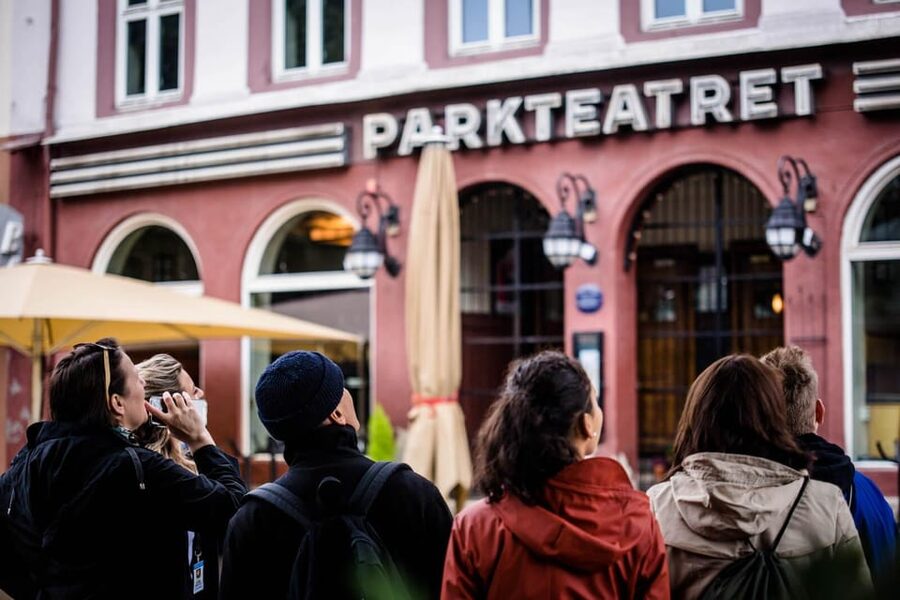
Quan Thang Ancient House is another listed sightseeing stop on the route. It adds an unexpected note to a walk already moving through industrial buildings, wooden homes, art spaces, and a cemetery.
The information provided does not specify whether you enter the house or view it from outside, so you should treat it as a brief point of interest rather than promise yourself a full house visit. That uncertainty is typical of a neighborhood walking route, where some stops work as visual markers and story points rather than formal attractions.
This is also where a private guide can add value. You can ask questions about the buildings and cultural mix as you go, instead of moving past them with only a name on a map.
The tour’s strongest appeal is its range. In three hours, you move from a central square to a river, a bridge, a music venue, painted industrial streets, old homes, a cemetery, and a food hall. The route feels varied without requiring a long ride between sights.
Finishing at Vulkan and Mathallen
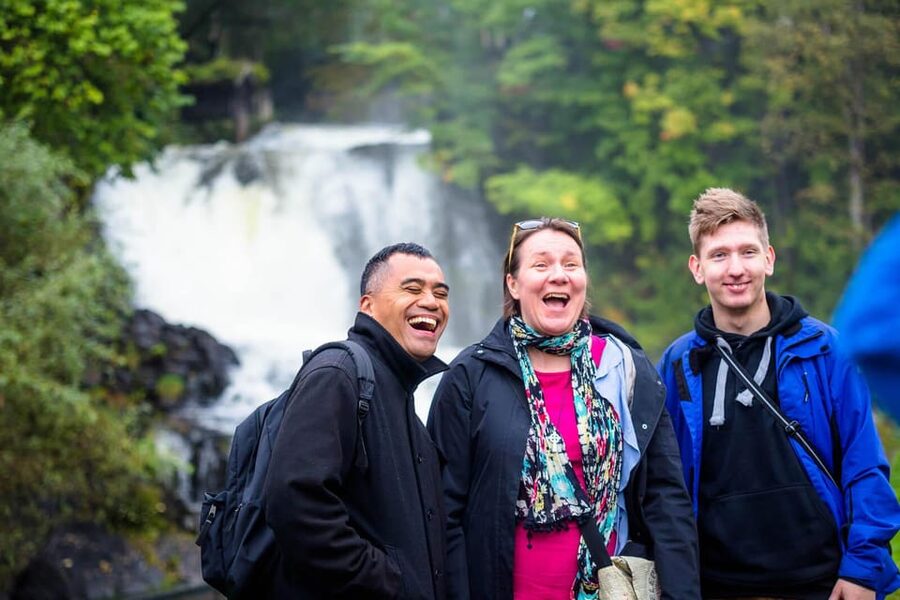
The walk ends at Vulkan, a sustainable neighborhood beside Mathallen Oslo, at Vulkan 16. The final stop is well chosen because Mathallen is one of the city’s main food destinations, and the tour finishes by the entrance just as lunch becomes appealing.
Mathallen is more than a convenient endpoint. It gives you a chance to continue the experience on your own, explore food stalls and vendors, and make the lunch decision after you have finished walking. The former industrial buildings and colorful graffiti around Vulkan keep the area visually connected to the route.
I would plan to stay for lunch rather than treat Mathallen as a quick goodbye. The tour ends at the right time for a meal, and this arrangement saves you from having to search for a restaurant immediately after a three-hour walk.
The finish does require a little planning. You make your own way back to the starting point, either by walking about 1 kilometer, roughly 15 minutes, or by public transport. A public transport ticket is not included. If your hotel or next appointment is near Youngstorget, the return walk is simple. If you are carrying luggage or have a tight schedule, account for that extra time.
What the $461 private price really buys
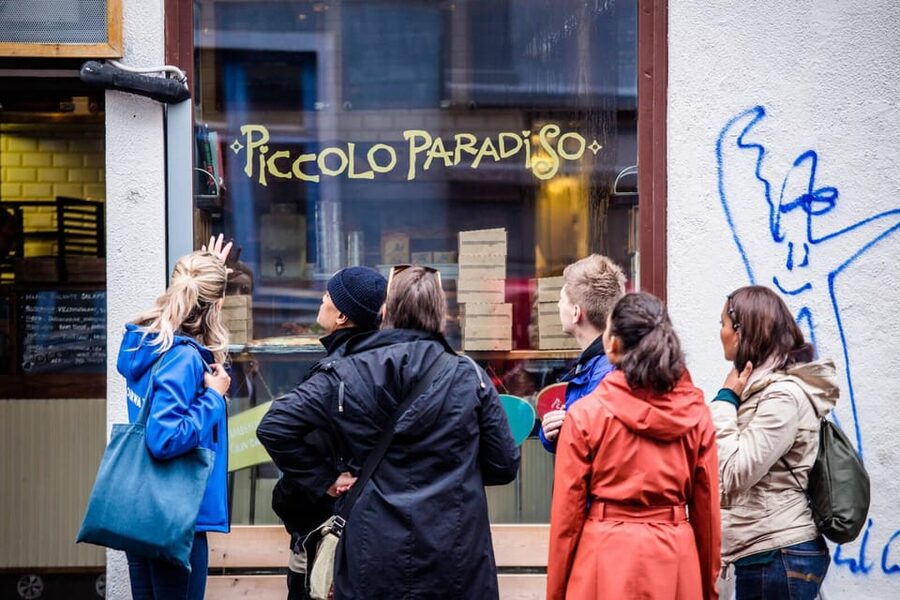
At $461 per group up to one person, this is not a budget walking tour. The price makes the most sense when you place a high value on privacy, flexible conversation, and a guide focused on your interests.
For one person, the cost is especially high compared with a standard group walk. The supplied price wording says up to one person, so confirm the exact party and pricing details before payment if you are booking for more than one person. Do not assume the listed amount covers a larger party.
The private format can be worthwhile for art lovers, first-time visitors who want local orientation, couples seeking a quieter walk, or families who do not want to match the pace of a large group. It is also useful if you want to ask many questions about Munch, street art, architecture, or Oslo’s creative districts.
The value is weaker if you mainly want famous landmarks, indoor attractions, or the lowest possible cost. Much of the pleasure comes from interpretation and atmosphere, not admission to paid sights. You are paying for the guide’s time and route design.
The overall rating is 4.6 from 26 ratings, and the strongest praise centers on the guides, the unusual route, the artwork, and the mix of small highlights. The one recurring suggestion is useful: some people would have liked even more stories and anecdotes. If storytelling is your main reason for booking, tell the guide that at the start.
Who will enjoy this Oslo walk most?
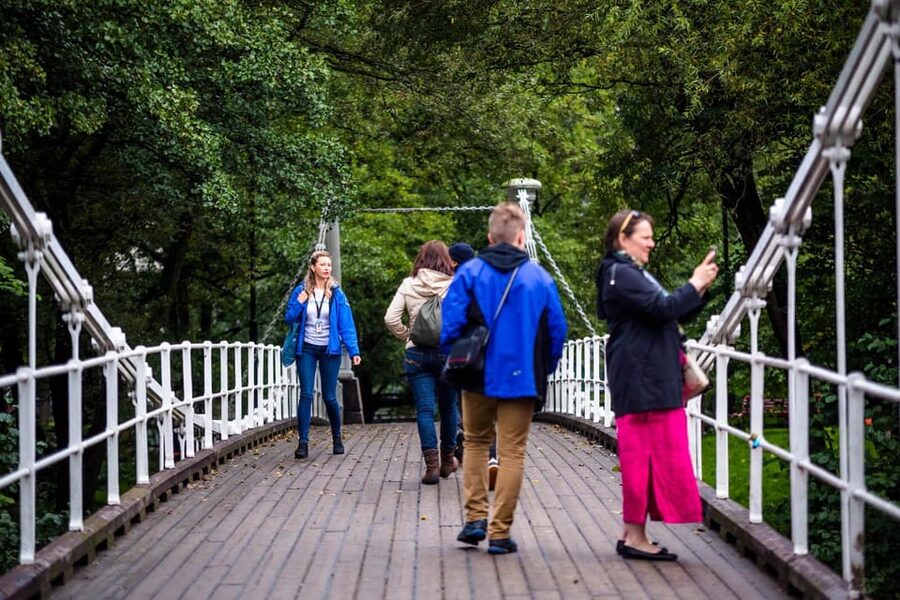
I would choose this tour if you want to see a side of Oslo that is more local, creative, and slightly rough around the edges. It suits people who enjoy walking, urban photography, modern art, old houses, and food stops.
It is also a good fit if you have already seen Oslo’s central sights and want something less typical. The route is not built around the city’s biggest attractions, and that is exactly its strength.
You should think twice if you dislike outdoor walking, want a relaxed pace with little ground to cover, or need to finish back at Youngstorget. The three-hour duration is fixed, and the return trip is your responsibility.
Book in weather-ready clothing and sturdy shoes. Tours are offered in English, Spanish, French, German, Italian, and Norwegian, so select the language that will let you get the most from the stories.
Should you book the Grünerløkka tour?
Book it if you want a private, story-led walk through Oslo’s creative side, especially if Munch, street art, old wooden houses, and food halls appeal to you. The route has real variety, and the finish at Mathallen is both practical and enjoyable.
Skip it if your priority is a low-cost introduction to Oslo’s major landmarks. At $461 for a group up to one person, the price requires a clear interest in private guiding.
For the best value, set aside time for lunch at Mathallen and ask your guide for extra anecdotes. That small request may address the only notable weakness in an otherwise well-shaped introduction to Grünerløkka.
FAQ
Where does the tour start?
The tour starts at the fountain in the middle of Youngstorget, at Youngstorget 2A in central Oslo. The guide is expected to arrive about 10 minutes before departure and carries a sign with the local partner’s name.
Where does the tour end?
The tour ends at Vulkan 16, 0178 Oslo, by the entrance to Mathallen Oslo in the Grünerløkka district.
How long does the walking tour last?
The tour lasts three hours. About 30 minutes covers Sentrum, followed by roughly two and a half hours in Grünerløkka.
Is the tour private?
Yes. It is offered as a private group experience.
Which languages are available?
The tour is available in Spanish, English, French, German, Italian, and Norwegian.
Is lunch at Mathallen included?
No. The tour ends by the entrance to Mathallen, but lunch and any food purchases are not listed as included.
How do I return to the starting point?
You can walk about 1 kilometer, or roughly 15 minutes, back to Youngstorget. You may also use public transport, but the ticket is not included.
More 3-Hour Experiences
- Oslo: 3-Hour Highlights Bike Tour
★ 4.8 · 1,609 reviews - Oslo: 3-hour Kayaking Trip on the Oslofjord
★ 4.9 · 43 reviews - Private Bike Tour (3 hours)
★ 5.0 · 33 reviews - 3 Hours Walking Tour for Great Food in Oslo
★ 5.0 · 32 reviews
Just added around Oslo
- Visit the Instaworthy Spots of Oslo’s Vigeland Park with a Local★ 5.0 · 4 reviews
- Oslo: 3-hour Cross Country trip with equipment and guide★ 5.0 · 4 reviews
- Oslo: 2-hour Christmas Private Walking Tour★ 3.0 · 4 reviews
- Art and Museum Tour of Oslo★ 5.0 · 4 reviews
- Flavors of Oslo: Food & Beer Tour★ 4.8 · 4 reviews
- Private Transfer from Oslo City Centre to Oslo Airport★ 5.0 · 4 reviews
- 3-Hour Vattkørt Beginner Kayak Course on Oslo Fjord★ 5.0 · 4 reviews
- Hipstoric Grünerløkka Private Walking Tour★ 5.0 · 4 reviews
Walking Tours, compared.
Past & Present Small Group Guided Walking Tour
Read our review →
Walking Tour in Bergen of the Past and Present
Read our review →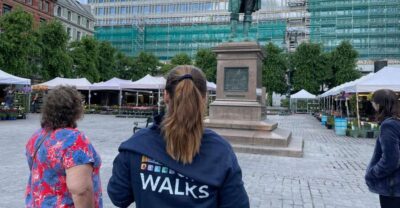

Browse the lists this tour appears in