
Reviewed · WALKING TOURS
Free City Walking Tour in Oslo
Oslo opens up quickly on foot. This 90-minute walk links the city’s major sights with stories about Norwegian royalty, daily life, art, politics, and the city’s changing waterfront. You start at the Tiger statue by Oslo Central Station and finish near the Norwegian Parliament, so the route is useful both as an introduction and as a practical way to get your bearings.
I like the compact route, which covers a lot of central Oslo without asking you to spend half a day walking. I also like the mix of grand sights and smaller details, from the Royal Palace and Akershus Fortress to the Public Library, University Aula, and the tiny stock exchange. The main consideration is that this is an overview, not a museum tour. You see many places from outside, and the amount of historical detail may depend on your guide.
The tour costs about $3.45 per person through the booking channel described here, though the activity is promoted as free and tips are expected. One direct comment put a typical tip at about $10 per person. That makes the real cost worth considering before you reserve, especially if you are traveling with a group.
In This Review
- Key points to know before you go
- Starting beside Oslo’s Tiger statue
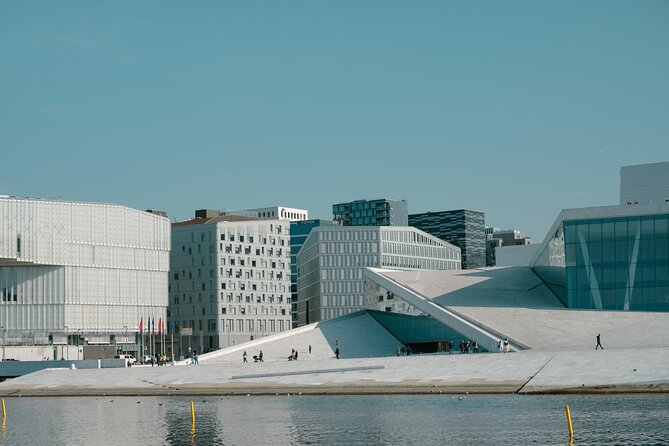
- Opera House, Bjørvika, and Oslo’s modern waterfront
- Kvadraturen and Christiania Square
- Akershus Fortress and Alfred Nobel
- Aker Brygge, the National Museum, and the Nobel Peace Center
- Oslo City Hall and the civic heart
- Nationaltheatret and Henrik Ibsen
- The University Aula and Edvard Munch
- The Royal Palace and Norwegian royal stories
- Finishing at the Norwegian Parliament
- Guide quality, group size, and walking pace
- What the $3.45 price really means
- Practical details that affect your choice
- Who should book this Oslo walk?
- Should you book the Free City Walking Tour in Oslo?
- FAQ
- How long is the Free City Walking Tour in Oslo?
- Where does the tour begin?
- Where does the tour finish?
- What sights are included on the route?
- Is the tour really free?
- How many people can join?
- Is a mobile ticket available?
- Is the tour accessible by public transportation?
- What is the cancellation policy?
Key points to know before you go
- Start at the Tiger statue: Meet beside Oslo Central Station at Jernbanetorget, an easy point to reach by public transportation.
- See central Oslo in 90 minutes: The route passes the Opera House, fortress, waterfront, City Hall, theater district, palace, and Parliament.
- Expect local stories, not just photo stops: Guides such as Nicholas, Nikola, Yellena, Zoe, and Mia have been praised for clear explanations, humor, and friendly presentation.
- The route ends near the Norwegian Parliament: You finish at Karl Johans gate, about 10 minutes on foot from the Tiger statue.
- Group size can reach 30 people: That is large enough for energy and variety, but you may need to stay close to hear everything.
- Book early if your schedule is fixed: The average booking point is 22 days before the tour, suggesting that popular departure times can fill.
Starting beside Oslo’s Tiger statue
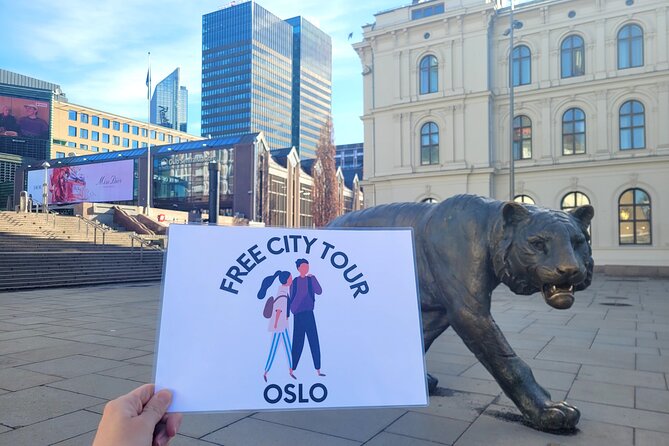
The meeting point is the Tiger sculpture at Jernbanetorget, outside Oslo Central Station. This is a practical beginning because the square is easy to find and close to public transportation. If you arrive in Oslo by train, you are already in the right part of town.
The Tiger is more than a meeting marker. It gives the group a clear landmark in a busy transport area, and the guide can gather everyone before leading you toward the harbor. With a maximum of 30 people, look for the guide promptly rather than assuming the whole group will be easy to spot.
The first stop takes about eight minutes. That time helps set the tone for the walk and introduces central Oslo before the route moves into the newer waterfront districts. Bring shoes suited to steady city walking. The tour is not described as strenuous, but it covers many stops in a short period.
More Walking Tours in Oslo
- Oslo: Best of Oslo Walking Tour
★ 4.5 · 458 reviews - Oslo: Guided Walking Tour of Central Oslo
★ 4.7 · 438 reviews - Oslo: Historic Myths & Legends Evening Walking Tour
★ 4.8 · 408 reviews
Opera House, Bjørvika, and Oslo’s modern waterfront
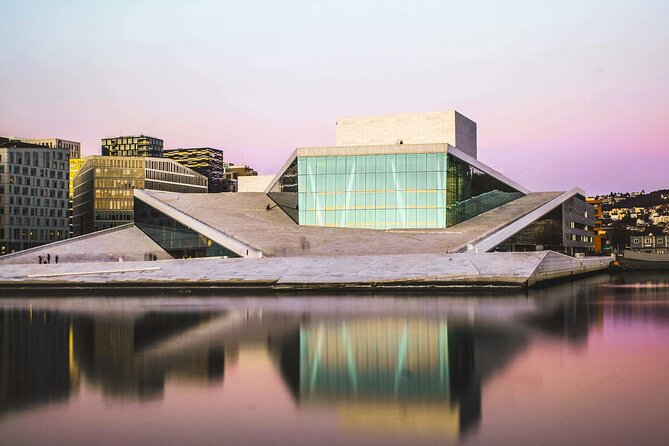
The Oslo Opera House gets about 10 minutes, along with stories about Bjørvika, Sørenga, the Public Library, and the Munch Museum. This is one of the strongest parts of the route because it shows Oslo as a modern capital, not just a city of old royal buildings.
The Opera House is especially useful as a first major sight. It gives you a sense of Oslo’s connection to the water and its effort to bring public spaces into the harbor area. The nearby Public Library and Munch Museum add a cultural angle, while Bjørvika and Sørenga show how the waterfront has changed.
You should not expect time to tour the Opera House, library, or Munch Museum during this walk. The value is in seeing them as part of a larger city story and learning where they are. If you plan to visit the Munch Museum or another cultural site later, listen carefully here, since the guide’s introduction may help you decide how to use the rest of your day.
The route also passes what is described as the smallest stock exchange in the world. It is a brief stop rather than a major attraction, but details like this give the walk personality. They are the sort of small facts that help a city feel less like a checklist of monuments.
Kvadraturen and Christiania Square
Next comes Kvadraturen, Oslo’s historic central neighborhood, with a stop at Christiania Square lasting about seven minutes. The name points to an earlier chapter of the city, when Oslo was known as Christiania.
This section provides a useful bridge between the new waterfront and the older core. The guide can place Oslo’s streets and institutions in a longer story, rather than presenting each sight as an isolated stop. You get a sense of how the city’s center developed around trade, government, and the harbor.
The stop is short, so you will want to stay attentive. This is not a leisurely neighborhood wander with time to browse shops or enter buildings. It is better suited to someone who wants a clear introduction before exploring Kvadraturen alone.
Akershus Fortress and Alfred Nobel
Akershus Castle and Fortress receives about eight minutes, with admission included for this part of the route. It is one of the most important stops because the fortress gives you both a historic setting and a chance to look out across Oslo.
The guide also tells the story of Alfred Nobel here. That connection leads naturally toward the Nobel Peace Center later in the walk and adds an international thread to the tour. Instead of hearing only about kings and government, you get a link to the peace prize and Norway’s role in that tradition.
The fortress is also one of the places where the route becomes more scenic. A response from the operator highlighted views from the top of the fortress, and this is likely to be one of the better points for photographs. Still, eight minutes is not enough for a full visit to the grounds, castle interiors, or every defensive feature.
If Akershus interests you, I would return later with extra time. The walking tour gives you the setting and the basic story. A separate visit lets you explore at a slower pace.
A completely different kind of day out from Oslo:
- Oslo: Scenic Fjord Cruise with Audio Guide Commentary
★ 4.5 · 5,375 reviews - Oslo Nature Walks: Island Hopping Tour
★ 4.8 · 2,713 reviews - Oslo: 100% Electric Oslofjord Sightseeing Cruise
★ 4.4 · 2,041 reviews - Oslo: Fjord Evening Cruise with Shrimp Buffet
★ 4.5 · 1,956 reviews
Aker Brygge, the National Museum, and the Nobel Peace Center
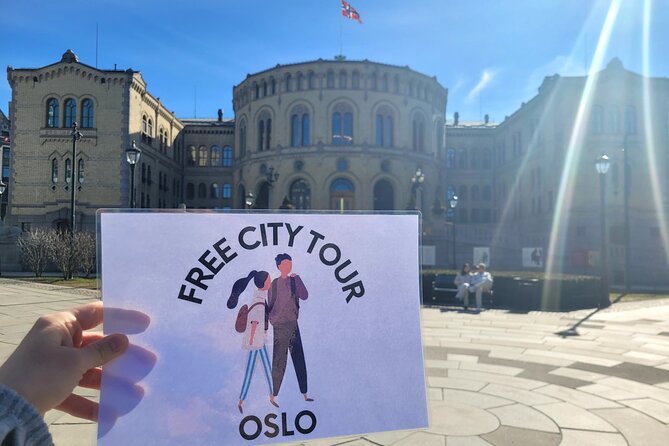
The walk then reaches Aker Brygge, with about seven minutes devoted to the waterfront, the National Museum, and the Nobel Peace Center. This is a short but useful cluster of attractions.
Aker Brygge adds a more contemporary, open-air feel to the route. The National Museum and Nobel Peace Center show how much culture is concentrated around Oslo’s central harbor. You get a practical sense of which places are close together, which can save time when planning your own sightseeing.
The Nobel Peace Center also connects back to the Alfred Nobel story at Akershus. That repeated theme gives the itinerary more shape than a random series of landmarks. The guide can explain how the people, buildings, and institutions fit together.
Again, the tour focuses on orientation rather than admission. You pass these attractions and hear about them, but the supplied details do not indicate that the group enters the National Museum or Nobel Peace Center. Plan separate visits if you want exhibitions.
Oslo City Hall and the civic heart
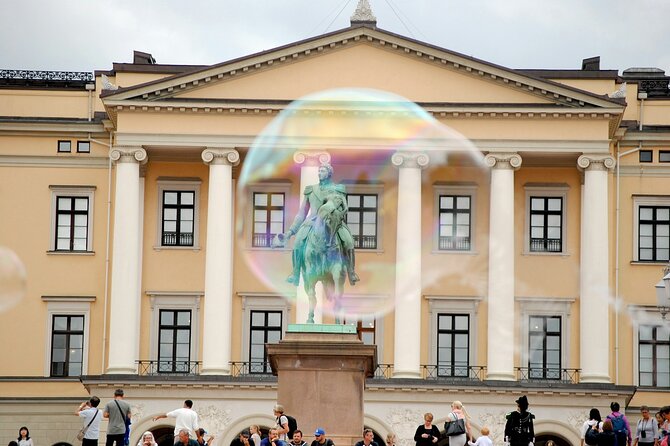
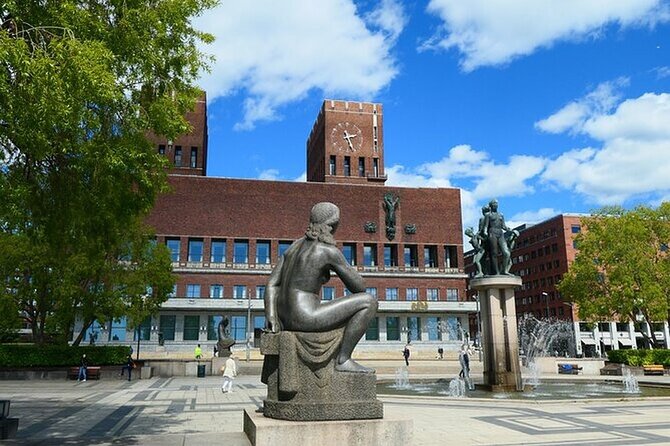
Oslo City Hall, or Rådhuset, receives about 10 minutes. This longer stop suggests that the building and its role in Oslo receive more attention than some of the shorter points along the route.
City Hall is an ideal place for a guide to explain local government, public life, and the city’s relationship with the Nobel Peace Prize. It also helps shift the tour from waterfront development to civic Oslo. The route is not only about pretty buildings. It introduces the institutions that shape Norwegian public life.
The stop should suit you if you like context along with photographs. If you prefer a fast parade of famous landmarks, the guide’s explanations may feel slower. The strongest ratings consistently praise the guides for making the information entertaining, but one lower assessment felt there was too much walking and not enough explanation. That is a fair reminder that guide style matters.
Nationaltheatret and Henrik Ibsen
Nationaltheatret receives about six minutes and brings Henrik Ibsen into the story. Ibsen is one of Norway’s best-known playwrights, so this stop adds literature and theater to a route otherwise centered on architecture, politics, and royal history.
The theater district also changes the mood. After the harbor and government buildings, you are seeing a part of Oslo associated with performance and public culture. The stop is brief, but it gives you a useful landmark to revisit if you want to explore more of central Oslo.
Do not expect a theater performance or interior tour. The point is the setting and the connection to Ibsen. For a first walk, that is enough to mark the district on your mental map.
The University Aula and Edvard Munch
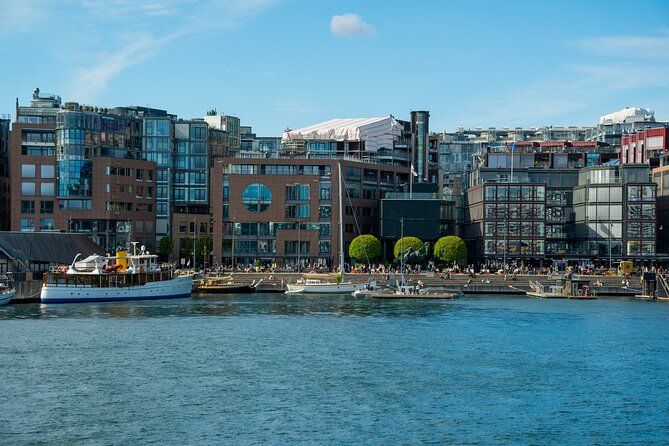
The University Aula is a very short four-minute stop, but it carries an unusual artistic detail: Edvard Munch painted there. That makes it more than another institutional building.
The Aula helps connect Oslo’s academic life with its art history. You may not spend long here, but the Munch story gives the stop a clear reason to be included. It also complements the earlier mention of the Munch Museum, allowing you to understand that Munch’s presence in Oslo extends beyond one museum building.
This is a good example of how the tour works best. It gives you a handful of facts that can guide later exploration. If the Aula or Munch interests you, note the location and return when you have more time.
The Royal Palace and Norwegian royal stories
The Royal Palace receives about eight minutes and is one of the route’s main highlights. The guide shares stories about the Norwegian Royal Family, giving you a look at the country’s monarchy through the building and the surrounding ceremonial area.
For many people, this will be the most familiar type of Oslo sight: a grand official residence with a direct link to national identity. The stop is not just about taking a palace photograph. The stories help explain how the royal family fits into modern Norwegian life.
As with the other landmarks, the itinerary does not promise an interior visit. You see the palace from the route and hear its story. If you want to enter, you will need to arrange that separately, if available during your visit.
The palace is also a useful marker for the end of the central-city walk. From here, the group continues along Karl Johans gate toward the Norwegian Parliament.
Finishing at the Norwegian Parliament
The final stop is the Norwegian Parliament, at Karl Johans gate 22. The route ends here after about eight minutes, and the location is convenient for continuing on foot through central Oslo.
Ending at Parliament gives the tour a logical finish. You have moved from the city’s transport hub and modern harbor through historic districts, fortress grounds, museums, City Hall, theater, university, and palace. The final stop brings the focus back to national government.
The end point is about 10 minutes walking from the Tiger statue, so you can return easily if needed. You can also use the location to continue along Karl Johans gate or head toward nearby central sights. The tour does not include a return transfer.
Guide quality, group size, and walking pace
The strongest part of this experience is the guide-led storytelling. Nicholas was praised for presenting both Oslo’s past and everyday life, while Nikola was described as clear and unhurried even in chilly weather. Yellena received particular praise for being fun, friendly, and welcoming to people of different ages.
Zoe was described as personable and entertaining, and Mia was praised for sharing appealing places around Oslo. The pattern is clear: the experience depends heavily on who leads your departure, but the guide role is central rather than decorative.
A group of up to 30 people is manageable, though not intimate. Stay close to the guide, especially near traffic, open squares, and the waterfront. The walk is listed at about 90 minutes, and the pace has been described as easy by one participant. Still, you are moving between many stops, so the experience is better for you if you are comfortable walking continuously.
One isolated complaint described a rushed finish and very fast speech, while the operator said that person may have reviewed a different business. I would treat that as a reminder to stay alert to the exact meeting point and tour identity, not as a clear pattern. Most of the available feedback praises the guides’ energy, clarity, and friendly manner.
What the $3.45 price really means
At $3.45, the booking price looks almost symbolic for a 90-minute introduction to Oslo. You are getting a guided route through some of the city’s most important central sights, including the Opera House, Akershus Fortress, City Hall, Royal Palace, and Parliament.
The word free needs a little care. The tour is promoted as a free walking tour, but tips are expected. One comment suggested about $10 per person as a normal tip, which would make the gratuity the main cost. You should decide in advance what the experience is worth to you and budget accordingly.
I see good value here if you use the tour as a first-day orientation. It can help you choose which museums and buildings deserve a longer visit, while also giving you basic context for the city. It is less useful if you want entry tickets, long stops, or a specialist focus on art, architecture, or royal history.
The 4.8 rating from 91 ratings and 93 percent recommendation rate point to a strong overall experience, but no walking tour suits every guide preference. If you want silence and independent wandering, this may feel structured. If you like a friendly guide who keeps the pace moving, it should fit well.
Practical details that affect your choice
You receive confirmation at booking, and the ticket is mobile, so you do not need to print anything. The meeting point is near public transportation, and service animals are allowed. Most people can participate.
Free cancellation is available if you cancel at least 24 hours before the local start time. Cancellations within 24 hours are not refunded, and changes during that period are not accepted. The tour also requires a minimum number of participants, so an operator cancellation may result in another date or experience, or a full refund.
I would book this early if the tour is important to your schedule. The average booking point is 22 days ahead, and the maximum group size is 30. Oslo is easy to visit independently, but a popular departure can still be full when you arrive.
Who should book this Oslo walk?
I would recommend it most strongly for a first visit, a short stay, or the first morning of a longer trip. You get a fast map of central Oslo and can mark the Opera House, fortress, Nobel Peace Center, museums, palace, and Parliament for later.
It also suits you if you enjoy history explained through stories rather than a formal lecture. Families and mixed-age groups may appreciate the short stops and light presentation, though everyone should be ready for steady walking.
I would choose another activity if you want to tour interiors, spend serious time with art, or explore neighborhoods beyond central Oslo. The itinerary stays focused on the city center, and its purpose is to connect major sights rather than provide deep access to any one of them.
Should you book the Free City Walking Tour in Oslo?
Yes, if you want an affordable and lively introduction to central Oslo. The route is well chosen, the end point is convenient, and the best guides appear to combine humor with useful facts about Norwegian culture, politics, art, and royal life.
Book it near the start of your visit, wear comfortable shoes, and treat the tip as part of the budget. Just remember that you are buying orientation and storytelling, not museum entry or an in-depth historical course. For that purpose, this is a smart first look at Oslo.
FAQ
How long is the Free City Walking Tour in Oslo?
The tour lasts approximately 1 hour and 30 minutes.
Where does the tour begin?
It begins at the Tiger sculpture at Jernbanetorget, 0154 Oslo, beside Oslo Central Station.
Where does the tour finish?
It ends at Karl Johans gate 22, near the Norwegian Parliament. The endpoint is about a 10-minute walk from the Tiger statue.
What sights are included on the route?
The route includes the Oslo Opera House, Bjørvika, Sørenga, the Public Library, the Munch Museum area, the smallest stock exchange in the world, Kvadraturen, Christiania Square, Akershus Fortress, Aker Brygge, the National Museum, the Nobel Peace Center, City Hall, Nationaltheatret, the University Aula, the Royal Palace, and the Norwegian Parliament.
Is the tour really free?
The experience is promoted as a free walking tour, but the booking price provided is $3.45 per person. Tips are expected, and one comment suggested about $10 per person.
How many people can join?
The maximum group size is 30 people.
Is a mobile ticket available?
Yes. The experience includes a mobile ticket, and confirmation is provided at the time of booking.
Is the tour accessible by public transportation?
Yes. The meeting point is near public transportation.
What is the cancellation policy?
You can cancel at least 24 hours before the start time for a full refund. Cancellations or changes made less than 24 hours before the experience are not refunded or accepted.
Just added around Oslo
- Oslo: 3-hour Cross Country trip with equipment and guide★ 5.0 · 4 reviews
- Visit the Instaworthy Spots of Oslo’s Vigeland Park with a Local★ 5.0 · 4 reviews
- Art and Museum Tour of Oslo★ 5.0 · 4 reviews
- Oslo: 2-hour Christmas Private Walking Tour★ 3.0 · 4 reviews
- Flavors of Oslo: Food & Beer Tour★ 4.8 · 4 reviews
- Private Transfer from Oslo City Centre to Oslo Airport★ 5.0 · 4 reviews
- 3-Hour Vattkørt Beginner Kayak Course on Oslo Fjord★ 5.0 · 4 reviews
- Hipstoric Grünerløkka Private Walking Tour★ 5.0 · 4 reviews
Walking Tours, compared.
Past & Present Small Group Guided Walking Tour
Read our review →
Walking Tour in Bergen of the Past and Present
Read our review →

Browse the lists this tour appears in