
Reviewed · NORWAY
Dagali: Extreme Canyoning Experience
Water, rock, and a little nerve make this memorable. Dagali’s Full On Canyoning combines waterfall rappelling, natural slides, safe jumps, and secluded mountain scenery in a demanding half-day outing. I especially like the close contact with the river and the small-group format, limited to 10 people.
The four-meter-deep Giant’s kettles are a rare natural feature, and the English-speaking guides receive strong praise for being friendly, careful, and encouraging. The main caution is simple: this is active canyoning, not a gentle river walk. You need to be a swimmer, comfortable in cold water, and ready for plenty of walking between water sections.
In This Review
- Key points to know before booking
- What Dagali canyoning is really like
- Starting at Dagali Fjellpark
- The 25-minute ride to Bjorkflåta
- Three hours through the canyon
- Four-meter Giant’s kettles
- How demanding is the five-hour outing?
- Guides, safety, and the small-group advantage
- Price and what you receive for $150
- Who should book this experience?
- What to pack for warmth and comfort
- Final verdict: should you book Dagali canyoning?
- FAQ
- How long does the Dagali canyoning experience last?
- Where does the activity start?
- What equipment is provided?
- What should I bring?
- Is the experience suitable for beginners?
- Who cannot take part?
Key points to know before booking
- A 180-meter descent over 1,500 meters of canyon gives the trip a real sense of progression, not just one short rappel.
- The Giant’s kettles reach four meters deep, adding unusual rock formations and water features to the route.
- The group is capped at 10 people, which helps the guides give attention during rappels, jumps, and slides.
- The waterfall rappel is the headline moment, but the tour also includes natural slides, safe jumps, pools, and classic juving.
- The active canyon section lasts about three hours, inside a five-hour outing that includes two safety briefings and shuttle rides.
- Bring swimwear, a large towel, and extra warm layers if you tend to feel cold in wet conditions.
What Dagali canyoning is really like
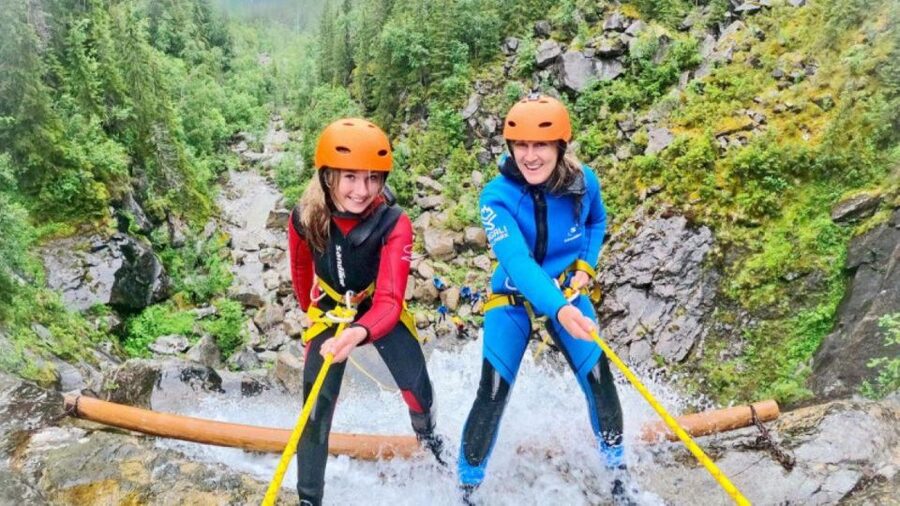
This is a proper outdoor challenge, but it is designed for recreational athletes and first-timers who are physically ready. You do not need to arrive as an expert canyoner. You do need to swim, manage uneven ground, handle cold water, and follow instructions when the group reaches a rappel or jump.
The route covers about 1,500 meters and drops around 180 meters. Those numbers matter because they show the scale of the outing. You are not simply walking to a waterfall, taking one photo, and heading back. The route moves through a series of water and rock features, with the canyon itself providing the structure for the adventure.
I like that the experience mixes controlled activity with natural scenery. The rappelling gives you a clear goal and a bit of adrenaline. The pools, smooth rock slides, and Giant’s kettles slow the pace and let you appreciate the setting. That balance makes the trip more varied than a single technical descent.
Still, the physical side should not be underestimated. One participant enjoyed the outing as a family activity with older children but found there was quite a bit of walking through the woods and less time in the river than expected. That is useful information. If you picture five straight hours of swimming and water play, adjust your expectations. This is a canyon route with wet sections, not a continuous river ride.
Other Norway trips travellers book alongside this one:
- From Bergen: The Original Fjord Cruise to Mostraumen
★ 4.7 · 8,440 reviews - Tromsø: Reindeer Sledding & Feeding with a Sami Guide
★ 4.8 · 6,417 reviews - Stavanger: Scenic Fjord Cruise to Lysefjord and Preikestolen
★ 4.6 · 5,791 reviews
Starting at Dagali Fjellpark
The meeting point is Dagali Fjellpark, where the day begins with equipment and instructions. This is a useful start because you can get organized before heading into the canyon rather than dealing with gear at the water’s edge.
The operator provides a helmet, wetsuit, neoprene shoes, and harness. These are the key pieces for cold, slippery, wet conditions. The wetsuit helps with warmth, while the shoes and harness are important for moving across rock and handling the rappel.
A safety briefing at the fjellpark lasts about 15 minutes. Listen closely here, even if you have tried canyoning before. The guide will explain how the equipment works and what to expect from the route. Since several parts of the trip involve water, height, and uneven rock, clear instructions are more useful than bravado.
You should arrive with swimwear to wear under the neoprene. Bring a large towel and shower gel for afterward. Thermal or wool underwear and socks are also suggested for extra warmth, a sensible idea if you get cold easily.
Alcohol and drugs are not allowed. That rule is especially important on an activity involving ropes, slippery surfaces, and jumps.
The 25-minute ride to Bjorkflåta
After the first briefing, a bus takes the group toward the canyon. The ride lasts about 25 minutes and gives the outing a clear transition from organized meeting point to remote nature.
The route begins near Bjorkflåta, identified by the location code 6JW3+HQ. Once there, you receive another safety briefing before entering the canyon. I see the second briefing as a good sign. Conditions in the canyon are different from conditions at the fjellpark, so a quick review of the actual route and current setting has practical value.
The short shuttle also keeps the walking approach manageable. You are not spending the first hour carrying wet-weather equipment through a long approach. The bus gets you close to the active section, leaving your energy for the canyon itself.
Because the group is small, the guides can keep instructions personal. The maximum group size is 10 people. That does not mean every moment will move quickly, since rappelling takes time and the group must proceed together, but it should make it easier to hear instructions and receive help when needed.
Three hours through the canyon
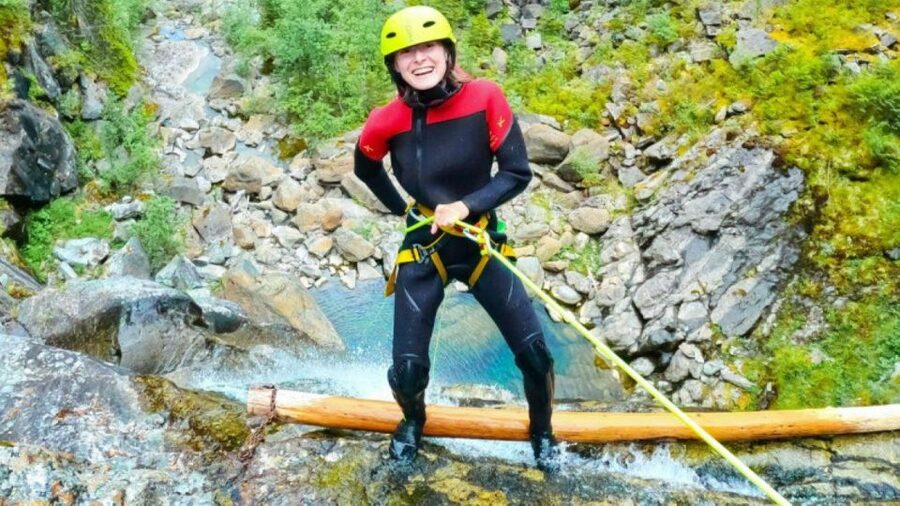
The guided canyon portion lasts about three hours. It is the heart of the trip, and the variety of features keeps the route from feeling repetitive.
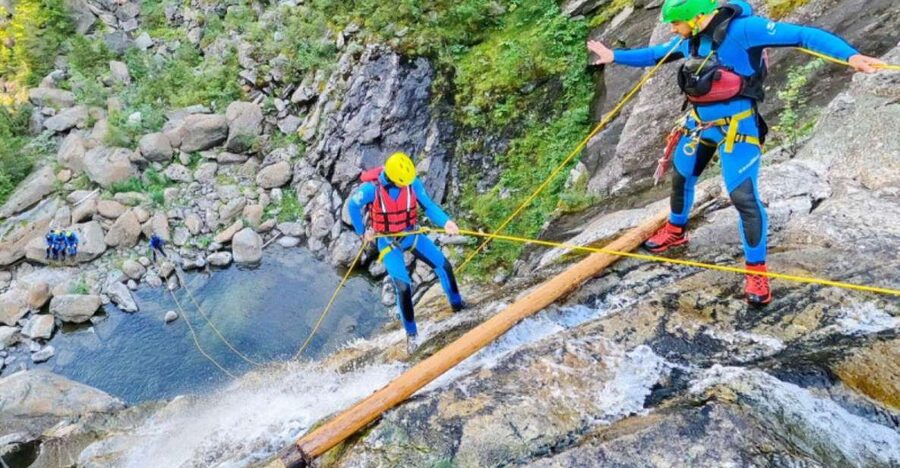
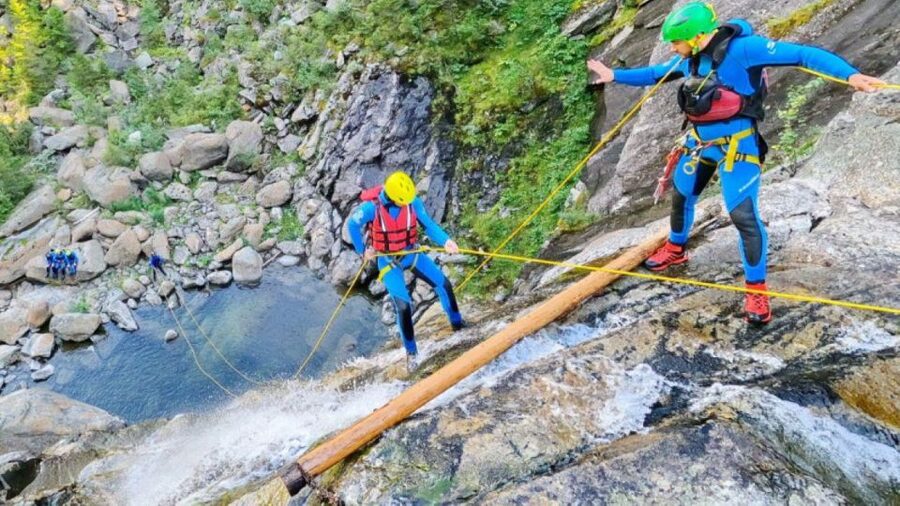
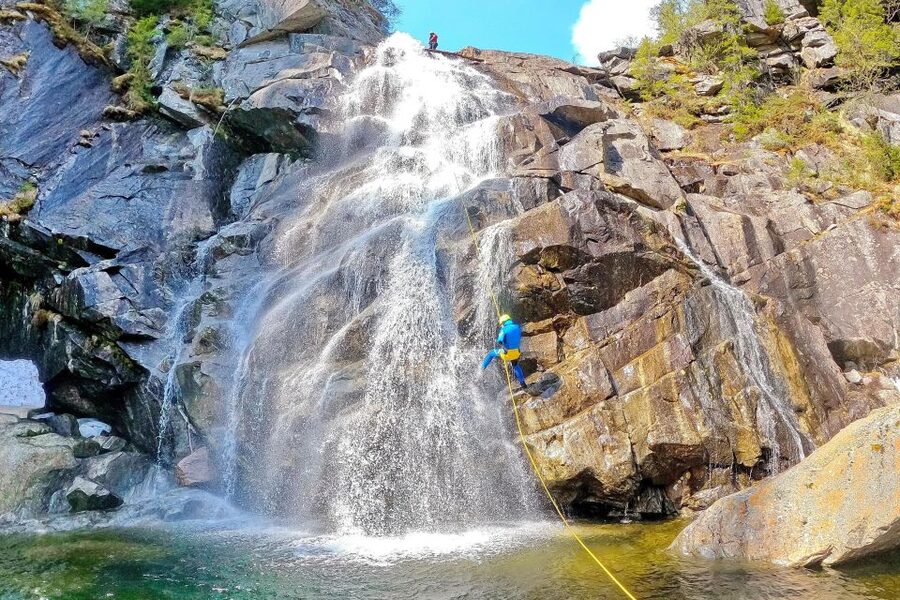
The most dramatic section is the high waterfall rappel. You are secured in a harness and guided down wet rock beside or along the waterfall. This is likely the moment that tests your nerve most. The height, noise, spray, and slippery surface make it feel very different from a dry climbing wall.
The guides are there throughout the descent. One of the strongest themes from the available feedback is their safety focus and friendly attitude. Ville from Sweden specifically praised the way the guides supported people who felt nervous. That matters because a good canyoning guide does more than explain equipment. The guide also helps you manage the moment when your feet leave firm ground.
The trip includes safe jumps, but the word safe does not mean compulsory or careless. Follow the guide’s instructions and do not treat another person’s jump as a challenge to copy without permission. The attraction is the controlled experience of entering the water, not proving anything to the group.
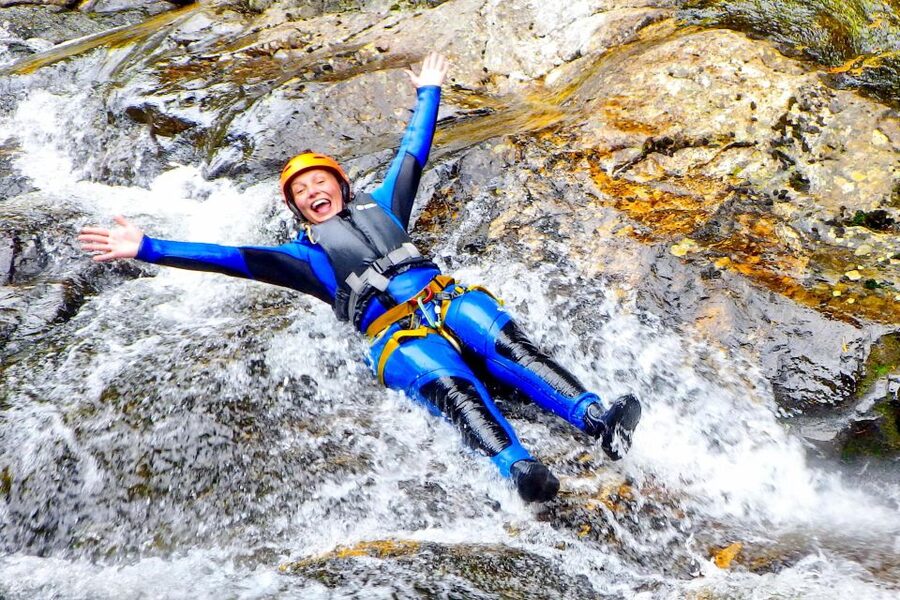
Natural slides add a lighter side to the route. Smooth rock has been shaped by moving water, creating places where you can slide rather than rappel or walk. These features break up the more serious sections and give the experience a playful quality.
The route also includes pools and the classic Norwegian canyoning activity known as juving. Expect a mix of walking, wading, climbing over rock, sliding, jumping, and rope work. The exact balance can vary, but the stated route and direct feedback both suggest that walking through the woods is part of the day.
A completely different kind of day out from Norway:
- Oslo: Scenic Fjord Cruise with Audio Guide Commentary
★ 4.5 · 5,375 reviews - Tromsø: Whale Watching Tour by Hybrid-Electric Boat
★ 4.5 · 4,217 reviews - From Tromsø: Aurora Borealis Tour
★ 4.8 · 4,206 reviews - Tromsø’s Top-Rated Fjord & Fishing Cruise – All-Inclusive
★ 4.7 · 4,017 reviews
Four-meter Giant’s kettles
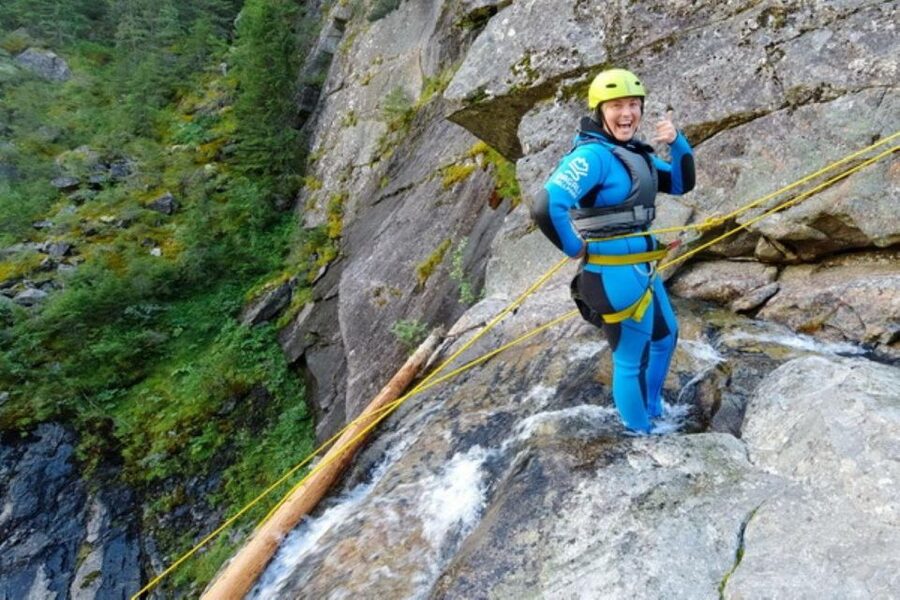
The Giant’s kettles are one of the most distinctive reasons to choose this route. These are deep, rounded rock formations formed by the force of water and stone over time. The ones on this outing reach about four meters deep.
They give the canyon a sense of age and character that a standard waterfall activity may lack. You are not only completing obstacles. You are moving through rock shaped by natural water flow, with the formations becoming part of the route.
The kettles also help explain why the activity is aimed at swimmers and water lovers. Water features are central to the experience, and you should be ready to enter pools and manage yourself in wet surroundings. The provided wetsuit and neoprene shoes help, but they do not remove the need for water confidence.
If you are uneasy in deep water, ask yourself whether the setting will feel exciting or stressful. This is not presented as a dry rappel tour with a few puddles. At the same time, you are guided, equipped, and accompanied through the route. The activity is demanding, but it is not marketed as an elite expedition.
How demanding is the five-hour outing?
The full experience takes about five hours. The schedule includes:
- A 15-minute safety briefing at Dagali Fjellpark
- A 25-minute shuttle to the canyon
- A second 15-minute safety briefing at Bjorkflåta
- About three hours of guided canyoning
- A 25-minute ride back
- A snack after the activity
The total timing gives you a practical way to plan the rest of your day. Treat this as a half-day commitment, not a quick morning add-on. The active period includes walking through natural areas, and the terrain may feel tiring even before the most technical parts.
The trip is listed with a possible duration range of three to six hours in the general activity information, while the planned experience is described as five hours. Allow the full five hours and avoid booking a tightly timed activity immediately afterward.
You also need enough physical confidence to move in a wetsuit and harness. Those items are useful, but they add bulk and warmth. You may find the combination tiring during the walking sections, especially if you are not used to wet outdoor activities.
Guides, safety, and the small-group advantage
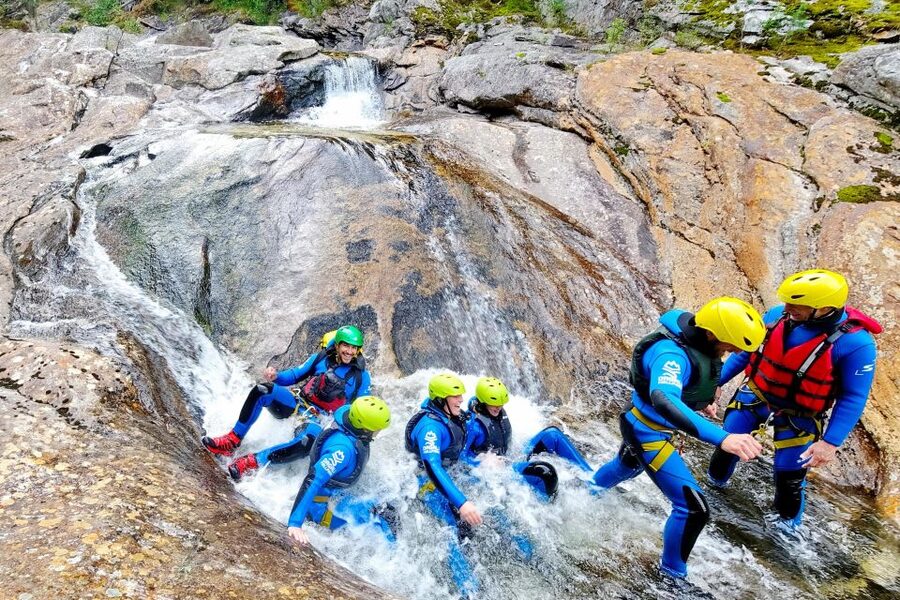
The guides speak English and remain with the group during the activity. Their role covers equipment, route instructions, rappelling, jumps, and general support.
The feedback gives the staff high marks. One German participant described the organization as very good and the staff as friendly. Another specifically praised the guides for paying close attention to safety and encouraging nervous participants. A Norwegian participant also described the guides as kind and capable.
That consistent praise is important because canyoning depends heavily on guide quality. The scenery may be impressive, but your comfort will often depend on how clearly the guide explains each move and how calmly the group is managed.
A group limit of 10 is another practical benefit. You are unlikely to have the same privacy as on a private trip, and the group may pause while each person completes a rappel. Still, 10 is small enough for a more personal atmosphere and better access to help than a large coach-style excursion.
The guides are described as friendly and humorous as well as safety-conscious. That combination can make a difference. You want a calm professional when the route becomes serious, but a little warmth helps everyone relax during waiting periods.
Price and what you receive for $150
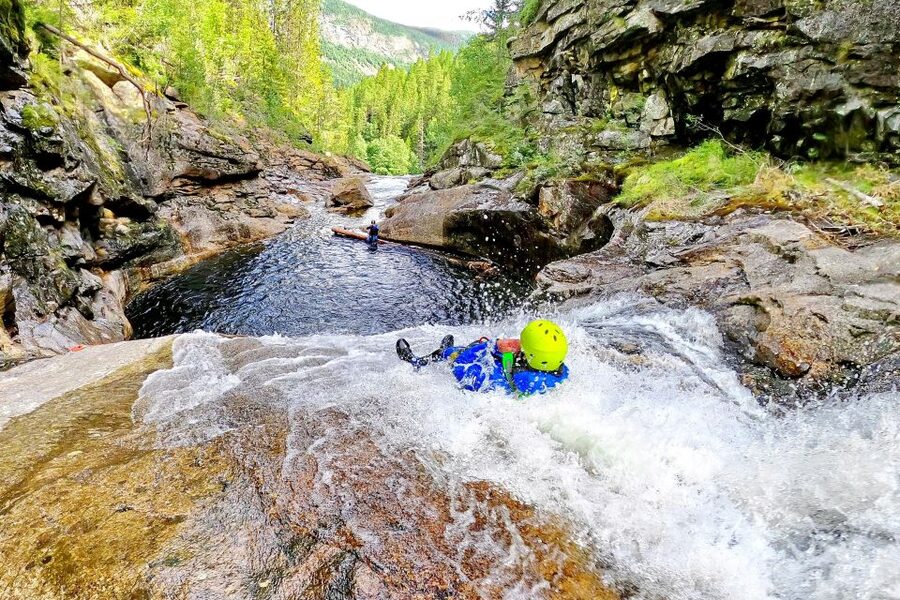
At $150 per person, this is not a low-cost sightseeing activity. It is better judged as a guided technical outdoor experience that includes specialist equipment, instruction, transport, and a snack.
The price includes the helmet, wetsuit, neoprene shoes, and harness. It also covers the two shuttle rides, English-speaking guides, the three-hour guided route, safety briefings, and a snack afterward. If you had to arrange those elements separately, the cost and planning would rise quickly.
I think the price makes reasonable sense for the right participant. You are paying for access to a route that requires equipment and supervision, not just for a view. The small group and guide support add value, particularly if this is your first canyoning experience.
The value is weaker if you want a relaxed nature outing with little effort. The active route includes walking and physical movement, and the five-hour commitment is substantial. You may prefer a simpler waterfall visit or gentle river activity if your main goal is scenery rather than challenge.
Who should book this experience?
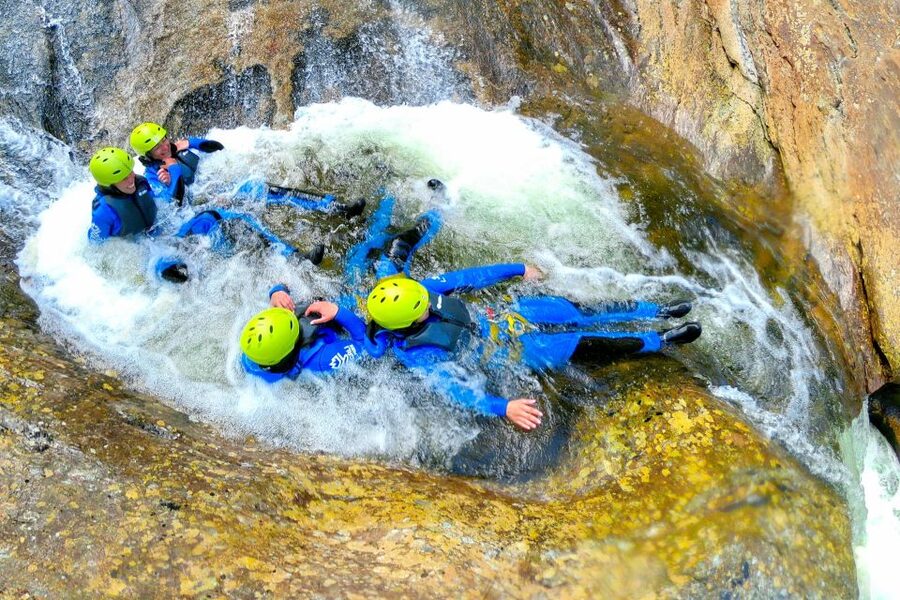
This trip is best for swimmers, water lovers, recreational athletes, and adventurous first-timers aged 16 or older. You should be comfortable with cold water, uneven ground, harness work, and the idea of jumping or rappelling under instruction.
It can work for a family with older children, but age alone is not enough. Anyone under 16 cannot take part, and each participant needs the physical confidence to manage the route. The family feedback is useful here: the outing worked with older children, but the amount of walking was noticeable.
Do not book if you are pregnant, have mobility impairments, or have heart problems. The activity is also not suitable for anyone over 275 pounds, or 125 kilograms. These limits are direct safety considerations, not minor booking notes.
If you are nervous about heights, that does not automatically rule you out. The guides are reported to encourage people who feel uneasy. But you should be honest about your comfort level and ready to follow instructions. This is a place for supported courage, not pressure.
What to pack for warmth and comfort
Keep your packing simple, but do not skip the basics:
- Swimwear for under the wetsuit
- A large towel
- Shower gel
- Thermal or wool underwear if you get cold easily
- Thermal or wool socks if your feet tend to chill
The operator supplies the main canyoning equipment. You do not need to bring a helmet, harness, wetsuit, or neoprene shoes.
A large towel is worth taking because you will finish wet and may want to clean up after the activity. The snack afterward is a welcome touch, but it should not replace any personal food or water needs you may have. The supplied information confirms the snack, but does not specify its size or contents.
Final verdict: should you book Dagali canyoning?
Book it if you want a serious but guided half-day adventure with waterfall rappelling, natural slides, deep Giant’s kettles, and a small group. The strongest reasons are the varied route, thoughtful equipment package, and consistently praised guides.
Think twice if you expect to spend nearly the whole outing in the river. One direct account found there was more woodland walking and less river time than expected. Also remember that this is a physical activity with a five-hour schedule, not a passive excursion.
For swimmers and active visitors who want to experience Norway through rock and running water, the $150 price is defensible. Bring warm layers, listen carefully during both safety briefings, and arrive ready to work a little for the fun. The reward is a close, energetic encounter with a canyon that offers much more than one impressive waterfall.
FAQ
How long does the Dagali canyoning experience last?
The planned experience lasts about five hours. This includes safety briefings, two 25-minute shuttle rides, about three hours in the canyon, and a snack afterward.
Where does the activity start?
The activity starts at Dagali Fjellpark. You then travel by bus to the canyon area near Bjorkflåta.
What equipment is provided?
The operator provides a helmet, wetsuit, neoprene shoes, and harness. English-speaking guides also provide safety instructions and guidance throughout the route.
What should I bring?
Bring swimwear and a towel. Thermal or wool underwear and socks are suggested if you want extra warmth, and shower gel may be useful afterward.
Is the experience suitable for beginners?
Yes. The activity is suitable for first-timers as well as canyoning enthusiasts, provided they can swim, handle the physical demands, and follow the guides’ instructions.
Who cannot take part?
The experience is not suitable for children under 16, pregnant women, people with mobility impairments, people with heart problems, or people over 275 pounds, or 125 kilograms. Alcohol and drugs are not allowed.
Just added around Norway
- From Alta: Experience Seiland National Park★ 4.3 · 4 reviews
- Private hiking tour Bergen mountains like a local★ 5.0 · 4 reviews
- Oslo: 3-hour Cross Country trip with equipment and guide★ 5.0 · 4 reviews
- Visit the Instaworthy Spots of Oslo’s Vigeland Park with a Local★ 5.0 · 4 reviews
- Flexible tour to Hardangerfjord vøringsfossen cruise include★ 5.0 · 4 reviews
- Oslo: 2-hour Christmas Private Walking Tour★ 3.0 · 4 reviews
- Art and Museum Tour of Oslo★ 5.0 · 4 reviews
- From Geiranger: Dalsnibba & Eagle Road Private Tour & Picnic★ 5.0 · 4 reviews