
Reviewed · STAVANGER TOURS
Stavanger: Prison Island Adventure Game
Bring a team, not a treasure map. At Fangene på Fortet Stavanger, you enter a prison-themed challenge center where every room asks for a different mix of logic, movement, timing, and teamwork. I like the wide range of rooms and the chance to retry tasks, so one poor attempt does not end the fun. I also like that the format works for families, friends, school groups, and company outings. The main catch is that some challenges may not be immediately clear, and one player found that a few tasks did not seem to work properly.
This is not a standard escape room with one locked door and one answer. You move between many separate challenge rooms, earning points by completing puzzles and physical tasks before time runs out. At about $30 per person, it offers good value if you use the full visit, but the experience depends heavily on how well your group communicates.
In This Review
- Key Things to Know Before You Go
- What Prison Island Is Really Like
- Arriving at Fangene på Fortet
- Inside the Challenge Rooms
- Why Retrying Rooms Changes the Value
- How Much Time Should You Allow?
- The Best Group Size and Age Mix
- Physical Effort, Clothing, and Comfort
- Price and Overall Value at $30
- Problems to Watch For
- Booking and Practical Details
- Should You Book Prison Island Stavanger?
- FAQ
- Where does the Prison Island game take place?
- How much does the activity cost?
- How long does the experience last?
- How many people can be on one team?
- Is the game suitable for beginners?
- What languages are available?
- Do I need special clothing?
- How early should I arrive?
- Is transportation included?
- Is the venue wheelchair accessible?
Key Things to Know Before You Go
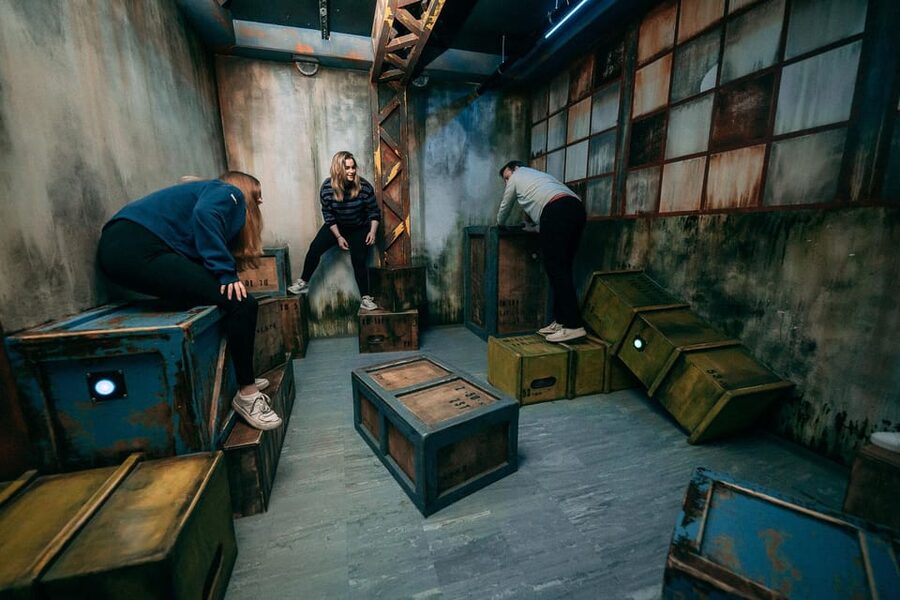
- Up to 46 challenge rooms: The large selection gives you plenty of variety and makes repeat visits worthwhile.
- Teams of 2 to 5 people: Small groups must share ideas quickly, while larger groups need to divide tasks without leaving anyone idle.
- Flexible visit length: Bookings can last from 1 to 2.5 hours, and some groups planned for one hour but stayed for more than two.
- Retry-friendly scoring: You can try rooms again to improve your score or finish a task you nearly solved.
- English-language gameplay: The game is played in English, with English and Norwegian support at the venue.
- Physical activity required: Wear comfortable clothes and shoes, and arrive 15 minutes early for the briefing.
What Prison Island Is Really Like
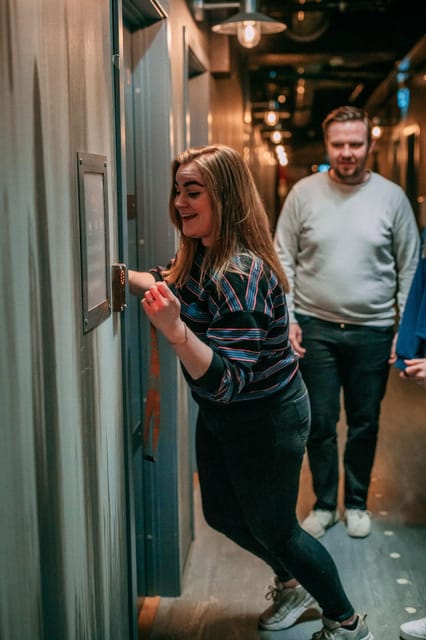
Fangene på Fortet uses a format inspired by escape rooms and television challenge shows. Instead of working through one long puzzle, you choose or visit a series of individual rooms, each with its own task.
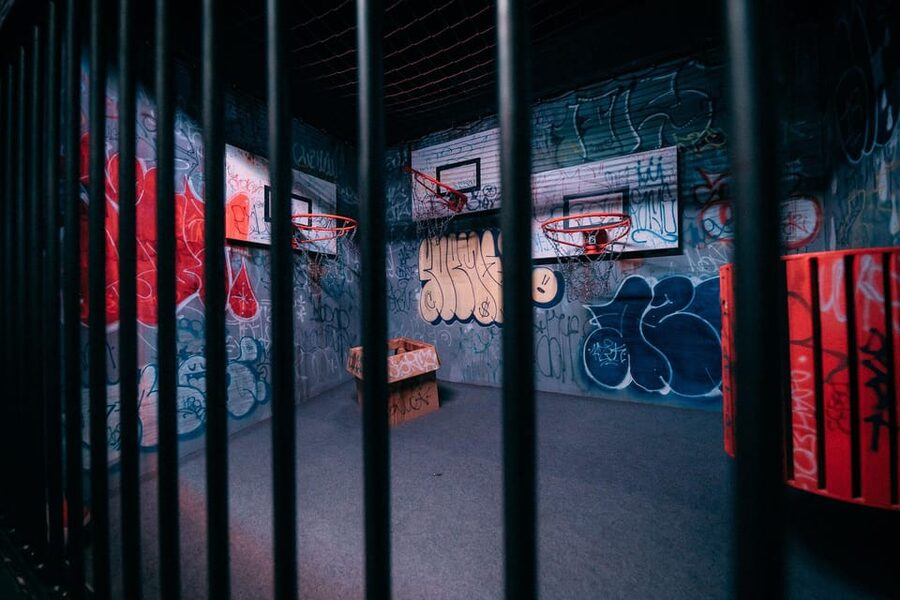
Some rooms focus on problem-solving. Others may ask you to overcome an obstacle, coordinate movement, or react quickly. The exact challenge in each room can vary in difficulty, which is part of the appeal. You may solve one task in seconds and then spend much longer working out the next.
I like this setup for mixed groups. In a traditional escape room, one difficult puzzle can hold everyone back. Here, you have many rooms to choose from, so your group can keep moving and collect points even if one task defeats you.
The aim is not simply to escape. Your team works to score as many points as possible within the time available. That changes the mood. You are not just trying to finish once. You are making decisions about which rooms to attempt, when to give up, and when a second try might be worthwhile.
More escape rooms:
- Molde: Serial Killer Escape Room Game
★ 5.0 · 6 reviews - Oslo: Perfect Escape – Fun and exciting Escape Rooms
★ 3.9 · 4 reviews - Fangene på Fortet Bergen: Prison Island Adventure Escapegame
★ 5.0 · 3 reviews
Arriving at Fangene på Fortet
Your meeting point is the welcome reception at Fangene på Fortet. Plan to arrive 15 minutes before your booked time. That early arrival matters because the activity includes a briefing, and you will want to understand the scoring and room system before the clock begins.
There is no personal guide included. You receive the necessary introduction, but your team handles the challenges on its own. That gives the activity a self-directed feel, though it also means you should listen carefully at the start and ask questions if the rules are unclear.
English and Norwegian are available from the host or greeter, but the game itself is played in English. If your group has mixed language skills, agree on simple calls and instructions before you start. Clear communication is often more useful than fast English.
The venue is wheelchair accessible. Still, the game includes physical activity and obstacles, so you should consider the needs of everyone in your group before booking. Accessibility at the venue does not mean every individual task will suit every participant.
Inside the Challenge Rooms
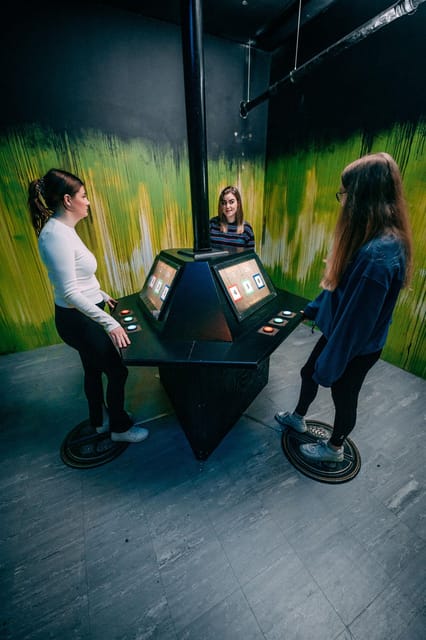
The heart of the visit is the collection of challenge rooms. You work together to solve puzzles, overcome obstacles, and complete timed tasks. Each room gives your team a fresh problem, so you need to switch quickly from one style of thinking to another.
That variety is one of the strongest reasons to choose this activity. A person who dislikes word puzzles may be better at coordination or physical tasks. Someone who is quiet in a large group may spot a pattern that everyone else misses. The best teams do not rely on one clever person. They let different strengths take the lead at different moments.
I would encourage you to give every team member a job. One person can watch the instructions, another can test possible solutions, and another can keep an eye on the time. Small groups of two may need to do everything themselves, while groups of four or five can split up more effectively.
The challenge is also social. You will need to explain ideas clearly, listen when someone sees a different route, and avoid having three people attempt the same thing while nobody checks the instructions. That makes the game useful for team-building, but it can also reveal how your group handles pressure.
The rooms are not presented as one fixed route, so your visit should feel active rather than predictable. With numerous rooms and different difficulty levels, a second visit can offer a new set of targets. Even if you return to a familiar room, you may approach it differently while trying to beat your earlier score.
Why Retrying Rooms Changes the Value
The option to retry rooms is a major advantage. In many timed activities, a failed attempt feels final. Here, you can return to a task and try to improve your performance, provided your available time allows it.
This helps families and mixed-ability groups. Younger players may need one attempt to understand what a room is asking, then perform better the second time. Friends can also turn the visit into a small competition by chasing a higher team score.
One group booked for an hour but stayed for more than two hours. That tells you something useful about the format: the activity can be easy to extend if rooms are available and your group wants another round. Still, do not assume every booking automatically lasts longer. Check the available duration and starting time when you reserve.
Retrying also makes the $30 price easier to justify. You are not paying for a single short puzzle. You are paying for access to multiple rooms and the chance to choose how seriously you want to pursue a score.
The drawback is that repeated attempts may not appeal to everyone. Some people prefer a clean, one-time puzzle with a clear ending. If your group dislikes competition or becomes frustrated by a difficult task, the open-ended scoring can feel less satisfying.
A few more trips worth weighing up
- Stavanger: Scenic Fjord Cruise to Lysefjord and Preikestolen
★ 4.6 · 5,791 reviews - Stavanger: Fjord Cruise to Lysefjord and Pulpit Rock
★ 4.8 · 1,357 reviews - From Stavanger: RIB Tour to Lysefjord
★ 4.9 · 1,288 reviews - From Stavanger: Lysefjord Sightseeing RIB Boat Tour
★ 4.9 · 821 reviews
How Much Time Should You Allow?
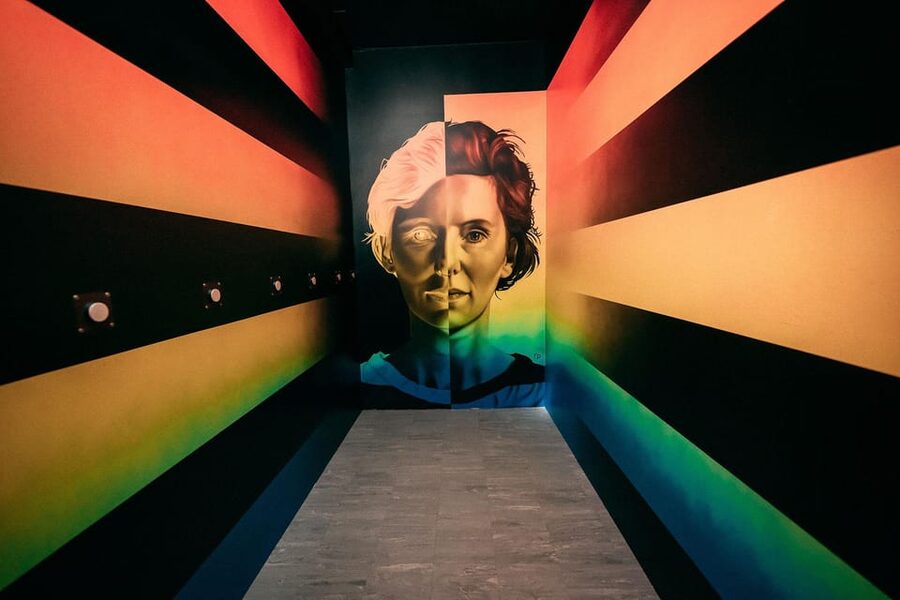
The listed duration ranges from 1 to 2.5 hours. A one-hour booking may suit a family with a busy day or a group that wants a compact activity between other plans. If you enjoy the competition and want to retry rooms, allow closer to the longer end of the range.
The experience moves quickly because each room offers a new task. One 90-minute visit was described as passing very quickly, which is exactly what you want from a game, but it also means you should not arrive late. Fifteen minutes before the booking gives you time for the briefing without cutting into your challenge period.
For a short visit, focus on trying a range of room types instead of spending the entire session on one stubborn puzzle. For a longer visit, you can return to rooms and work on your score.
There is no sightseeing component here, so you do not need to allow extra time for scenery or a guided walk. This is a focused indoor activity. You arrive, receive the briefing, play, and leave when your time is used.
The Best Group Size and Age Mix
Teams can contain two to five people. I think four is a particularly practical size because you have enough people to share ideas without creating too much noise. A pair can enjoy the game, but every task rests on both players, so the experience may feel more demanding.
Five people give you more hands and more opinions. That can help with physical tasks and puzzles, but only if everyone gets a role. A group that talks over itself may lose time. Set a simple rule: hear each idea, test it, and move on if it fails.
The activity is suitable for friends, families, corporate teams, and schools. It is designed for all skill levels, which makes it easier to include people with different tastes. You do not need to be an escape-room expert to take part.
For families, the room variety is helpful because not every child will enjoy the same challenge. Teenagers may especially like the competitive score system. A German family of four paid 103 euros for a 1.5-hour visit and considered the cost reasonable, with the teenagers calling it the best part of their holiday.
For companies and school groups, the game gives you a shared task without requiring a formal workshop. You can see how people communicate, share responsibility, and react when a solution is not obvious. The activity is fun first, but it naturally creates chances for teamwork.
Physical Effort, Clothing, and Comfort
Wear comfortable clothing and shoes suitable for physical activity. That is not a minor suggestion. The rooms include obstacles and tasks that may require movement, so stiff clothing or unsuitable footwear can make the visit less enjoyable.
The activity is not described as a demanding sport, and it is intended for a broad range of skill levels. Still, you should expect more than quiet puzzle-solving. You may need to move around, work with teammates, and respond quickly under a time limit.
The venue is wheelchair accessible, which is useful for planning a mixed group. Since individual rooms can vary, ask at the reception if someone in your party needs specific adaptations or wants to know which challenges are most suitable.
Price and Overall Value at $30
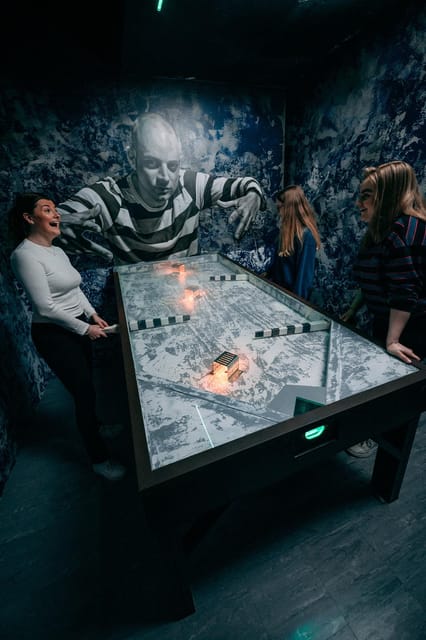
At $30 per person, the value depends on how much time you use and how actively your group plays. A one-hour visit gives you a brisk game with several challenges. A 90-minute or two-hour session gives you more room to retry tasks and chase a better score.
The price includes entry to multiple challenge rooms and a team scorecard. It does not include transport or a personal guide. Since the venue provides a self-directed game rather than a guided tour, you are paying for access to the challenge setup and the chance to control your own pace.
I consider the price fair for a group activity with repeat attempts and many possible rooms. The large selection also helps protect the value of a return visit. You are not simply paying to see one attraction once.
The main value is shared time. You are buying an activity that gives your group something specific to do together, rather than just sitting through a show or walking through an exhibit. If your group enjoys puzzles, competition, and physical tasks, $30 can feel well spent. If only one person wants to play while the others watch, the value drops quickly.
Problems to Watch For
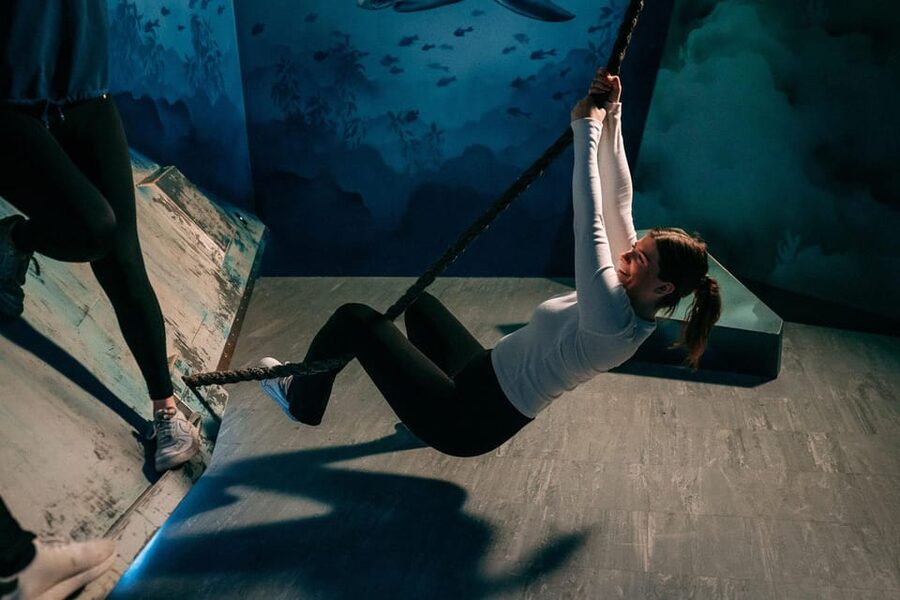
The biggest concern is clarity. One participant found several tasks difficult to understand and felt that some may not have been working properly. That does not mean every room will cause trouble, but you should expect occasional confusion.
When a room seems broken, ask the staff rather than wasting your entire booking. The team at the venue has been described as friendly and helpful, so use the reception or available support when you need clarification.
The lack of a personal guide cuts both ways. Independent teams get freedom and privacy, but you do not have someone walking beside you to explain every puzzle. Strong communication and a willingness to ask for help will improve your visit.
Another possible issue is time pressure. A task that looks simple can consume several minutes when everyone has a different idea. If your group becomes fixed on one room, remember that the center offers many alternatives. You can always return if the scoring rules and remaining time permit.
Booking and Practical Details
You can cancel up to 24 hours in advance for a full refund. A reserve-now, pay-later option is also available, which helps if your Stavanger plans are still shifting.
Check the available starting times before booking because the duration is listed as 1 to 2.5 hours rather than one fixed session length. Choose a slot that gives you enough time to arrive 15 minutes early and complete the briefing without rushing.
Transport to and from Fangene på Fortet is not included, so you need to arrange your own way to the venue. The meeting point is the welcome reception.
The host or greeter can communicate in English or Norwegian. Gameplay is in English, so keep that in mind when forming a group with different language abilities.
Should You Book Prison Island Stavanger?
I would book this for a group that wants active fun and does not mind a little confusion along the way. It is especially well suited to families with teenagers, friends looking for a competitive indoor activity, and work or school groups that need a shared challenge.
I would be more cautious if your group wants a polished guided experience, a quiet attraction, or one carefully scripted puzzle. This format is more flexible and less predictable. You may love the room variety, or you may find some tasks unclear.
The strongest reason to go is the combination of choice and replay value. You can try many rooms, improve your score, and keep playing if your schedule and booking allow. With a rating of 4.9 from 11 reviews, the experience has made a strong impression, while the occasional complaint about confusing tasks is worth keeping in mind.
Book it if your group can communicate, laugh at failed attempts, and treat the score as part of the fun rather than the whole point.
FAQ
Where does the Prison Island game take place?
It takes place at Fangene på Fortet in Stavanger, in Rogaland, Norway. Meet at the welcome reception.
How much does the activity cost?
The listed price is $30 per person. Actual booking prices may vary, so check the price shown for your selected time.
How long does the experience last?
The available duration is listed as 1 to 2.5 hours. Check the available starting times and duration when booking.
How many people can be on one team?
Teams can contain between two and five people.
Is the game suitable for beginners?
Yes. The game is designed for all skill levels and includes rooms with varying difficulties.
What languages are available?
The host or greeter can communicate in English and Norwegian. The game itself is played in English.
Do I need special clothing?
Wear comfortable clothing and shoes suitable for physical activity.
How early should I arrive?
Arrive 15 minutes before your booking time for the briefing.
Is transportation included?
No. Transportation to and from the venue is not included.
Is the venue wheelchair accessible?
Yes, Fangene på Fortet is wheelchair accessible. Individual challenges may vary, so ask the venue about specific rooms if needed.
Just added around Stavanger
- Discover Private+ Stavanger Guided City Tour★ 4.8 · 5 reviews
- Guided hike to Florli 4,444 steps★ 5.0 · 5 reviews
- Stavanger: Guided Sunrise Hike to Pulpit Rock★ 4.2 · 5 reviews
- Boat Cruise to Lysefjorden and The Pulpit Rock, Fixed tour price★ 5.0 · 6 reviews
- Discover Sensational Stavanger: Self-Guided Audio Tour★ 3.5 · 7 reviews
- Stavanger: 5-Hour Fishing Trip with Equipment and Guide★ 3.1 · 8 reviews
- The Pulpit Rock Air★ 4.5 · 8 reviews
- Stavanger Private Safari and Fishing’s★ 5.0 · 8 reviews
Stavanger Tours, compared.

Scenic Fjord Cruise to Lysefjord and Preikestolen
Read our review →




Haugesund Shore Excursion: Åkrafjorden & Langfoss waterfall
Read our review →

Lysefjorden & Pulpit Rock RIB-Safari from Stavanger
Read our review →Browse the lists this tour appears in