
Reviewed · VIKING EXPERIENCES
Oslo Viking Quest: Exploration Game and Tour
Oslo rewards curious walkers. This self-guided Viking Quest turns central Oslo into a puzzle board, leading you from the Nobel Peace Center and City Hall to the Royal Palace, Storting, and Akershus Fortress. I like the way the game gives you a reason to look closely at buildings and statues, and I also like the freedom to pause, take side trips, or continue when your group is ready. The main drawback is that some clues may take patience, especially in rain or very cold weather.
The price is unusually low at $7.20 per person, and a private group gets its own experience rather than joining strangers. You receive a mobile access code, not a human guide, so this suits independent explorers who enjoy solving problems more than following a set speech. The advertised route takes about 1 hour 15 minutes, but side trips can stretch it to several hours.
In This Review
- Key points to know before you start
- A Viking game with a practical Oslo route
- Starting at the Nobel Peace Center
- City Hall and Oslo’s public face
- Nils Sigurd Aas and the June Seventh Square
- The Royal Palace and a royal chapter
- University of Oslo and the Storting
- Oslo Cathedral and a quiet change of mood
- Akershus Fortress and Norway’s wartime story
- What the $7.20 price really buys
- Weather, clue difficulty, and the no-guide tradeoff
- Who will enjoy Oslo Viking Quest most
- Should you book this Oslo walking game?
- FAQ
- How long does Oslo Viking Quest take?
- Where does the experience start?
- Where does the experience finish?
- Is a tour guide included?
- How many puzzles are included?
- What language is offered?
- Can I pause and resume the game?
- What happens if I need to cancel?
Key points to know before you start
- Eleven puzzles turn central Oslo into an outdoor game, with challenges tied to major sights and local stories.
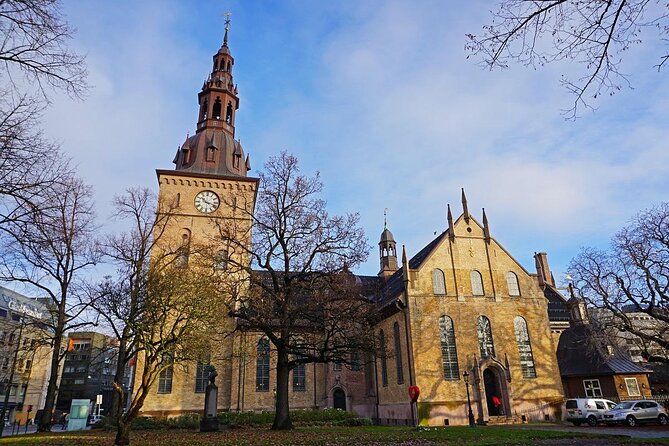
- The route links nine notable stops, including the Royal Palace, Oslo Cathedral, the Storting, and Akershus Fortress.
- You control the timing, with no fixed departure schedule and the ability to pause and resume.
- The experience is private and self-guided, so your group works together without a physical tour guide.
- The final stop reaches Akershus Fortress and the Scandinavian Star Memorial, giving the route a clear waterfront finish.
- Good weather matters, since the clues require you to inspect places outdoors and some hints may not be easy to understand at once.
A Viking game with a practical Oslo route
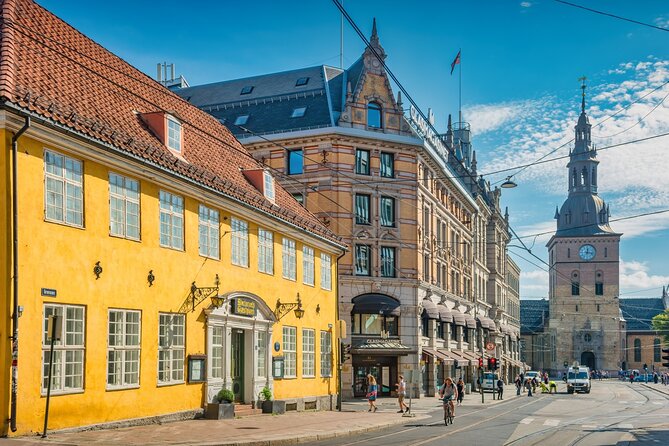
Questo’s Oslo Viking Quest is best understood as a walking tour with a game layered on top. You move through the city using your phone, read a challenge, search the nearby setting for an answer, and then advance to the next location.
That simple format changes how you walk. Instead of passing a building after taking a quick photograph, you stop to inspect it. A date, name, architectural feature, statue, or public inscription may become part of the answer. The history arrives in small pieces, tied to the exact place where you are standing.
You get 11 interactive puzzle challenges and an Oslo story with a Viking theme. The Viking framing adds a bit of fun, but the route itself is firmly focused on central Oslo’s civic, royal, religious, academic, and wartime landmarks.
I would not treat the stated 1 hour 15 minutes as a strict appointment. That may be a reasonable playing time for a group that moves directly from one clue to the next. If you stop for photographs, enter nearby attractions, eat, or make side trips, the outing can last much longer. One detailed rating described a few hours on the route after adding extra stops, which is a useful clue about the experience’s flexibility.
More Viking experiences:
- Oslo: Viking Planet Entry Ticket
★ 4.4 · 603 reviews - The Viking Planet Museum Ticket
★ 4.0 · 197 reviews - The Viking Planet Museum – Mini Group (4 adults)
★ 4.0 · 16 reviews
Starting at the Nobel Peace Center
The starting point is Rådhusgata 30B, close to the Nobel Peace Center. This is a smart place to begin because the area quickly introduces one of Oslo’s key public themes: the city as a center for discussion about peace, conflict, and international affairs.
The Nobel Peace Center presents the Nobel Peace Prize and the ideals behind it. It also connects culture and politics through exhibitions and public discussion. Here, the challenge asks you to examine the surroundings, find the answer, and learn why the place matters.
You should give yourself a little time to get oriented before starting the first puzzle. Since the game is phone-based and has no guide waiting for you, the initial step depends on your access code and your group’s ability to follow the instructions.
This first stop also shows the value of the format. You are not simply told a fact about Oslo. You need to look for something, work it out, and pay attention to the setting. That can keep children, teenagers, and competitive adults involved in a way a standard walking talk may not.
City Hall and Oslo’s public face
Oslo City Hall is the next major stop. The building houses the city council, city administration, and other municipal offices. The present structure was built between 1931 and 1950, with construction interrupted during the Second World War.
City Hall is an especially useful place for a puzzle because it is large, public, and full of visual details. The challenge asks you to inspect the area for the answer before moving on. You may find that your group notices features that you would otherwise walk past.
The stop also gives the route a civic backbone. You are learning not just about old kings and medieval defenses, but about how Oslo functions as a capital city. That mix of modern government and older monuments helps the outing feel like a tour of Oslo rather than a string of unrelated photo stops.
Keep in mind that this is an outdoor game. The supplied information does not promise entry into every building, so plan on solving the challenge from the relevant public areas unless the instructions tell you otherwise.
Nils Sigurd Aas and the June Seventh Square
One of the more distinctive stops focuses on Norwegian sculptor Nils Sigurd Aas. Born in 1933 and deceased in 2004, Aas was a major figure in modern Norwegian sculpture.
He is known for the statue of King Haakon VII at June Seventh Square and for designing Norwegian coins, including the 10-krone and 20-krone pieces. This gives the route a welcome change of pace. You are no longer looking only at grand institutions. You are also considering how art, public memory, and everyday objects shape a city.
The challenge again asks you to search the setting for an answer. This is where a patient group has an advantage. If you rush, you may miss the detail that the puzzle expects you to notice.
I like this stop because it adds a human scale to the route. A statue or coin design can tell you something about national identity without requiring a long museum visit. It also gives anyone interested in sculpture a reason to slow down.
A few more trips worth weighing up
- Oslo: Scenic Fjord Cruise with Audio Guide Commentary
★ 4.5 · 5,375 reviews - Oslo To Bergen Self-Guided Full Day Trip with Flåm Railway And Fjord Cruise
★ 4.0 · 69 reviews - Self-Guided 22-Hour Round Trip From Oslo To Sognefjord With Flåm Railway
★ 4.5 · 54 reviews - Oslo Self Guided Walking Tour with an APP
★ 4.3 · 12 reviews
The Royal Palace and a royal chapter
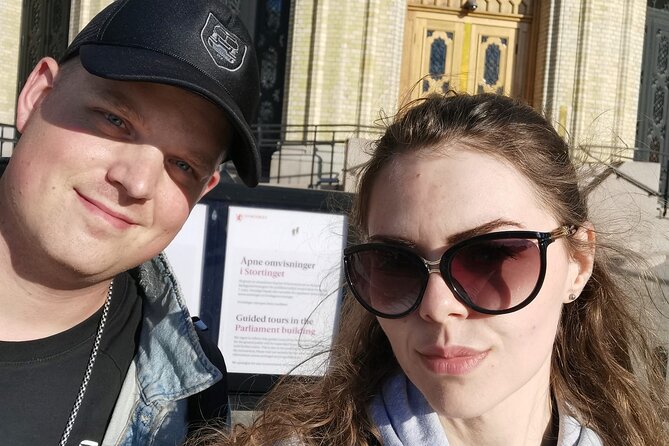
The Royal Palace was built in the first half of the 19th century as a Norwegian residence for Charles III John, the French-born king who ruled Norway and Sweden. The building remains one of the clearest symbols of Oslo’s royal past.
The game sends you here for another observation challenge. The palace grounds provide a natural point for photographs and a change from the tighter streets around the civic center.
The route does not include a physical guide to explain palace life, and the provided details do not confirm an interior visit. That matters if you want a full palace tour. This quest is better for seeing the exterior, learning a compact piece of royal history, and continuing through the city at your own pace.
If your group has children, the puzzle can turn a formal building into an active stop. Instead of asking everyone to listen quietly, you give them a task. That is one of this experience’s strongest features.
University of Oslo and the Storting

The University of Oslo is Norway’s oldest university. It was known as the Royal Frederick University until 1939. Its place on the route gives you a look at Oslo’s academic life and a chance to connect the modern city with its older institutions.
The challenge asks you to find an answer in the area before moving onward. The information provided does not specify a particular university building or interior access, so you should think of this as an exterior city stop rather than a campus tour.
Next comes the Storting building on Karl Johans gate. The Storting is Norway’s parliament, and its building was taken into use on March 5, 1866. Swedish architect Emil Victor Langlet designed it.
This is one of the most meaningful stops for understanding Norway as a constitutional state. The game keeps the lesson short, but the setting gives it weight. You are standing outside the institution where national political decisions are made, then using the surroundings to solve a clue.
The central route is compact enough to connect these stops on foot, although the exact walking time between individual challenges is not provided. Comfortable shoes still make sense, particularly if you turn the 75-minute game into a longer afternoon.
Oslo Cathedral and a quiet change of mood
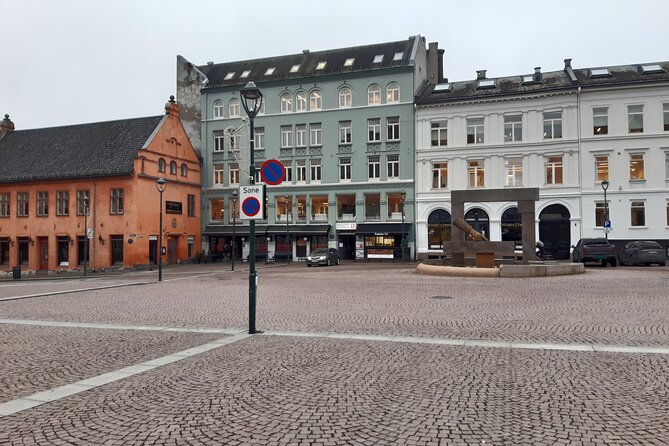
Oslo Cathedral, formerly Our Savior’s Church, is the main church of the Church of Norway Diocese of Oslo and the parish church for downtown Oslo. The current building dates from 1694 to 1697.
The Norwegian Royal Family and government use the cathedral for public events. That gives the stop both religious and civic importance. Like the other locations, it comes with a search challenge that asks you to inspect the surroundings and find the answer.
A cathedral stop can also help break up the pace of the game. The route moves through political and royal sites, then gives you a chance to consider Oslo’s religious heritage. If the cathedral is open, you may be tempted to look inside, but interior access is not listed as part of the experience, so treat that as an optional extra rather than a guaranteed feature.
This is also a good point to pause if your group needs a rest. The game lets you stop and resume later, one of its most useful practical features.
Akershus Fortress and Norway’s wartime story
The final part of the route shifts toward Akershus Fortress, one of Oslo’s most important historic sites. The fortress began as a medieval castle built to protect the city and provide a royal residence.
The route includes Norway’s Resistance Museum, also called the Norwegian Home Front Museum. It focuses on Norway’s resistance during the German occupation from 1940 to 1945, using equipment, photographs, and documents from the war years.
The challenge here adds a serious note to the Viking storyline. Earlier stops deal with peace, government, monarchy, art, education, and religion. At the fortress, the focus turns to occupation, resistance, and national memory.
The supplied information does not say that museum admission is included. I would therefore plan to solve the quest at the designated area and pay separately only if you choose to enter a museum or other attraction. The game itself includes mobile access and puzzle content, not a physical guide or listed admissions.
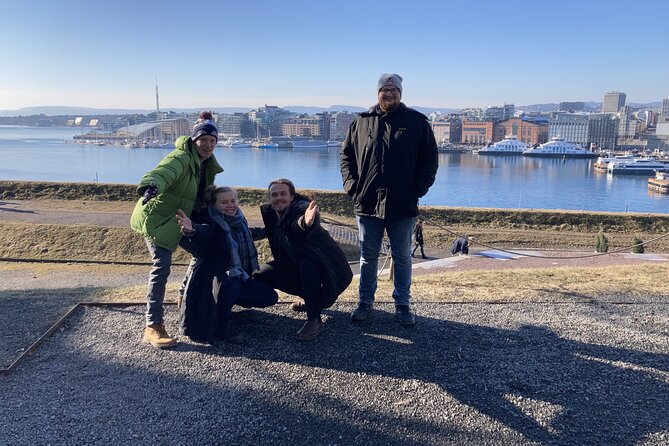
Akershus Fortress is the last named historic stop, and the experience finishes at the Scandinavian Star Memorial on Akershusstranda. That ending gives you a waterfront destination instead of sending you back to the start.
What the $7.20 price really buys
At $7.20 per person, this is an inexpensive way to add structure to an Oslo walk. You are paying for a mobile game, 11 interactive challenges, a Viking-themed storyline, and historical content connected to the route.
You are not paying for a guide, transportation, attraction admission, food, or a private historian. That distinction helps set the right expectations. If you want detailed answers to follow-up questions, a live guide would offer more. If you want freedom and a low price, this format has a clear advantage.
The private setup also improves the value for families and small groups. You do not need to match another group’s pace, and you can stop when someone wants a snack, a photograph, or a closer look at a building.
Group discounts are available, although the supplied information does not state the exact discount. Since the base price is already low, the experience makes most sense as a budget activity between larger paid attractions.
Weather, clue difficulty, and the no-guide tradeoff
The biggest practical warning is weather. A direct rating advised doing the route on a day when it is not raining or very cold. That is sensible. You need to look around at outdoor sites, handle a phone, and remain patient when a clue is not immediately clear.
Some hints may be difficult to understand. This is not necessarily a flaw for a group that enjoys puzzles, but it can slow down people who want a smooth sightseeing route. Give yourself permission to reread the instructions and search carefully rather than guessing in a hurry.
The lack of a physical guide cuts both ways. You gain privacy and control, but you lose live explanations, local anecdotes, and help when the group gets stuck. I would choose this for people who like working things out together. I would choose a conventional guided walk for anyone who values a steady flow of spoken history.
The experience is offered in English. Confirmation arrives at booking, and the activity can be started during the listed daily window of 5:00 AM to 9:00 PM from Monday through Sunday. Public transportation is nearby, service animals are allowed, and most people can participate.
Who will enjoy Oslo Viking Quest most
I would recommend this for:
- Families who need an activity that keeps everyone involved
- Couples or friends who like quizzes and city walks
- Independent visitors who dislike fixed departure times
- Budget-minded people who want an overview of central Oslo
- Repeat visitors looking for a new way to connect familiar sights
- Groups that want a private activity without a guide
I would be more cautious if you dislike phone-based activities, have limited patience for unclear clues, or want extensive historical commentary at every stop. It is also less appealing in poor weather, since the route depends on outdoor observation.
The game can work as a first look at Oslo because it links several major landmarks in one outing. It can also act as a framework for a longer day. The flexibility means you can pause for lunch, explore a side street, enter an attraction if you choose, and return to the quest later.
Should you book this Oslo walking game?
Book Oslo Viking Quest if you want a low-cost, flexible way to see central Oslo and your group enjoys solving puzzles. The route covers an impressive range of subjects, from the Nobel Peace Prize and municipal government to royalty, sculpture, parliament, religion, resistance, and medieval defense.
Skip it if you want a guide who explains every detail or if your visit is likely to be wet and cold. At 4.5 out of 5 from 17 ratings, it has a strong record, and the most praised points are its educational content, easy navigation, broad city overview, and excellent value.
For the best experience, start with enough daylight, wear comfortable shoes, keep your phone charged, and allow more than 75 minutes if you want to take side trips. Free cancellation is available up to 24 hours before the start time for a full refund. Within 24 hours, the payment is not refunded.
FAQ
How long does Oslo Viking Quest take?
The estimated duration is about 1 hour 15 minutes. You can take longer if you add side trips, stop for photographs, or pause the game.
Where does the experience start?
It starts at Rådhusgata 30B, 0151 Oslo, Norway.
Where does the experience finish?
The listed end point is the Scandinavian Star Memorial at Akershusstranda, 0150 Oslo, Norway.
Is a tour guide included?
No. The experience is self-guided and provides a mobile access code rather than a physical tour guide.
How many puzzles are included?
The quest includes 11 interactive puzzle challenges.
What language is offered?
The experience is offered in English.
Can I pause and resume the game?
Yes. The quest is designed with flexibility, so you can pause and resume when needed.
What happens if I need to cancel?
You can receive a full refund if you cancel at least 24 hours before the experience start time. Cancellations or changes made within 24 hours are not accepted for a refund.
Just added around Oslo
- Visit the Instaworthy Spots of Oslo’s Vigeland Park with a Local★ 5.0 · 4 reviews
- Oslo: 3-hour Cross Country trip with equipment and guide★ 5.0 · 4 reviews
- Oslo: 2-hour Christmas Private Walking Tour★ 3.0 · 4 reviews
- Art and Museum Tour of Oslo★ 5.0 · 4 reviews
- Flavors of Oslo: Food & Beer Tour★ 4.8 · 4 reviews
- Private Transfer from Oslo City Centre to Oslo Airport★ 5.0 · 4 reviews
- 3-Hour Vattkørt Beginner Kayak Course on Oslo Fjord★ 5.0 · 4 reviews
- Hipstoric Grünerløkka Private Walking Tour★ 5.0 · 4 reviews
Viking Experiences, compared.
Viking Village, Nærøyfjord Cruise & Flåm Railway
Read our review →
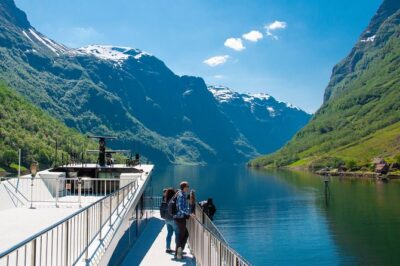
Guided tour – Viking Village, Nærøyfjord Cruise and Flåm Railway
Read our review →
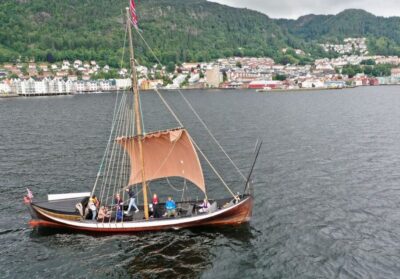
Viking Ship Sailing Experience and Sightseeing Trip
Read our review →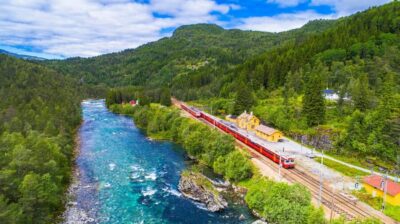
Viking Village, Nærøyfjorden Cruise and Flåm Railway
Read our review →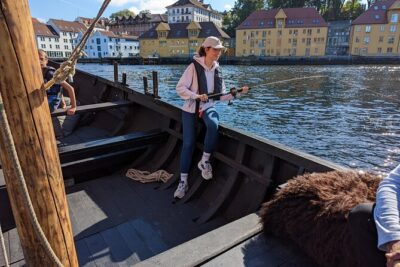
Bergen Fjord Experience Aboard Viking-style Ship
Read our review →
Guided E-Bike Tour in Haugesund: city, vikings, Rising Tides
Read our review →Browse the lists this tour appears in