
Reviewed · FISHING
Lofoten: Traditional Fishing Trip
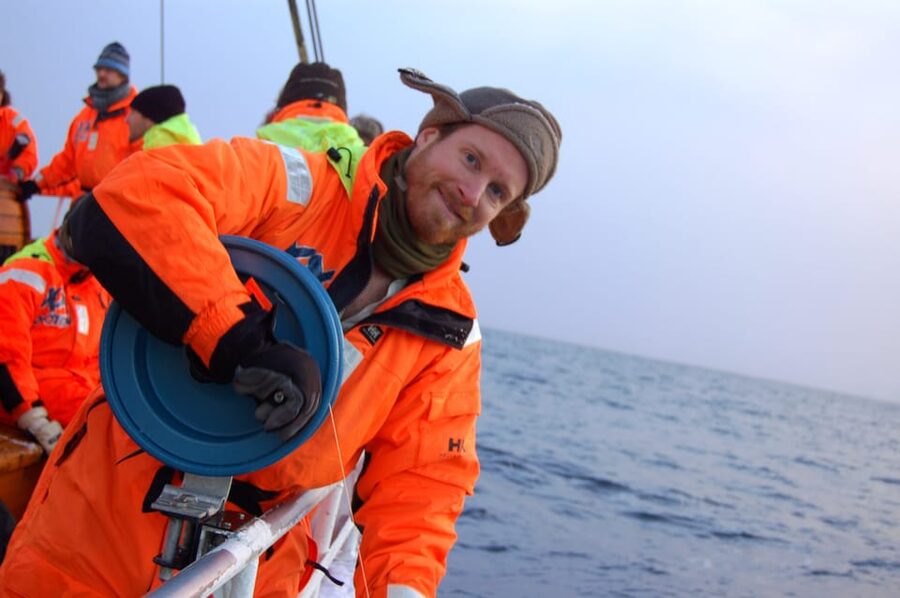
Catch fish the old-fashioned way. The four-hour trip aboard MS Symra gives you a working taste of Lofoten fishing, with a line wheel, shared fishing stations, and a chance to bring home your catch. I like the hands-on format, and I like that the crew teaches you how to fillet the fish instead of treating the trip as a simple sightseeing cruise.
The setting and small group are the other big draws. With up to 10 participants and professional guidance in English or Norwegian, you get room to fish without being packed onto a large boat. The main catch is uncertainty: some outings produce large fish and plenty of fun, while another produced only pollock, and one account found the guide offered too little explanation when nobody was catching.
In This Review
- Key points to know before you book
- Boarding MS Symra for an old-style fishing trip
- Four hours with the fishing grounds
- What the line wheel adds
- Learning to fillet your catch onboard
- Stories from Lofotfisket
- Weather, clothing, and physical demands
- Is $146 a fair price?
- Who will enjoy this most?
- Booking advice for a smoother day
- Should you book the traditional fishing trip?
- FAQ
- How long is the Lofoten traditional fishing trip?
- How much does the fishing trip cost?
- What fish might I catch?
- Is fishing equipment included?
- Do I need previous fishing experience?
- Can I take the fish home?
- What should I wear and bring?
Key points to know before you book
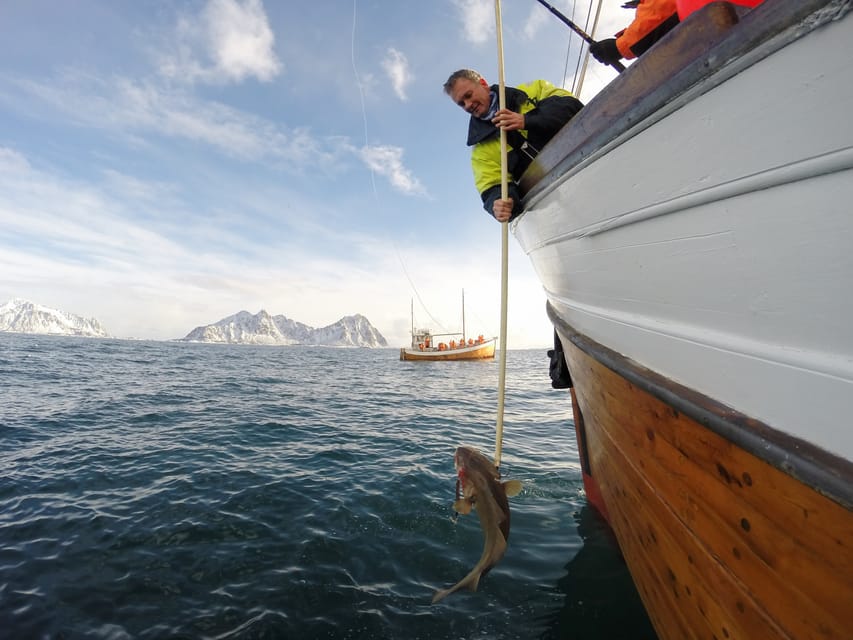
- MS Symra uses traditional fishing methods: You fish with a line wheel rather than a modern rod-and-reel setup.
- Ten fishing stations serve up to ten people: Expect to share a station with another participant.
- Your catch may vary by season: Possible fish include skrei, mackerel, coalfish, haddock, and coastal cod, but pollock may be the only fish you catch.
- The crew teaches practical skills: You get an introduction to the equipment and instruction on filleting fish onboard.
- The trip runs in all kinds of weather: Warm clothing and thermal layers are essential, and boots can be rented at the site.
- The $146 price buys a focused experience: Fishing equipment, safety gear, crew help, and four hours on the water are included, but food is not.
Boarding MS Symra for an old-style fishing trip
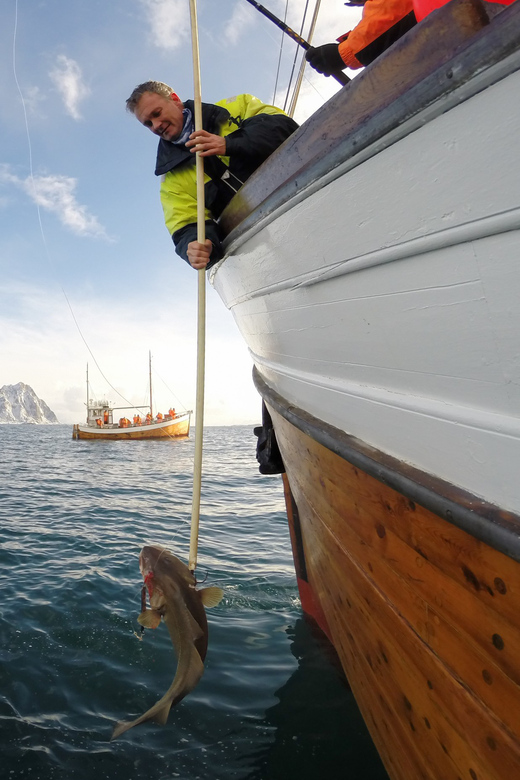
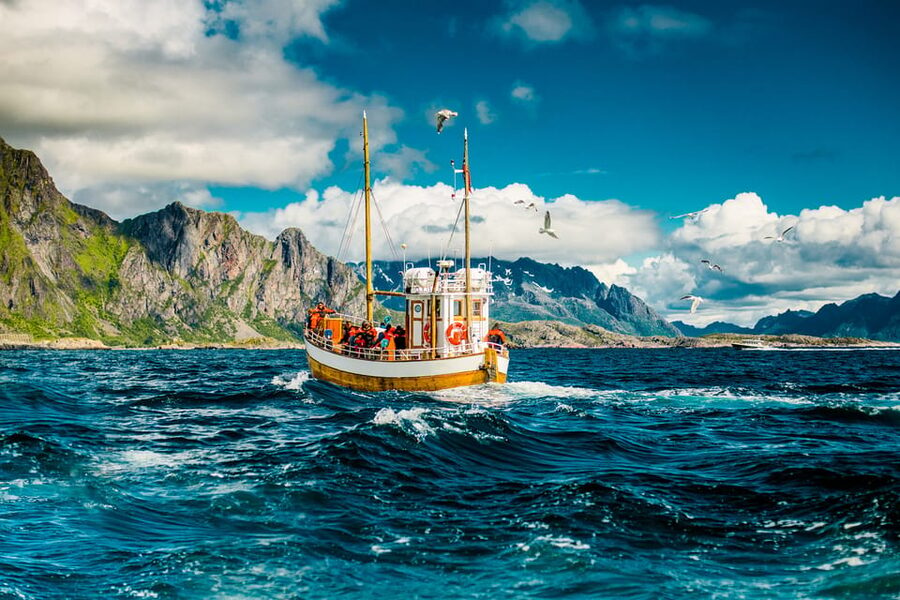
The appeal begins with the vessel itself. MS Symra is presented as a traditional fishing vessel, so this is not just a boat ride with a fishing rod added as an afterthought. The line wheel gives you a direct connection to the method being demonstrated, and the crew introduces the tools before you start.
That introduction matters. If you have never fished from a working-style boat, the equipment may not be obvious at first. You will learn how the fishing setup works, where to stand, and how to handle the gear safely. No previous fishing experience is required, which makes this a reasonable choice for beginners and families with older children who can manage the physical demands.
The group is limited to 10 people. There are 10 fishing stations, but each station is shared with another participant. I would think of this as a partner activity rather than a fully private fishing session. Sharing can be useful because you can compare catches and take turns, but it also means you should not expect to fish alone for the entire four hours.
More fishing trips:
- From Svolvaer: Lofoten Fishing Boat Cruise
★ 4.7 · 621 reviews - Svolvær: Fishing Trip on the Lofoten Sea
★ 4.5 · 106 reviews - Tromsø’s Top-Rated Fjord & Fishing Cruise – All-Inclusive
★ 4.7 · 4,017 reviews
Four hours with the fishing grounds
The timing gives the trip enough room to feel like an activity rather than a quick photo stop. After the safety briefing and equipment introduction, you spend most of the outing fishing from the vessel, with crew members available to guide you.
The exact order can change with conditions, but the experience has a clear rhythm. You learn the equipment, lower your line, wait for activity, and work the line when something takes the bait. The pause between catches is part of the reality of fishing. You may catch a fish quickly, or you may spend a long stretch watching the water and waiting.
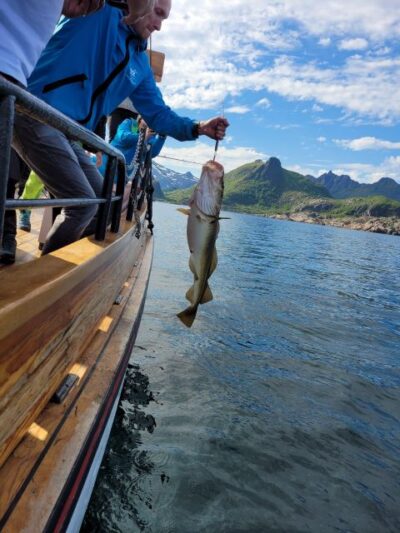
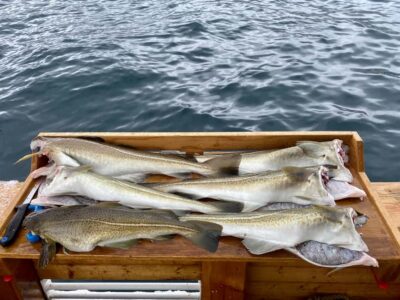
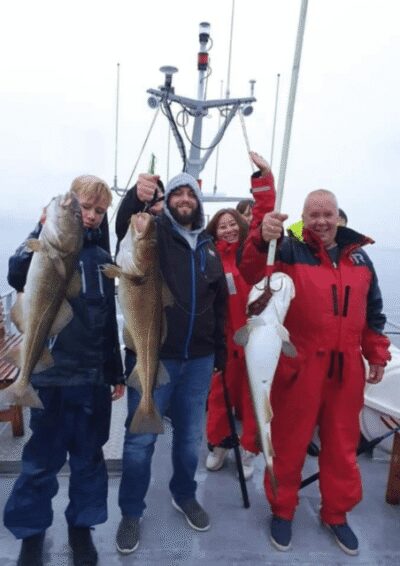
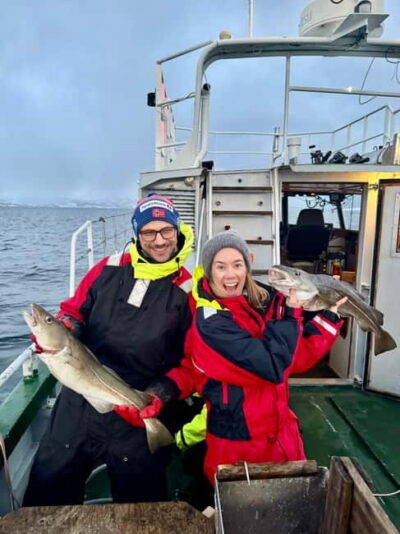
That uncertainty is worth understanding before you pay $146. You are not buying a guaranteed haul. The possible catch changes with the time of year and conditions. Skrei is the famous seasonal cod associated with northern Norway, while mackerel, coalfish, haddock, and coastal cod can also appear. On one outing, the only fish caught was pollock. On another, the catch included large fish and made for a very successful day.
I would book this for the process, not just the dinner. If your main goal is to return with a particular species, you may be disappointed. If you enjoy learning a local method and handling the line yourself, the uncertainty becomes part of the story.
What the line wheel adds
A traditional line wheel feels more purposeful than simply holding a standard rod. It connects the activity to Lofoten’s fishing culture and to the work that has shaped life in the islands for generations.
You still need to pay attention. Fishing is not passive entertainment, and the crew cannot make the fish bite. When a fish is on the line, you have to respond to the movement and bring it up properly. That gives the catch more meaning than receiving a prepared meal at the end of a cruise.
The line wheel also makes the trip approachable. You do not need to arrive with specialist gear or a set of fishing skills. The fishing kit is included, and the crew provides instruction. If you have never fished before, you can focus on following directions rather than worrying about what equipment to buy.
The shared stations are the one compromise. You may have to coordinate with another person, particularly if several people get a bite at once. Still, with no more than 10 participants, the arrangement should feel manageable compared with a large commercial fishing boat.
Learning to fillet your catch onboard
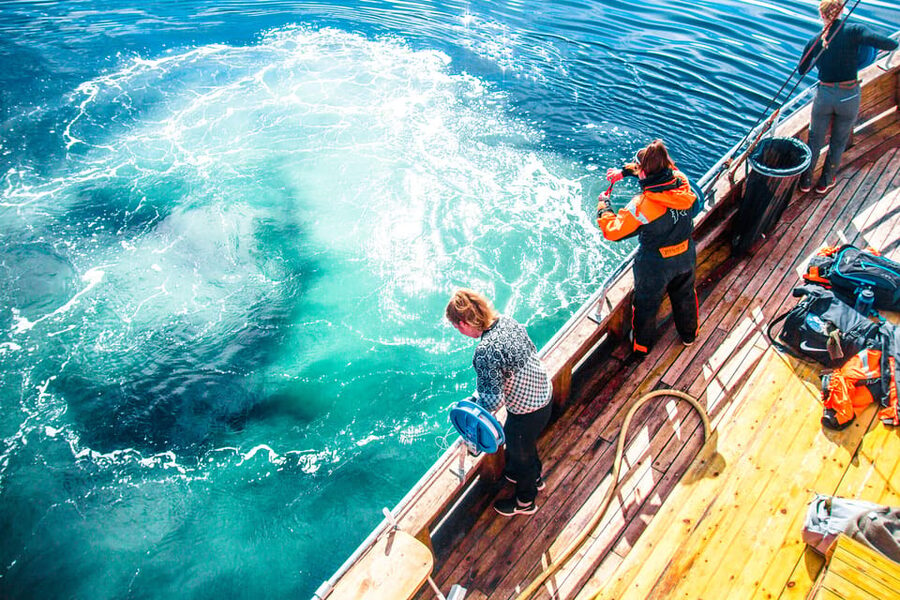
The trip does not stop when the fish reaches the deck. The crew shows you how to fillet what you catch, giving the outing a useful practical finish.
This is one of the strongest parts of the program for me. You get to see the full route from fishing to food, rather than treating the fish as a trophy and leaving the messy work to somebody else. The lesson also gives context to Lofoten’s fishing culture in a way a short sightseeing talk cannot.
You are welcome to take your catch home if you wish. The information provided does not specify packaging or storage arrangements, so I would ask the crew about the best way to handle it before leaving the boat. Food is not included, but you may bring your own food on the trip. That is a useful detail for a four-hour outing, especially since waiting for fish can make the time feel longer.
A few more trips worth weighing up
- From Svolvær: Lofoten Islands Silent Trollfjord Cruise
★ 4.8 · 2,979 reviews - From Svolvaer: Sea Eagle Safari to Trollfjord
★ 4.9 · 623 reviews - From Svolvær: Lofoten RIB Sea Eagle Safari Trollfjord Cruise
★ 4.9 · 591 reviews - Lofoten Island: Silent Trollfjord Cruise from Svolvær
★ 5.0 · 389 reviews
Stories from Lofotfisket
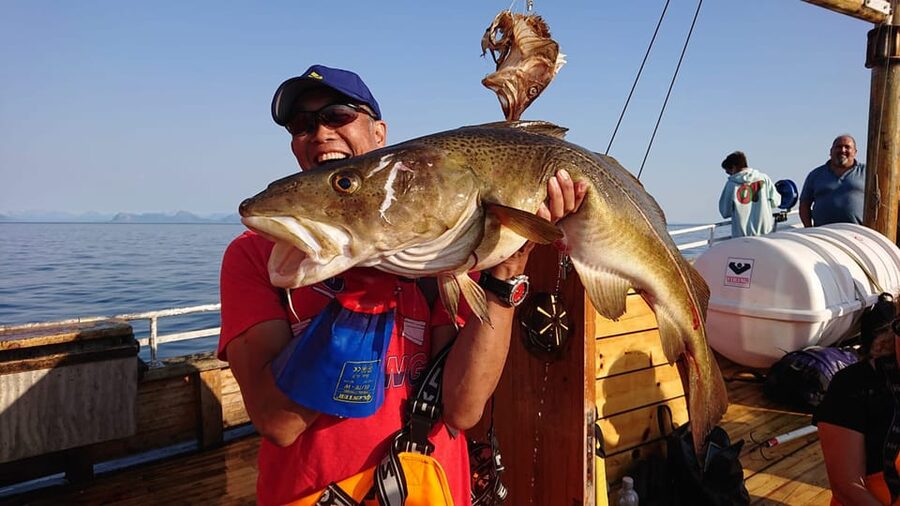
The crew also shares stories and anecdotes about Lofotfisket, the seasonal fishing life connected with the Lofoten Islands. These details help explain why this activity has a cultural value beyond the catch itself.
The quality of that spoken guidance may shape your day. One account described a guide who gave very little explanation, particularly when nobody was catching fish. That is a fair concern. When the fish are not cooperating, stories, local context, and clear instruction become even more important.
At its best, the crew’s guidance turns quiet stretches into part of the experience. You can learn about the fishing tools, the types of fish in the area, and the rhythm of life at sea. At its weakest, you may spend too much time waiting without much context. I would keep expectations practical: the crew offers professional guidance, but this is still a working-style fishing trip, not a full museum talk about Lofoten.
Weather, clothing, and physical demands
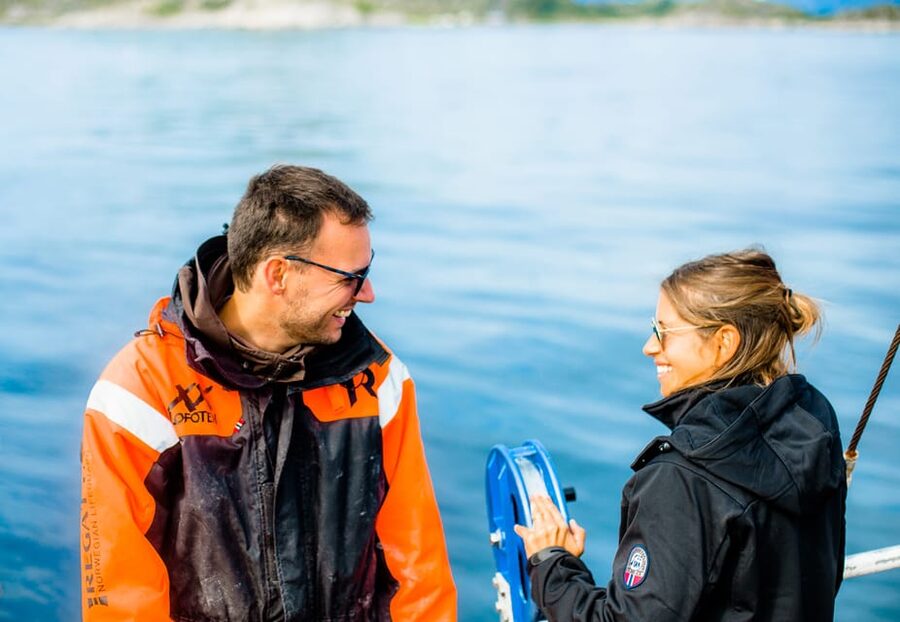
Warm clothing is not optional. You should wear thermal underlayers and prepare for cold conditions, even if the weather looks mild when you leave shore. Bring layers that you can adjust, and do not rely on ordinary city clothing to keep you comfortable for four hours outdoors.
The boat operates in rain or shine, although weather can lead to changes or cancellation. That flexibility is sensible in northern Norway, where conditions can shift quickly. It also means you should keep your schedule slightly open around the trip if possible.
Boots are not included, but you can rent them onsite. The fishing kit and safety equipment are included, so you do not need to bring specialist fishing supplies. Pets are not allowed, except for assistance dogs.
This activity is not suitable for people with mobility impairments. The supplied information does not give more detail about boarding or movement around the vessel, so anyone with a specific physical concern should ask the operator before booking. Even without a stated mobility issue, you should expect a boat-based activity that may involve standing, handling equipment, and moving around a fishing station.
Is $146 a fair price?
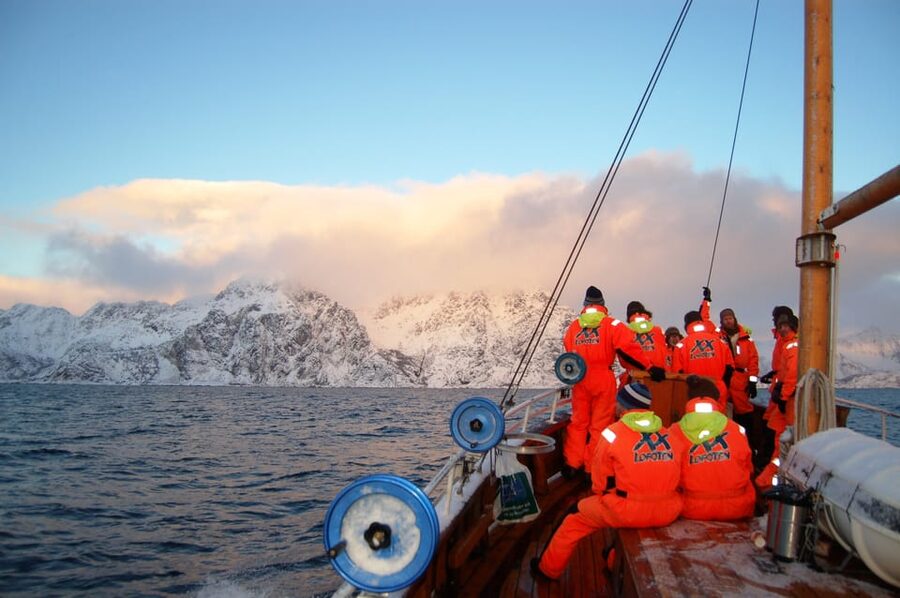
At $146 per person, this is not a cheap way to spend four hours in Lofoten. The value depends on what you want from the outing.
The price includes the fishing kit, safety equipment, an experienced crew, the vessel, instruction, and the chance to keep your catch. You are also paying for a small group, with no more than 10 participants. That is a better setup for personal guidance than a large boat filled with people.
Food is not included, so bring something to eat if you expect to get hungry. Boots cost extra if you need to rent them. Those small additions can affect the final cost, particularly if you are traveling with several people.
I think the price makes sense for someone who values a hands-on cultural activity and wants to learn a traditional fishing method. It is harder to justify if you simply want a boat ride with guaranteed fish. The 4.4 rating from 167 bookings suggests the experience works well for many people, but the mixed outcomes point to the central risk: fishing depends on nature, not the price tag.
Who will enjoy this most?
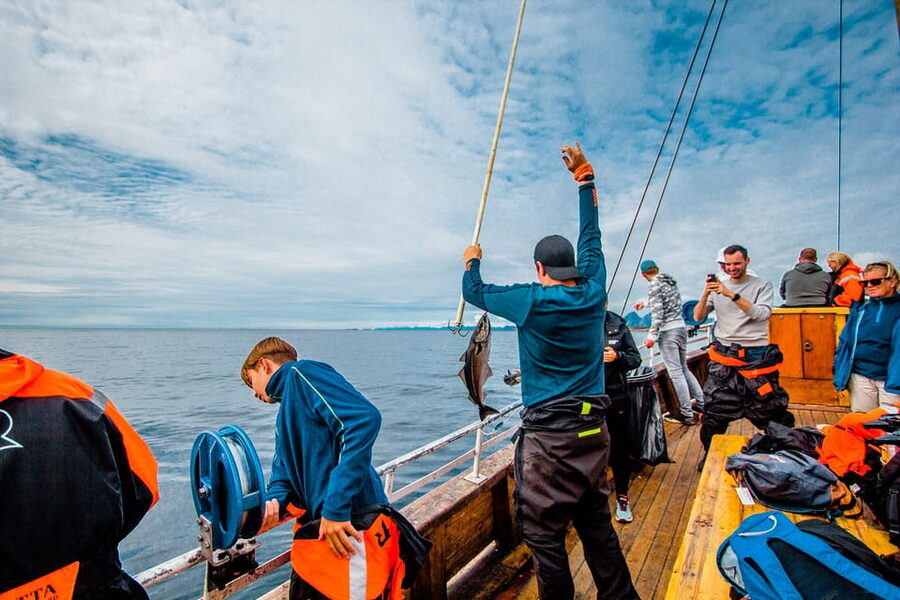
I would recommend the trip to you if you like active excursions, local traditions, and experiences where the result is not fully controlled. Beginners are welcome, and you do not need to own fishing gear. The opportunity to fillet the fish and take it home adds a useful, memorable ending.
It also suits anyone who wants to see a different side of Lofoten. The islands are known for dramatic scenery, but this trip places the focus on the sea and the work that supports island life. You get a closer look at an activity tied to the region rather than another pass through a scenic viewpoint.
I would be cautious if you dislike cold weather, long periods of waiting, or shared equipment. I would also avoid booking it if your schedule cannot handle a weather-related change. The trip takes place rain or shine when conditions allow, but northern weather still has the final say.
Booking advice for a smoother day
Reserve ahead if the date matters to you, since the group is limited to 10 people. The reserve-now, pay-later option lets you hold a place without paying immediately, which is helpful when you are arranging several Lofoten activities.
You can cancel up to 24 hours before the start for a full refund. Check the available starting times before booking because the trip lasts four hours and the exact departure time varies.
Wear thermal layers, bring warm outer clothing, and consider renting boots onsite. Pack your own food, since none is provided. Most important, arrive ready for either a successful catch or a quiet day with only a few fish. That mindset will make the experience much more enjoyable.
Should you book the traditional fishing trip?
Book it if you want to handle the equipment, learn a traditional method, and connect with Lofoten’s fishing culture in a direct way. The small group, included gear, onboard filleting lesson, and chance to take your catch home give the $146 price real substance.
Skip it if you need a guaranteed catch or prefer a warm, polished sightseeing cruise. Fish numbers can be low, and the quality of the day depends partly on how much explanation and storytelling the crew provides. For the right person, though, MS Symra offers something more personal than a standard boat tour: four hours of waiting, working, learning, and hoping the line suddenly pulls hard.
FAQ
How long is the Lofoten traditional fishing trip?
The trip lasts four hours. Starting times vary, so you should check availability for your chosen date.
How much does the fishing trip cost?
The listed price is $146 per person.
What fish might I catch?
Depending on the season, you might catch skrei, mackerel, coalfish, haddock, or coastal cod. Pollock is also possible, and one outing produced only pollock.
Is fishing equipment included?
Yes. The fishing kit and safety equipment are included. Boots are not included, but you can rent them onsite.
Do I need previous fishing experience?
No. The crew gives you an introduction to the fishing tools and provides professional guidance during the trip.
Can I take the fish home?
Yes. After learning how to fillet the fish onboard, you may take your catch home if you wish.
What should I wear and bring?
Wear warm clothing with thermal underlayers. The trip operates in rain or shine when conditions permit, and you may bring your own food.
Just added around Svolvaer
- Brewery Tour★ 5.0 · 5 reviews
- Private Midnight Tour To Gimsøya★ 5.0 · 6 reviews
- North Lofoten Highlights Photo Tour (Summer)★ 5.0 · 6 reviews
- 2-Day Lofoten Highlights Photo Tour (Summer)★ 5.0 · 8 reviews
- From Svolvaer: 2- Day Lofoten Highlights Photo Tour★ 5.0 · 8 reviews
- South Lofoten Highlights Photo Tour (Summer)★ 5.0 · 8 reviews
- Evening Kayaking★ 4.5 · 12 reviews
- Private Full Day Sightseeing Tour from Svolvær to Å★ 5.0 · 12 reviews
Fishing, compared.
Molde: Atlantic Ocean Road and Tour of Bud Fishing Village
Read our review →

Discover the Fjords of Kvaloya – a roadtrip along fjords and fishing villages
Read our review →Browse the lists this tour appears in