
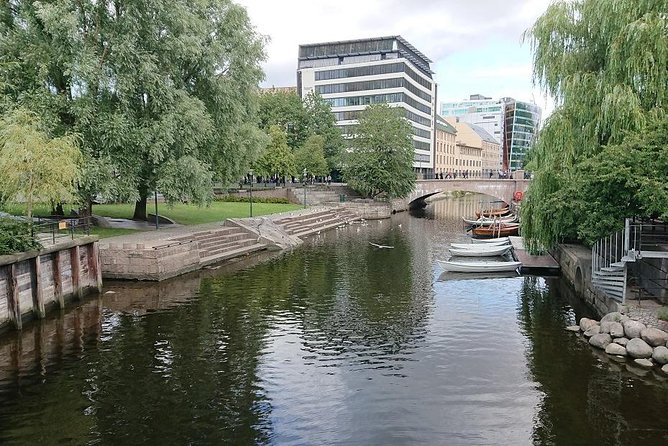
Reviewed · AUDIO TOURS
Akerselva River Meander: A Self-Guided Audio Tour
Oslo’s old working river now makes a fine walk. This self-guided audio tour turns the Akerselva into an open-air history lesson, leading you uphill from Vaterland Bridge toward Grünerløkka and a cafe beside the water. I like the freedom to pause and wander at your own pace, and I like how the route mixes old industry, street art, bridges, and green river views. The main drawback is finding the start, especially if you expect the app to guide you without any setup.
For $7.99, you get lifetime access in English through the VoiceMap app, with offline audio, maps, and location data. The walk is only about 1.8 miles, but the full outing can take from 45 minutes to 2 hours 15 minutes, depending on pauses. I would download everything before leaving Wi-Fi and allow extra time to get oriented at the river.
In This Review
- Key points to know before you go
- Why the Akerselva makes such a good Oslo walk
- Getting started at Vaterland Bridge
- Crossing bridges and reading Oslo’s past
- Waterfalls, street art, and the greener river corridor
- The final stop at Hønse-Lovisa’s House
- How long should you allow?
- Is $7.99 good value?
- The navigation issue you should take seriously
- Who will enjoy this self-guided route?
- Should you book the Akerselva River Meander?
- FAQ
- Where does the Akerselva audio tour start?
- Where does the tour end?
- How long does the walk take?
- How far is the route?
- Is the route wheelchair accessible?
- Is a guide included?
- What do I need to bring?
- Can I use the tour offline?
- Is the tour available in English?
Key points to know before you go
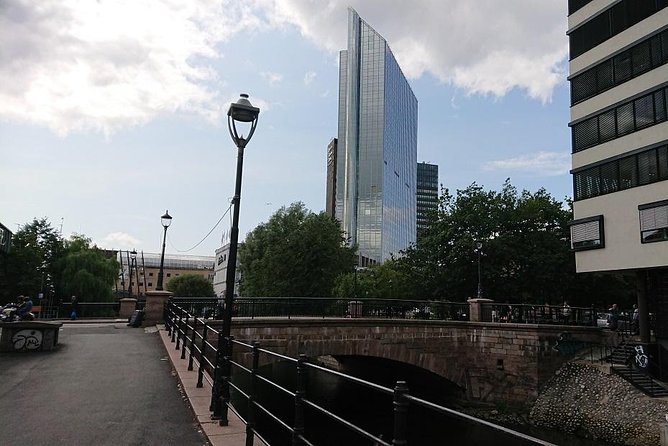
- The route follows the Akerselva upstream, beginning near Vaterland Bridge and ending at Hønse-Lovisa’s House.
- The audio portion takes about 45 minutes, but stops, photos, cafe time, and wrong turns can stretch the outing to more than two hours.
- The path is wheelchair-friendly overall, though some sections are steep.
- Street art appears along the river, including work by Jussi TwoSeven, Julien de Casablanca, and Anna Woods.
- The finish is especially pleasant, outside an art gallery and cafe with waterfall views.
- Navigation matters, since two people had trouble locating the starting point and walked beside the river without the audio.
Why the Akerselva makes such a good Oslo walk
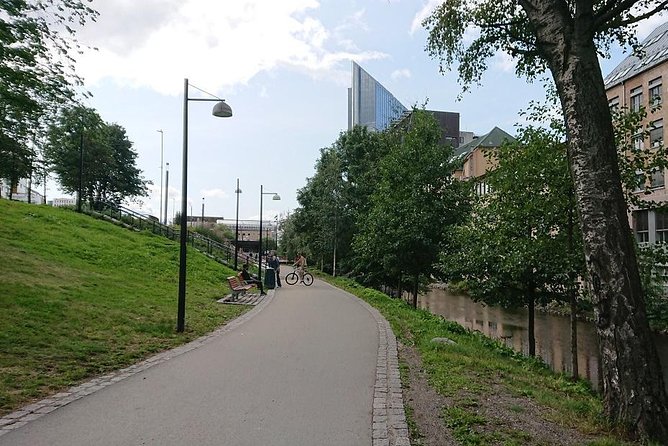
The Akerselva is more than a pretty stream through town. It is the thread that ties central Oslo to the old working districts farther north. Along this route, the city’s change is easy to read: industrial spaces gave way to parks, paths, cafes, art, and everyday city life.
That contrast gives the tour its purpose. You are not simply walking beside water while an app recites facts. You are following a corridor that once helped power Oslo’s industry and now serves as one of the city’s best green routes.
I also like the scale. At 1.8 miles, this is manageable for a morning or afternoon, and you do not need to reserve a large block of your day. The route passes close to Oslo Spektrum, the Oslo Visitor Centre, and Mathallen Oslo, so it can fit neatly into a wider city walk.
The self-guided format suits anyone who dislikes fixed departure times. You can stop for photographs, pause the narration while crossing a bridge, or sit beside the river without holding up a group. The tradeoff is simple: nobody is physically there to point out the next turn.
A few more trips worth weighing up
- Oslo: Scenic Fjord Cruise with Audio Guide Commentary
★ 4.5 · 5,375 reviews - Oslo To Bergen Self-Guided Full Day Trip with Flåm Railway And Fjord Cruise
★ 4.0 · 69 reviews - Self-Guided 22-Hour Round Trip From Oslo To Sognefjord With Flåm Railway
★ 4.5 · 54 reviews
Getting started at Vaterland Bridge
The stated meeting point is Vaterland Bridge in the Grünerløkka area, near Oslo Plaza. The first stop is identified as Ankerbrua, another bridge name that can create confusion when you are trying to locate the exact starting place.
Use the app’s directions before you begin, rather than waiting until you are standing in the wrong part of central Oslo. The audio service provides ways to navigate to the start through common map tools, and support can be contacted by email or telephone if you get stuck. That support detail matters here because locating the river path was the biggest practical problem reported about this experience.
Once you find the start, the route itself should be much easier to follow. You walk upstream, with the audio guiding you from one location-based point to the next. Download the tour, map, and geodata in advance. You need your own smartphone and headphones, and no phone or listening equipment is supplied.
The opening bridge stop is free, as are the outdoor parts of the walk. You are paying for the narration, route design, and convenience of having the city’s story delivered as you walk.
Crossing bridges and reading Oslo’s past
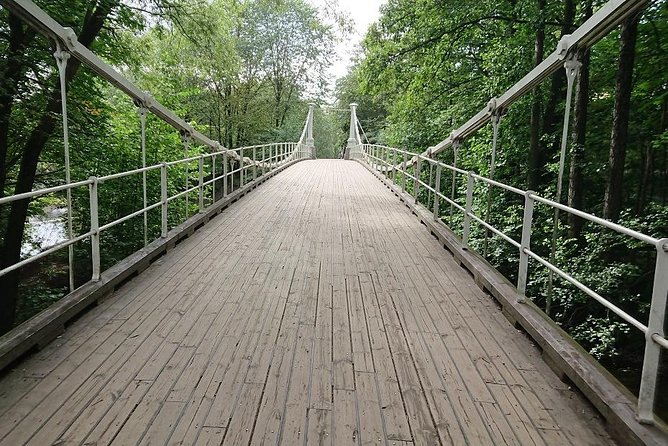
Bridges give the route its rhythm. You cross over the river at points, then return to the bank and continue uphill. That movement helps you see the water from different angles rather than treating the river path as one long, unchanging stretch.
The audio focuses on Oslo’s past and the way this former industrial corridor changed. The exact length of each stop is not specified, so you should think of the tour as a guided walk rather than a series of formal attractions. You are outside for most of it, moving through neighborhoods and public spaces.
One advantage of an audio tour here is that you can keep your eyes on the surroundings. A traditional guide might gather a group around a single speaking point, while you can listen through headphones as the path unfolds. The downside is that you must manage your own attention around bridges, crossings, other pedestrians, and changing surfaces.
The route briefly passes through a neighborhood, adding a bit of ordinary Oslo to the experience. That is useful because the Akerselva is not isolated from the city. It cuts through areas where people live, work, eat, and meet friends.
Waterfalls, street art, and the greener river corridor
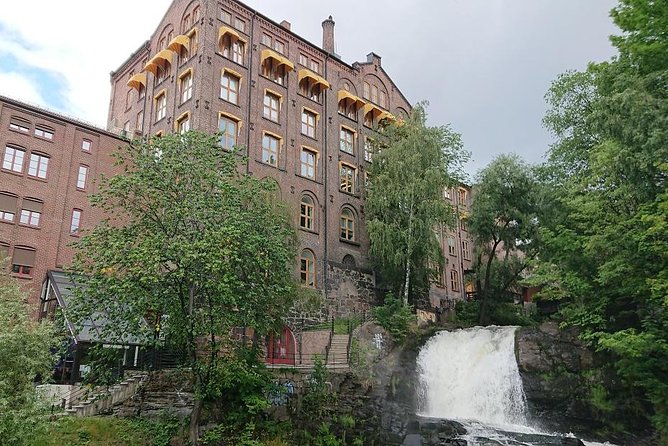
The waterfall is one of the route’s natural highlights. You pass close to it during the walk, and the final cafe also has waterfall views. Those two points give the outing a clear visual payoff, especially after the more urban opening near the center.
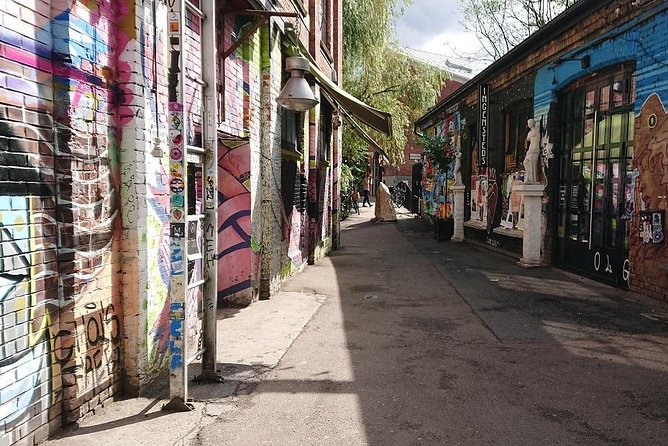
Street art adds another layer. Along the river, you can see work associated with Jussi TwoSeven, Julien de Casablanca, and Anna Woods. The art is not presented as a separate gallery visit, so keep your eyes open as you walk and pause the audio if you want a closer look.
This combination of water, public art, bridges, and old city districts is what makes the walk more rewarding than a standard point-to-point stroll. You get small changes of mood along the way. The central area feels connected to Oslo’s transport and commercial core, while the river route gradually offers more space and greenery.
I would not book this expecting a museum-style presentation or a string of major sights. Its value comes from the connections between the stops. The river is the main attraction, and the narration gives you a reason to notice what changed around it.
A completely different kind of day out from Oslo:
- Oslo Nature Walks: Island Hopping Tour
★ 4.8 · 2,713 reviews - Oslo: 100% Electric Oslofjord Sightseeing Cruise
★ 4.4 · 2,041 reviews - Oslo: Fjord Evening Cruise with Shrimp Buffet
★ 4.5 · 1,956 reviews - Oslo: 3-Hour Highlights Bike Tour
★ 4.8 · 1,609 reviews
The final stop at Hønse-Lovisa’s House
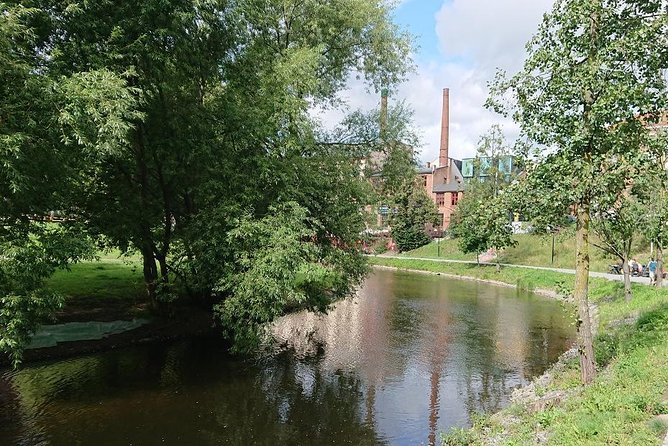
The tour ends outside Hønse-Lovisa’s House at Sandakerveien 2. This is described as an art gallery and cafe, with views toward a waterfall. It is a smart ending because you have a natural place to stop after the walk rather than simply reaching an anonymous street corner.
The cafe’s opening information is broad, listing Monday through Sunday from midnight to midnight for the stated operating period. Still, food and drink are not included, and the tour price does not cover entry to any museum or other attraction along the way. If the cafe is part of your plan, check its current status separately before setting out.
Because the end is outside the venue, you should not assume the audio tour includes an indoor visit. Think of Hønse-Lovisa’s House as the finishing point and optional stop, not a guaranteed included attraction.
The waterfall view makes this a better end than a return to the starting bridge. You can finish with a drink, look over the water, or continue exploring the surrounding area on your own.
How long should you allow?
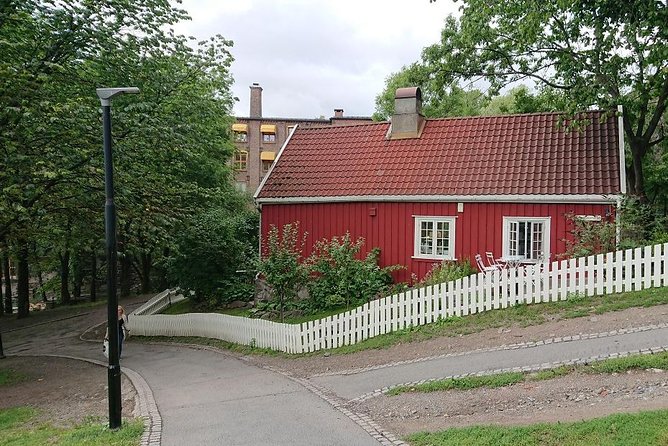
The audio tour is advertised as taking about 45 minutes, while the full duration is given as 45 minutes to 2 hours 15 minutes. That wide range makes sense for a self-guided walk.
If you listen continuously and keep moving, the shorter estimate may work. Most people will want time for photographs, street art, bridge views, route checks, and the waterfall. Add cafe time if you plan to stop at Hønse-Lovisa’s House.
I would allow around two hours if you want to enjoy the route instead of racing through it. The path is not long, but a short walk can become a pleasant half-day plan when you combine it with Mathallen Oslo, Oslo Spektrum, or the Oslo Visitor Centre.
The route passes close to Mathallen Oslo, a useful food stop either before or after the walk. Since the tour does not include food, drink, transportation, or attraction tickets, plan those costs separately.
Is $7.99 good value?
At $7.99 per person, this is a low-cost way to add structure to a city walk. You are not paying for transport, a live guide, or admission to a major attraction. You are paying for English narration, route instructions, and permanent access to the tour.
The lifetime access is useful if you want to revisit the route later or listen in sections. Offline access is also valuable in practice. Downloaded audio and maps reduce your dependence on a mobile signal, and you can avoid using data while walking.
The price works best for solo visitors, couples, and small private groups who already have a phone and headphones. A group of six would pay about $47.94, so the total rises quickly for a larger party. Still, because only your group participates, you do not have to match another group’s pace.
The value drops if you mainly want to walk by the river without commentary. You can see the water, bridges, waterfall, and street art without buying anything. The tour makes sense when you want context and a planned route, not simply a scenic path.
The navigation issue you should take seriously
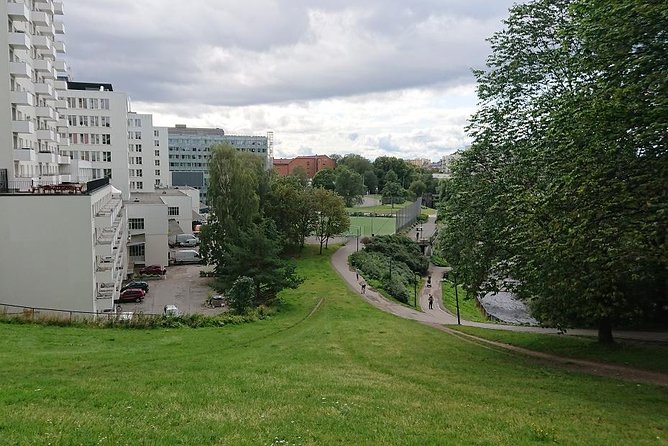
Two specific problems need attention. One person downloaded six audio recordings successfully but could not find the Akerselva path. Another walked along the river without audio after failing to locate the starting point.
That does not necessarily mean the route is impossible to follow, but it does show that the first few minutes require care. I would take these steps:
- Download the VoiceMap app before arriving.
- Redeem the audio tour code before you reach the bridge.
- Download the map and geodata for offline use.
- Check directions to Vaterland Bridge and compare them with the Ankerbrua starting reference.
- Start the tour only after the app confirms your location.
- Contact support by email or telephone if the start does not appear correctly.
These steps cost only a few minutes and can prevent the most frustrating outcome: completing a beautiful river walk without hearing any of the narration you paid for.
Who will enjoy this self-guided route?
I would recommend the tour to independent visitors who like history, urban change, and easy outdoor sightseeing. It suits people who want to stop often, take photographs, or fit the walk around a meal at Mathallen Oslo.
It is also a good choice for anyone who prefers a private activity. Only your group participates, so you can listen at your own pace and stop without asking permission.
Families may appreciate the short distance and outdoor setting, though each child would need suitable access to the audio through your own equipment. The route is wheelchair-friendly, but the steep sections deserve attention. If someone in your group has difficulty with inclines, check the path conditions and be prepared for slower progress.
I would choose a different option if you want a live guide who can answer questions, handle navigation, and adjust the route on the spot. This experience gives you independence, but that independence comes with responsibility.
Should you book the Akerselva River Meander?
Book it if you want an inexpensive, flexible introduction to one of Oslo’s most interesting walking corridors. The strongest parts are the freedom to set your pace, the mix of industrial history and public art, the waterfall views, and the pleasant finish at Hønse-Lovisa’s House.
Skip it if you are uncomfortable using a navigation app or want a fully guided experience. The middling overall rating reflects a real weakness at the starting point, so preparation is not optional.
My practical verdict: download everything before you go, confirm the start near Vaterland Bridge, and allow close to two hours. With those precautions, $7.99 buys a useful layer of context for a river walk you could otherwise pass through without noticing how much Oslo has changed.
FAQ
Where does the Akerselva audio tour start?
It starts at Vaterland Bridge in Grünerløkka, at 0186 Oslo, Norway. The first stop is identified as Ankerbrua, so use the app’s directions carefully when locating the exact starting point.
Where does the tour end?
The tour ends outside Hønse-Lovisa’s House at Sandakerveien 2, 0473 Oslo. The building is described as an art gallery and cafe with waterfall views.
How long does the walk take?
The tour takes approximately 45 minutes to 2 hours 15 minutes. The shorter time reflects continuous walking, while pauses and stops can make the outing longer.
How far is the route?
The walk is about 1.8 miles and follows the Akerselva upstream.
Is the route wheelchair accessible?
The walk is described as wheelchair-friendly, although some sections are steep.
Is a guide included?
No live guide is included. This is a private, self-guided audio tour for your group, accessed through the VoiceMap app.
What do I need to bring?
You need a smartphone and headphones. Food, drinks, transportation, and admission tickets for museums or other attractions are not included.
Can I use the tour offline?
Yes. The tour includes offline access to the audio, maps, and geodata after you download the material.
Is the tour available in English?
Yes. The purchase includes lifetime access to the tour in English.
Just added around Oslo
- Visit the Instaworthy Spots of Oslo’s Vigeland Park with a Local★ 5.0 · 4 reviews
- Oslo: 3-hour Cross Country trip with equipment and guide★ 5.0 · 4 reviews
- Oslo: 2-hour Christmas Private Walking Tour★ 3.0 · 4 reviews
- Art and Museum Tour of Oslo★ 5.0 · 4 reviews
- Flavors of Oslo: Food & Beer Tour★ 4.8 · 4 reviews
- Private Transfer from Oslo City Centre to Oslo Airport★ 5.0 · 4 reviews
- 3-Hour Vattkørt Beginner Kayak Course on Oslo Fjord★ 5.0 · 4 reviews
- Hipstoric Grünerløkka Private Walking Tour★ 5.0 · 4 reviews
Audio Tours, compared.
Scenic Fjord Cruise with Audio Guide Commentary
Read our review →
Molde: Atlantic Ocean Road & Varden Audio Guide Bus Tour
Read our review →

Ålesund and Surrounding Islands Audio Guide Tour
Read our review →

Norwegian Coastal Cities: Smartphone Audio Guide App
Read our review →
Bergen in Your Pocket: Landmarks and Lore Audio Tour
Read our review →Browse the lists this tour appears in